
Last updated September 19, 2026
Full 25-point door and opener safety check with every visit - springs, cables, rollers, tracks, and your LiftMaster or Chamberlain opener included
You get a price before we start. It does not change when the truck arrives.
 Before
 After
After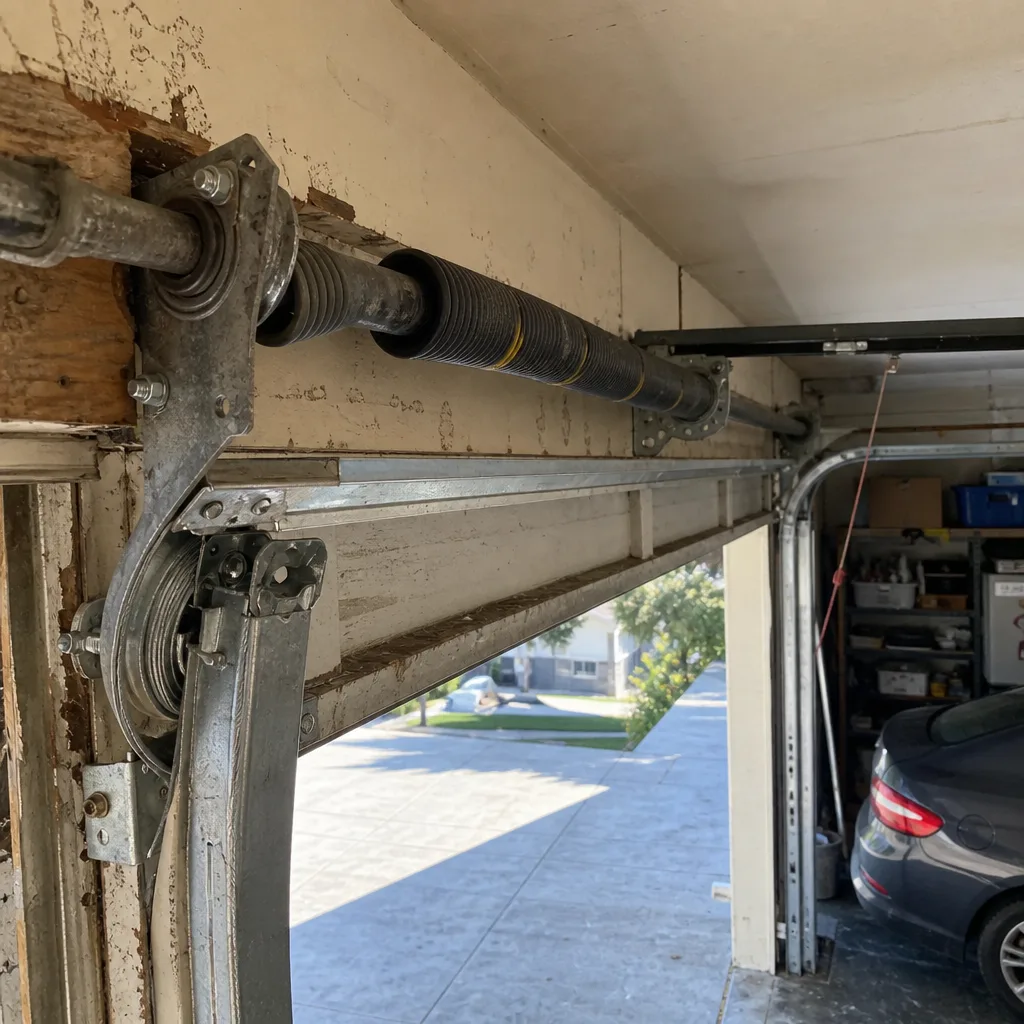 Before
 After
After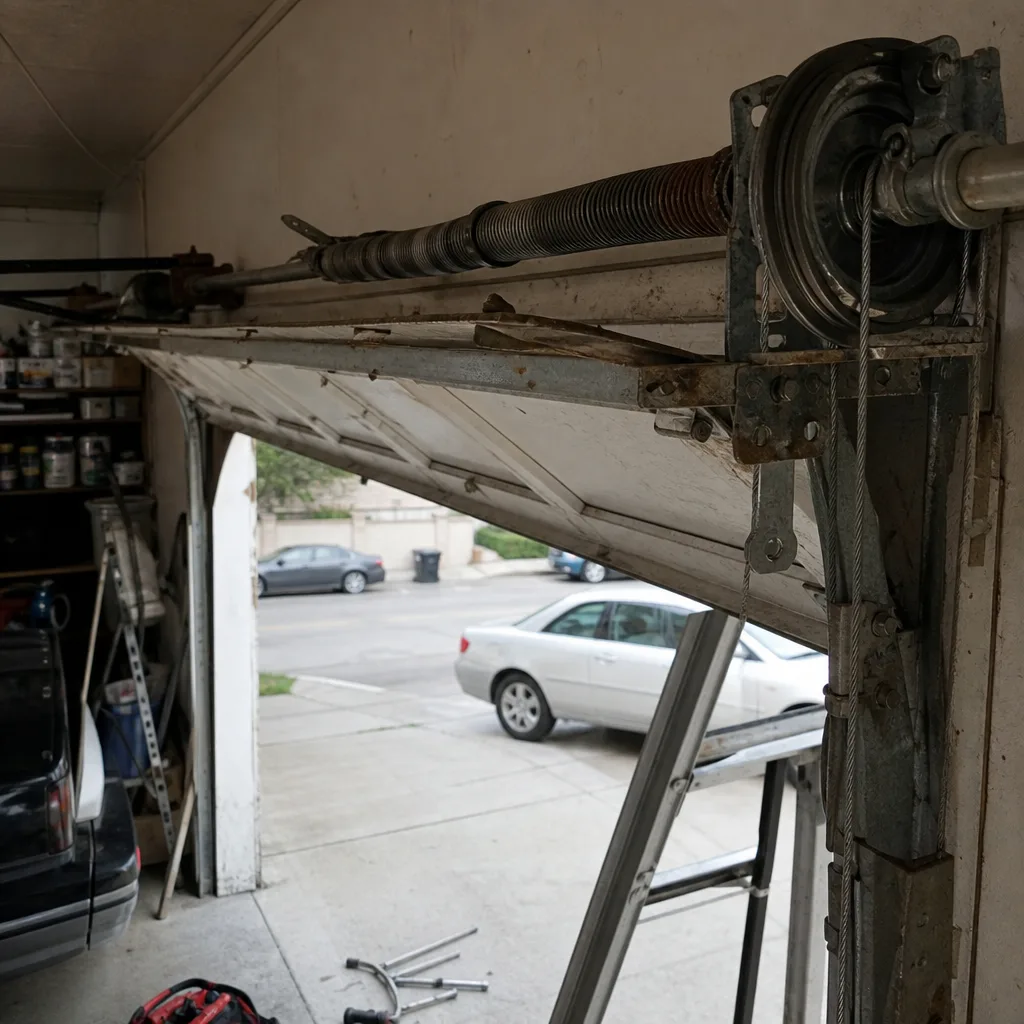 Before
 After
AfterSeasonal Garage Door Care for Los Angeles: Year-Round Homeowner’s Guide
Most seasonal garage door advice assumes a winter with ice, snow, and sub-zero overnight lows. Los Angeles has none of those, so homeowners here tend to skip the winter prep and assume the door will be fine. That assumption fails in a specific, predictable way: an El Niño wet season in Los Angeles can put more water under a degraded bottom seal in three months than a Seattle garage sees all year. In Los Angeles, the bottom seal fails from UV brittleness long before any rain arrives, and by the time water starts pooling under the door, the damage is already done. The good news is that Los Angeles garage doors fail in a repeating, calendar-based pattern, and a homeowner who understands that pattern can intercept most failures before they happen. This guide walks through the four distinct stress periods of the Los Angeles year, what each one does to your door, and what to do about it, or you can explore The Complete Guide to Garage Door in Los Angeles for more detail.
Quick Answer
Seasonal garage door care in Los Angeles is a calendar-based maintenance routine built around the city’s four distinct stress periods: marine-layer spring moisture, UV-peak summer heat, dry Santa Ana fall winds, and El Niño winter rain. Each period affects different components in a predictable sequence, so the maintenance task list changes with the season. A homeowner who performs a quarterly inspection and lubrication pass, plus one annual full hardware torque-and-documentation pass, will catch most issues before they become repairs; see our DIY vs Professional Garage Door: The Los Angeles Homeowner’s Decision Guide to decide which tasks to handle yourself. The single most important seasonal task in Los Angeles is replacing a UV-brittled bottom seal before the wet season begins.
Table of Contents
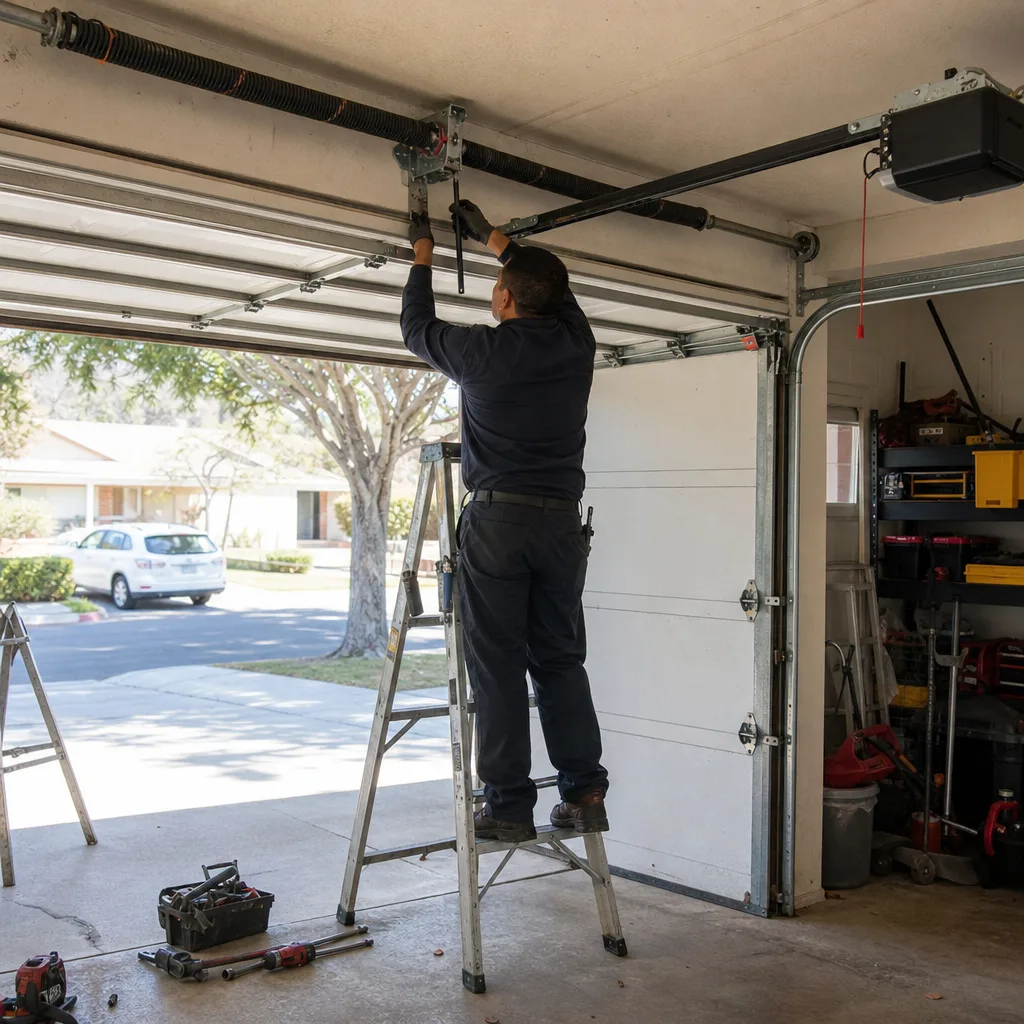
- The Four Stress Periods of the Los Angeles Garage Door Year
- March-May: Marine Layer Moisture and Metal Corrosion
- June-September: UV, Heat, and Circuit Board Limits
- October-November: Santa Ana Wind Preparation
- December-February: El Niño Rain Readiness
- The Annual Full Hardware Torque-and-Documentation Pass
- Lubrication Specs for Los Angeles: Coastal vs. Inland
- Common Mistakes to Avoid
- When to Call a Professional
- Frequently Asked Questions
BeforeAfterThe Four Stress Periods of the Los Angeles Garage Door Year
Los Angeles doesn’t have a winter in the way a Minneapolis homeowner would recognize. What it has instead are four distinct environmental stress periods, each of which attacks a different component of the garage door system. Understanding this pattern is the foundation of seasonal maintenance here.
The four periods break down like this:
- Marine-layer spring (March-May): Coastal fog and morning overcast push moist, salt-laden air into garage spaces from the Palisades to Long Beach, and as far inland as the 405 corridor on heavy days. This moisture accelerates corrosion on cables, hinges, and roller stems. Inland homes get the same pattern at reduced intensity.
- UV-peak summer (June-September): Direct sun on west-facing and south-facing doors drives panel surface temperatures well above ambient air temperature. Weatherstripping, vinyl trim, and door skin finishes degrade fastest in this period, and opener circuit boards can hit their thermal limits inside unventilated attached garages.
- Santa Ana fall (October-November): Sustained wind gusts apply lateral and cyclical loads to the door face that nothing else in the year produces. Track fasteners get worked loose, wind-load braces shift, and the manual release mechanism that no one has touched in five years may not work when a power outage hits.
- El Niño winter (December-February): The rain arrives in concentrated bursts, and a UV-brittled bottom seal that worked fine in September now channels water directly under the door. This is also the season when degraded side jamb seals show their failure, and when pooling water reveals whether the slab is graded correctly or the seal has failed.
Each period has a short, specific maintenance checklist. The goal isn’t to spend hours every month; it’s to spend twenty minutes four times a year and one longer afternoon annually. By the way, we’re Servo Garage Doors Los Angeles home base, and we’ve seen every one of these failures repeated hundreds of times across the city since 2015. The pattern is consistent enough that we can tell you what’s wrong over the phone before we even arrive.
March-May: Marine Layer Moisture and Metal Corrosion
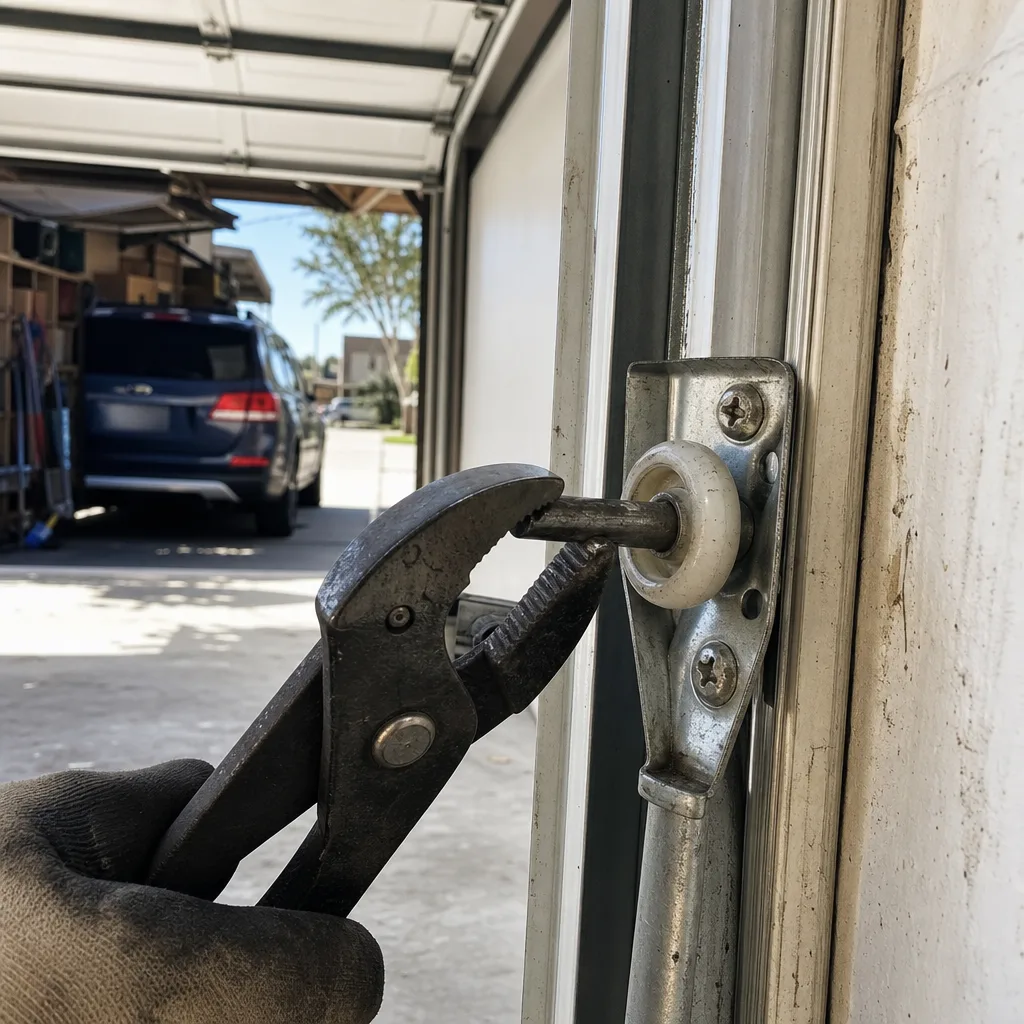
The marine layer is a morning phenomenon, but its effect on garage hardware is cumulative. When moist coastal air hits the cooler metal surfaces inside a garage, condensation forms. In homes from Santa Monica to El Segundo, and as far east as Culver City, this happens roughly 60 to 90 mornings per year. The result is slow, steady corrosion on the components that bear the door’s weight and guide its travel.
What the marine layer actually does, component by component:
- Lift cables: Over time, moisture at the cable drum promotes surface rust and, in severe cases, strand fraying. A fraying cable on one side changes the load distribution on the torsion spring and can pull the door out of level. In neighborhoods within three miles of the coast, we inspect cables more often than in Pasadena or Glendale, because the failure rate is measurably higher.
- Rollers and hinges: The roller stem and hinge pin are both steel parts that rust quietly. A rusted roller stem seizes the bearing and causes the roller to slide rather than roll along the track, which wears flat spots and makes the door noisy.
- Track hardware: The lag bolts that hold the vertical tracks to the framing are commonly overlooked. In coastal moisture, they can rust in place, making later adjustments difficult and weakening their grip on the wood.
- Panel edges and bottom brackets: The bottom panel corners are the lowest point of the door, and the bottom brackets that hold the cables are in direct contact with any water that violates the floor seal. These are the first spots to show rust on a Los Angeles door.
The spring inspection checklist for coastal and inland homes differs only in frequency, not in substance:
- Wipe down the lift cables with a clean cloth and inspect for rust blooms or broken strands. A cable with one broken strand needs replacement, not lubrication.
- Inspect each roller while the door moves through a full open-close cycle. Listen for grinding. Check the roller stems for rust.
- Check the bottom bracket bolts and the hinge screws for visible corrosion. Tighten any loose hardware with a socket wrench.
- Run a soft brush over the track to clear any rust flakes that have already formed.
- Lubricate the hinges, roller bearings (if they have grease fittings or exposed bearings), and the torsion spring with a garage door lubricant. The specification is covered in a later section.
One honest note about timing: if you’re doing this in late May and noticing rust on the cables, you’re seeing damage that built through April. The right moment to do the spring inspection is the first week of March, before the marine layer pattern strengthens into April and May. Homeowners who wait until June find six to eight more weeks of salt-air exposure has compounded the problem.
June-September: UV, Heat, and Circuit Board Limits
Summer in Los Angeles is not the kindest season for garage doors; it’s the season that quietly ages the materials that look fine until they suddenly aren’t. The primary damage comes from ultraviolet radiation and sustained high temperatures, and the affected components are the weatherstripping, the door skin finish, and the opener’s logic board.
Start with the bottom seal, because this is the single component where Los Angeles failures differ most from the rest of the country. In cold climates, bottom seals fail from freeze-thaw cycling and physical impact from ice. In Los Angeles, the bottom seal fails from UV exposure. The rubber or vinyl compound becomes brittle, develops small cracks at the flex points, and eventually loses its ability to compress and form a seal against the slab. This is true across the city, from Woodland Hills to El Sereno, and it applies to any door where direct sun hits the bottom panel for more than three hours per day. A bottom seal that shows visible cracking in June will be a water channel by January.
The heat itself affects more than the rubber:
- Logic boards: The circuit board inside a garage door opener has an operating temperature range that most manufacturers do not print on the packaging. In our experience, logic boards inside uninsulated attached garages in the San Fernando Valley, where interior garage temperatures can exceed 120°F on peak days, fail at a higher rate than coastal units. The failure is rarely dramatic; more often it’s an intermittent “no response” condition on hot afternoons that resolves once the garage cools. If this happens to you, note the time of day and the outside temperature before you call a technician.
- Vinyl trim and weatherstripping: The side and top seals, and any exterior vinyl trim, become brittle under direct UV. The failure shows as cracking at fastener points and along flex lines.
- Door skin finishes: Steel doors with factory finishes generally hold up for years, but the lower panel of a west-facing door takes a relentless solar load. Once the finish begins to chalk or micro-crack, the underlying metal is exposed to the marine layer moisture in the next cycle. Wood doors need a full finish inspection each summer, because a hairline crack in the clear coat is an entry point for moisture and sun that accelerates quickly.
The summer checklist:
- Inspect the full length of the bottom seal at least once in June and once in August. Squeeze it at several points; if it feels rigid rather than pliable, or if visible cracks appear at the flex lines, replace it before October. A replacement bottom seal is a part we stock on every truck; it’s inexpensive relative to the water damage it prevents.
- Check the side and top weatherstripping for brittleness, not just any gap. Brittle weatherstripping still looks fine when the door is closed, but it won’t seal against wind-driven rain in a few months.
- Look at the lower door panel finish under bright light. Any chalky spots, hairline cracks, or peeling indicate the need for a refinish before winter.
- Note any opener behaviors that seem temperature-dependent, like failing only on hot afternoons. Write down the time and outdoor temperature when it happens; this documentation saves a technician time and saves you money on diagnosis.
One more summer note for the opener: many Los Angeles garages are attached and unventilated, and the logic board is not the only heat-sensitive component in the system. The capacitor in the motor can fail under sustained heat load, and the remote receiver antenna is rarely the culprit when a remote stops working in July. If the opener misbehaves only in the afternoon and works fine in the morning, the circuit board is the first suspect.
October-November: Santa Ana Wind Preparation
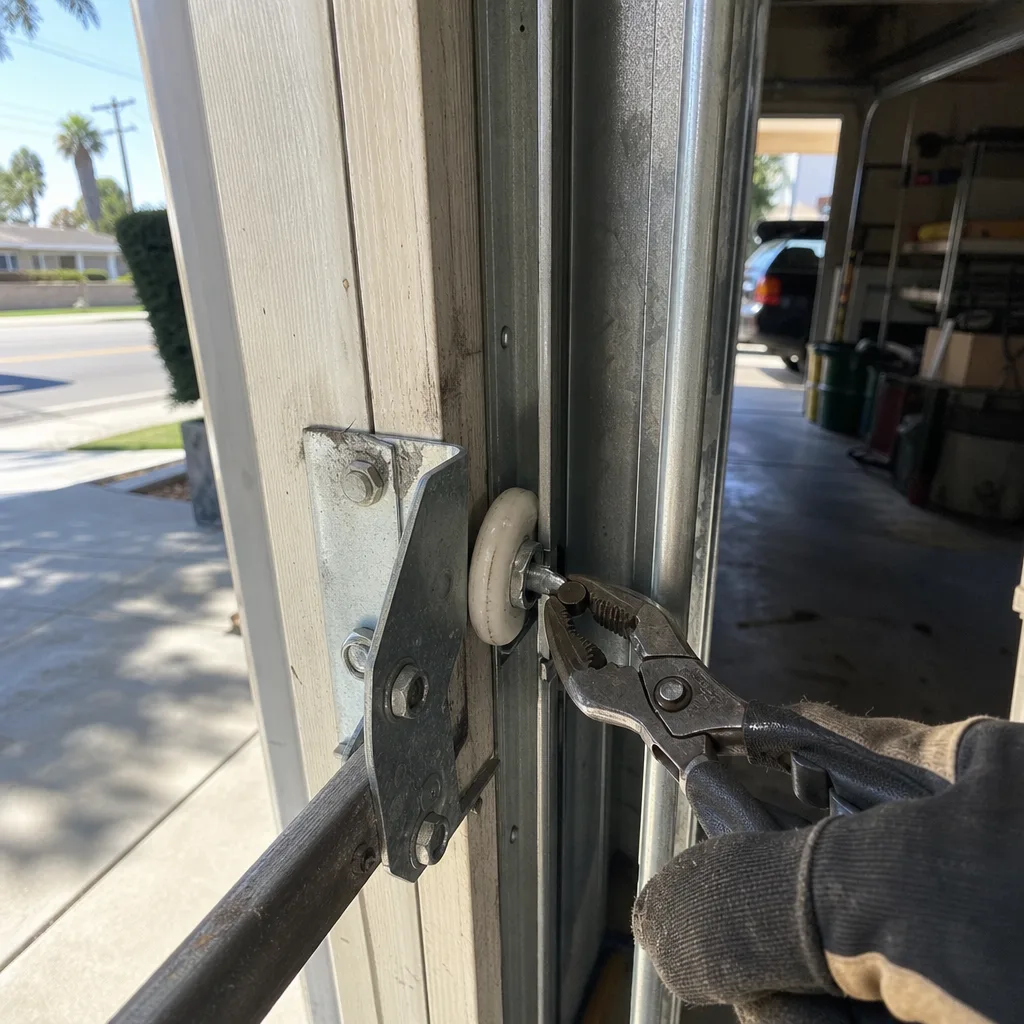
Santa Ana winds are the most underrated garage door stressor in Los Angeles. They don’t carry moisture, they don’t create rust, and they don’t leave visible damage on the door face. What they do is apply sustained, turbulent, lateral pressure to the largest movable surface on the front of your house. A garage door is a sail when the Santa Anas blow, and the hardware that keeps it in its tracks gets worked loose over several wind events.
The most important checks before and during the Santa Ana season:
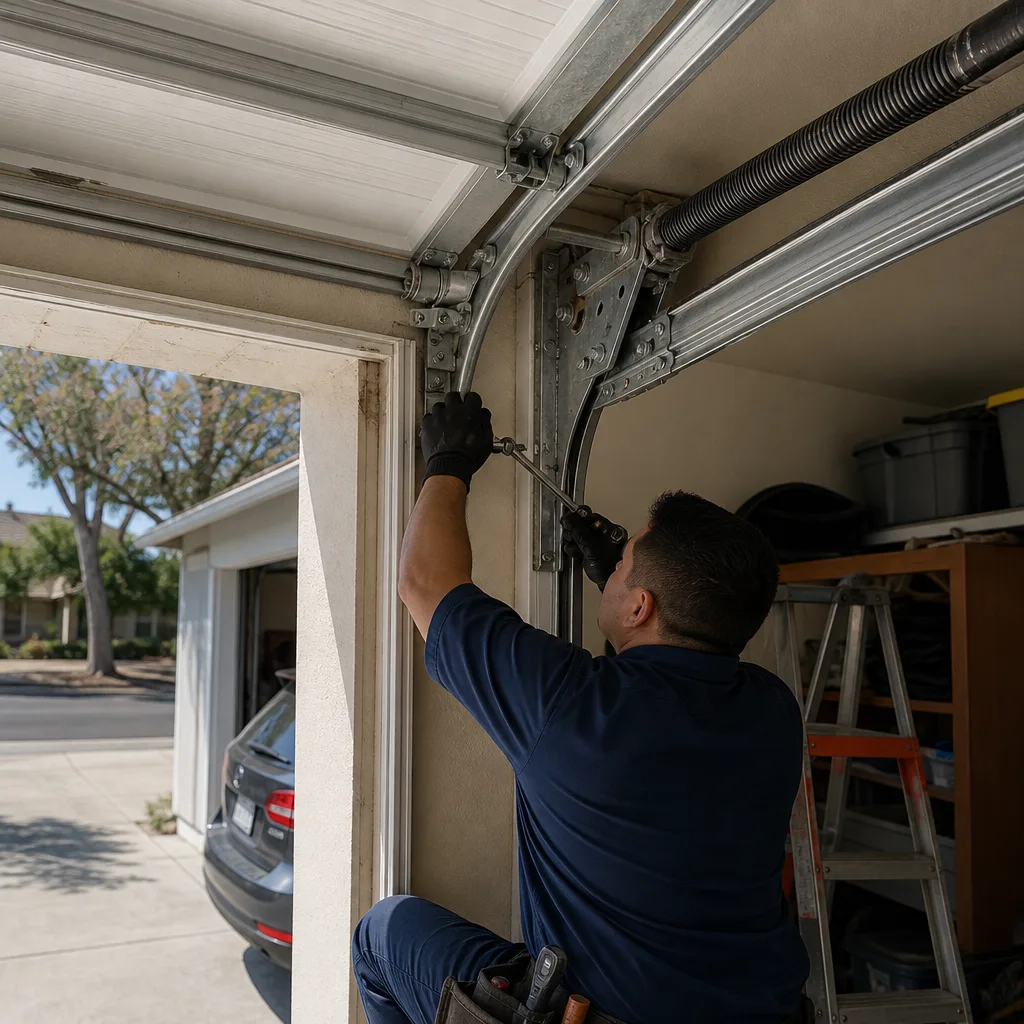
- Track fastener torque: The vertical and horizontal tracks are secured to the framing with lag bolts and brackets. Each sustained wind event applies cyclical load to these fasteners. After two or three Santa Ana events, some of these bolts will have backed out slightly. Walk the length of both tracks with a socket wrench and snug down anything that feels loose. Don’t over-torque; the goal is hand-tight plus a quarter turn, not maximum torque.
- Wind-load brace inspection: Doors in designated wind-prone areas may have horizontal struts or stiffening braces on the inside face of each panel. Check that all brace connections are tight and that the braces are not bent. A bent brace means the door took a lateral load it wasn’t designed for, and that’s worth a closer look.
- Manual release test: This is the task that almost no one does until the power goes out. The manual release handle (usually a red cord hanging from the trolley) disconnects the opener from the door so you can operate it by hand. During a Santa Ana wind event, power outages are common, and if the release mechanism hasn’t been operated in years, it may stick. Test it once in early October: pull the cord, lift the door by hand about a foot, and re-engage the opener. Don’t pull the release while the door is fully open, and keep your hands off the cables and springs.
- Top bracket and spring anchor inspection: The top brackets attach the upper panel to the horizontal track, and the spring anchor plates are secured to the header. These are not points that typically fail under Santa Ana load, but they are points worth checking while you’re already up there with the socket wrench.
Full transparency about the manual release test: if you have a high-tension torsion spring system, the spring itself is under enough force to cause serious injury if mishandled. The test we’re describing here is for the release mechanism and door balance, not for the spring. If the door doesn’t stay in place when you lift it partway, or if it feels heavier than it should, the springs may be fatigued, and that is a repair for a trained professional, not a DIY adjustment.
In the San Fernando Valley and the foothills, Santa Ana gusts routinely reach 50 to 70 mph, with occasional higher gusts in canyon passes. Homes in Porter Ranch, Chatsworth, Sylmar, and the 210 corridor are at the highest exposure. Homes in the basin and along the coast still get wind, but the sustained force is weaker, and the checklist above can be performed less frequently, once per month during the season is reasonable.
December-February: El Niño Rain Readiness
This is the season when all the deferred maintenance from the previous nine months comes due. The bottom seal that developed UV cracks in August is now brittle, and the first heavy rain channels water directly under the door. The side jamb seals that looked adequate in the dry months now leak at the corners. If water pools inside the garage, homeowners need to determine whether the slab is graded correctly or the seal has simply failed; the distinction matters because one of those is a seal replacement and the other is a concrete or drainage issue. For expected costs, see our Garage Door Cost Breakdown: The Los Angeles Homeowner’s Reference for 2026.
Here’s the sequence we follow when a Los Angeles homeowner calls about water intrusion in December or January:
- Bottom seal inspection: Open the door, run a bright light along the full length of the bottom seal, and look for cracks, splits, or flattened sections that no longer compress. A hardened seal doesn’t seal; it just rests on the slab.
- Side jamb seal inspection: The vertical weatherstripping on both sides of the door opening should compress slightly when the door is closed. If you can see daylight along either side, the seal is failing. Wind-driven rain will find that gap.
- Threshold seal check: Many Los Angeles homes have a concrete threshold or a rubber threshold seal added to keep water out. Check that the threshold seal is still bonded to the slab and that the door seal meets it squarely across the full width. A threshold that has shifted or a seal that has worn a groove in the middle creates a direct channel for water.
- Slab grade assessment: Step back and look at the garage floor from the driveway side. The slab should slope slightly away from the house. If it slopes toward the house, water will pool against the door regardless of how good the seals are. This is a grading or drainage issue, not a door seal issue, and it may require a contractor to address the slab or the surrounding drainage.
- Pooling water diagnosis: If there’s standing water inside the garage after a moderate rain, look at where the water is. Water running down the inside face of the door points to the top seal or the header. Water seeping in at the bottom corners points to the bottom seal or the side jamb seals. Water spreading across the floor from the center of the door suggests the slab is graded toward the house, or the drainage outside the door can’t move water away fast enough during heavy downpours.
A quick note on neighborhoods: the El Niño rainfall pattern doesn’t discriminate by zip code, but homes in the hills above Studio City, the canyon communities, and the La Cañada Flintridge area face an additional challenge. Those garages frequently sit at the base of a slope, and excess surface water from the property above can accumulate at the door. If that’s your situation, inspect your threshold seal before every winter, not just when rain is forecast. And make sure your downspouts and driveway drains are clear before the season starts.
The Annual Full Hardware Torque-and-Documentation Pass
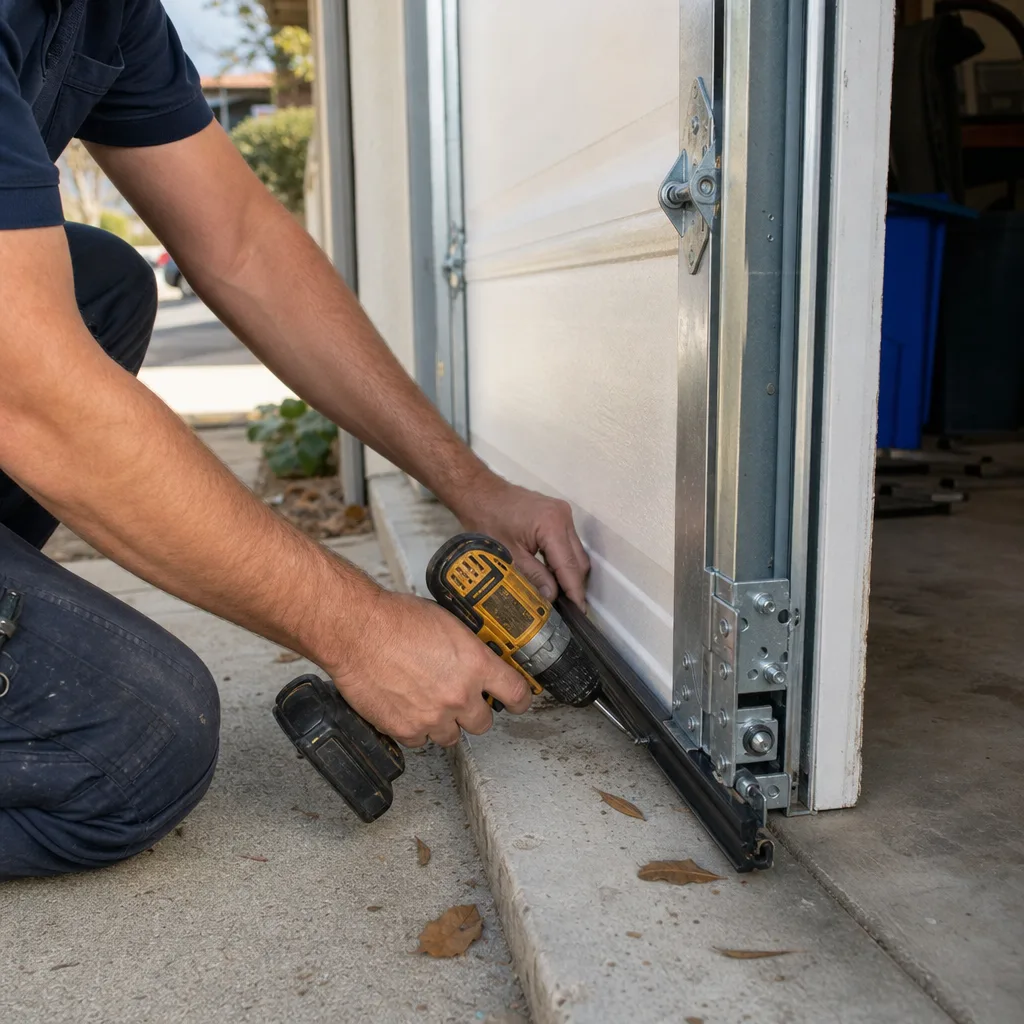
Quarterly inspections address seasonal changes, but once a year, a complete torque-and-lubrication pass is worth doing. This is the single task that, performed consistently, extends the service life of the entire door system and produces a paper trail that matters for insurance and warranty purposes. It takes about two hours, requires a socket set, a torque-conscious hand, and a camera phone.
Here’s the full sequence, in order:
- Disconnect the opener and lower the door: Pull the manual release and bring the door down to the closed position. This removes the opener from the equation so you’re assessing the door’s mechanical condition, not the opener’s performance.
- Balance test: Lift the door manually to about waist height. It should stay in place. If it drops or rises, the torsion springs are fatigued. This is a professional repair; springs under tension require specialized tools and expertise.
- Torque every fastener: Work from the bottom brackets upward to the top brackets, then along the vertical tracks, then along the horizontal tracks, and finally to the spring anchor plates and header brackets. A socket wrench is the right tool; an impact driver is not. Tighten to snug plus a quarter turn. Record any fasteners that were loose before you tightened them, and note their location.
- Lubricate the moving parts: The hinges, roller bearings, and torsion spring all get a light application of garage door lubricant. More on lubrication specs below. Wipe away any excess.
- Inspect every roller: Rollers have a usable life span, and when they fail, they fail gradually. Replace any rollers with visible flat spots, cracked wheels, or rusted bearings. Nylon rollers run quieter and last longer than steel in a marine-influenced climate.
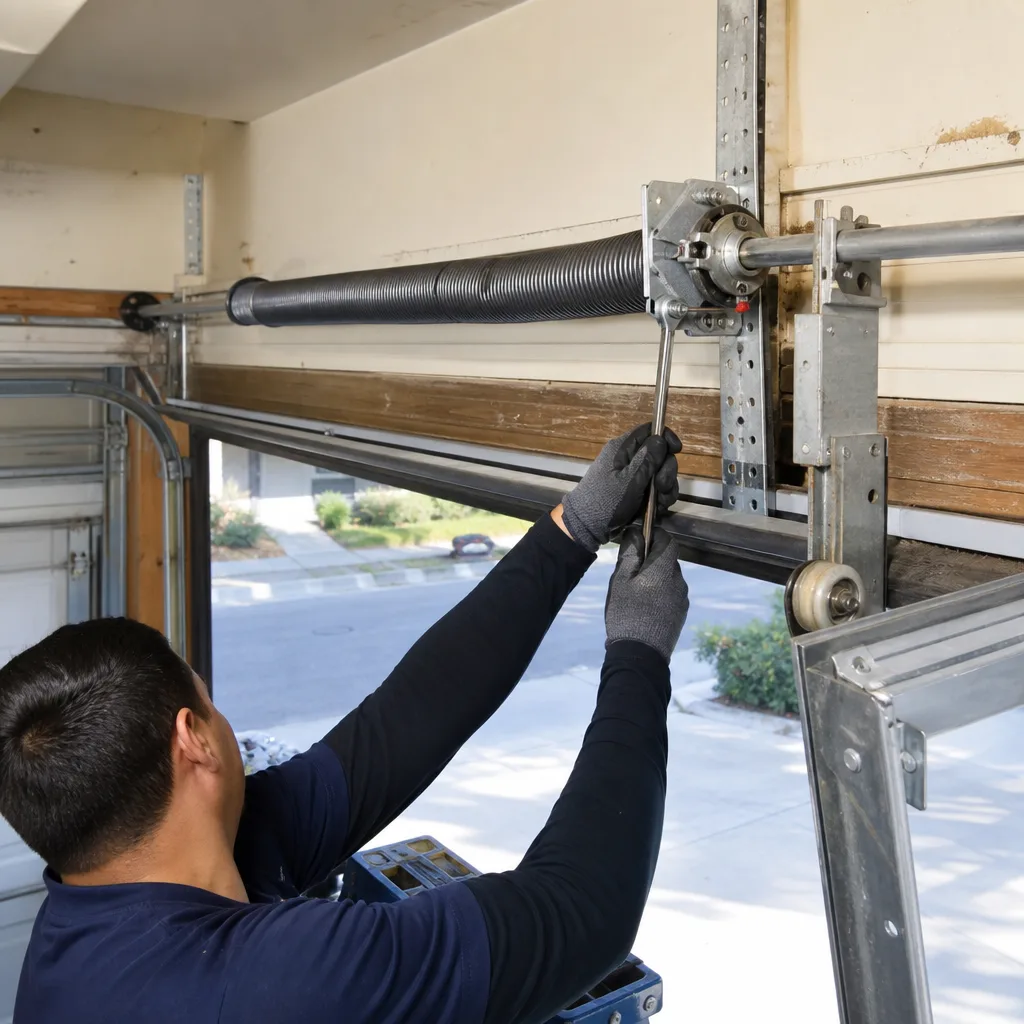
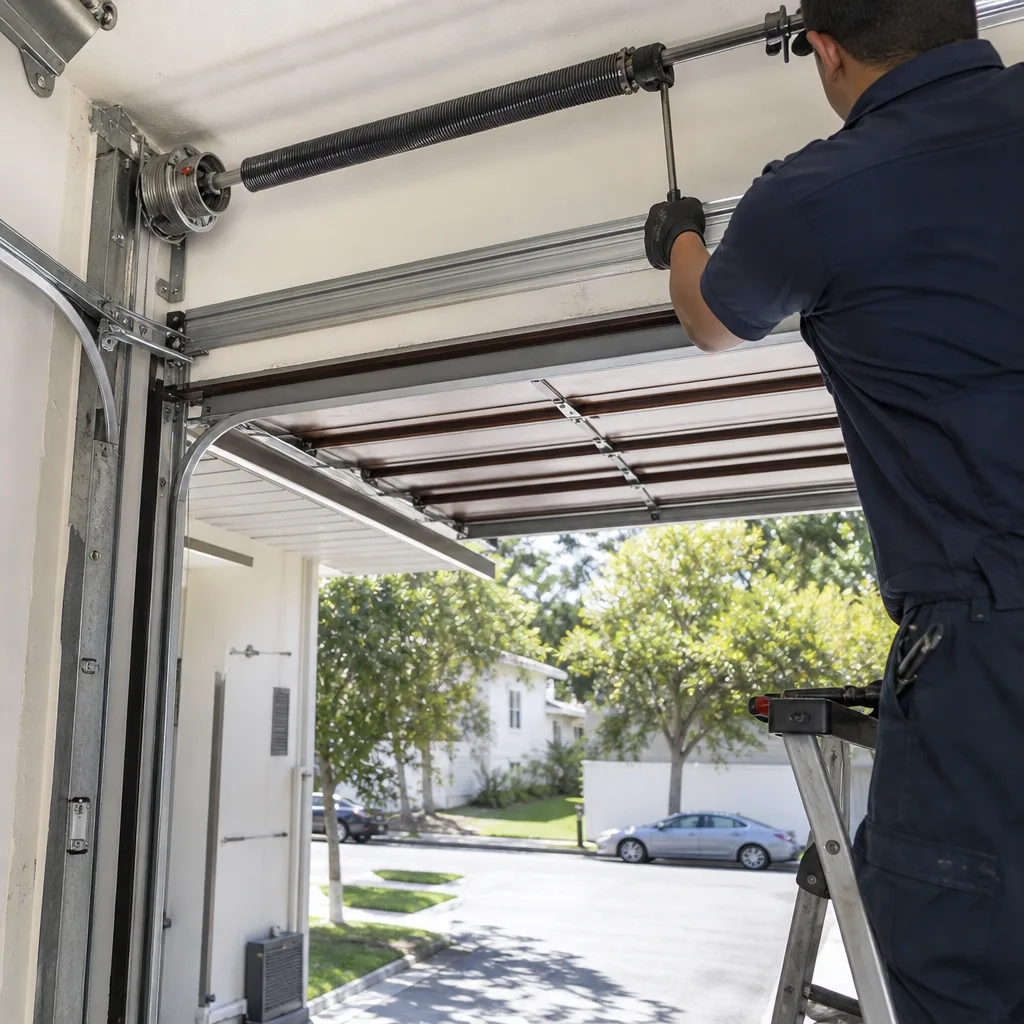
- Inspect the torsion spring: Look at the coil spacing. An even gap between coils along the full length of the spring is correct. Uneven coil spacing, a visible gap where the spring has separated, or rust on the spring surface all indicate replacement. Mark the date of inspection on the spring with a permanent marker; this helps track its age.
- Document everything: Take photos of the spring, both cables, the bottom seal, and any components you adjusted or replaced. Save them in a folder with a date. This is your service record, and it’s the foundation of any warranty claim, insurance claim, or future sale of the home.
We can’t overstate the value of the photographic documentation. Clause 4 of The Haven Standard, the standard we operate under at Servo, requires that the technician photograph the failed component before quoting a replacement, and the customer receives that photo record after every visit. It’s the reason we were founded in 2015, and it’s the same principle a homeowner should apply to their own annual maintenance. A photo of a healthy torsion spring in October, followed by a photo of the same spring with uneven coil spacing in May, makes the diagnosis and the warranty conversation much faster.
Lubrication Specs for Los Angeles: Coastal vs. Inland
Lubrication frequency is one place where Los Angeles splits into two markets, and the advice that works for one doesn’t work well for the other. The dividing line is roughly the 405 corridor, though the marine layer’s influence extends further east depending on the season.
Coastal homes (within about five miles of the water): Lubricate hinges, rollers, and the torsion spring every four months. The marine layer deposits moisture and salt on exposed metal, and lubrication that isn’t refreshed gets diluted and washed off. Homes in Venice, Playa del Rey, Manhattan Beach, and San Pedro should treat lubrication as a year-round task with no seasonal break.
Inland homes (roughly east of the 405): Lubricate twice per year, once in early March and once in early October. The spring pass prepares the hardware for the marine layer’s reduced but still present influence in the basin; the fall pass prepares for Santa Ana season and the colder, damper winter months. Homes in Pasadena, Glendale, Burbank, and the San Fernando Valley fall into this category.
Use a garage door specific lubricant, not WD-40. WD-40 is a solvent and water displacer; it’s useful for cleaning metal surfaces but poor for lubricating them long-term. A garage door lubricant is typically a silicone or lithium-based product designed to stay in place and resist collecting dust. Apply it sparingly; a little goes a long way, and excess lubricant attracts dirt and grime that shortens the life of the rollers and hinges.
For the torsion spring, the goal is to coat the coil surface evenly, not to soak it. Use a rag to catch drips. For hinges and roller bearings, one drop per pivot point is sufficient. And skip the track; the track doesn’t get lubricated. A lubricated track causes the rollers to slide instead of roll, which accelerates roller wear. If you’ve been lubricating the track, wipe it down and stop.
Common Mistakes to Avoid
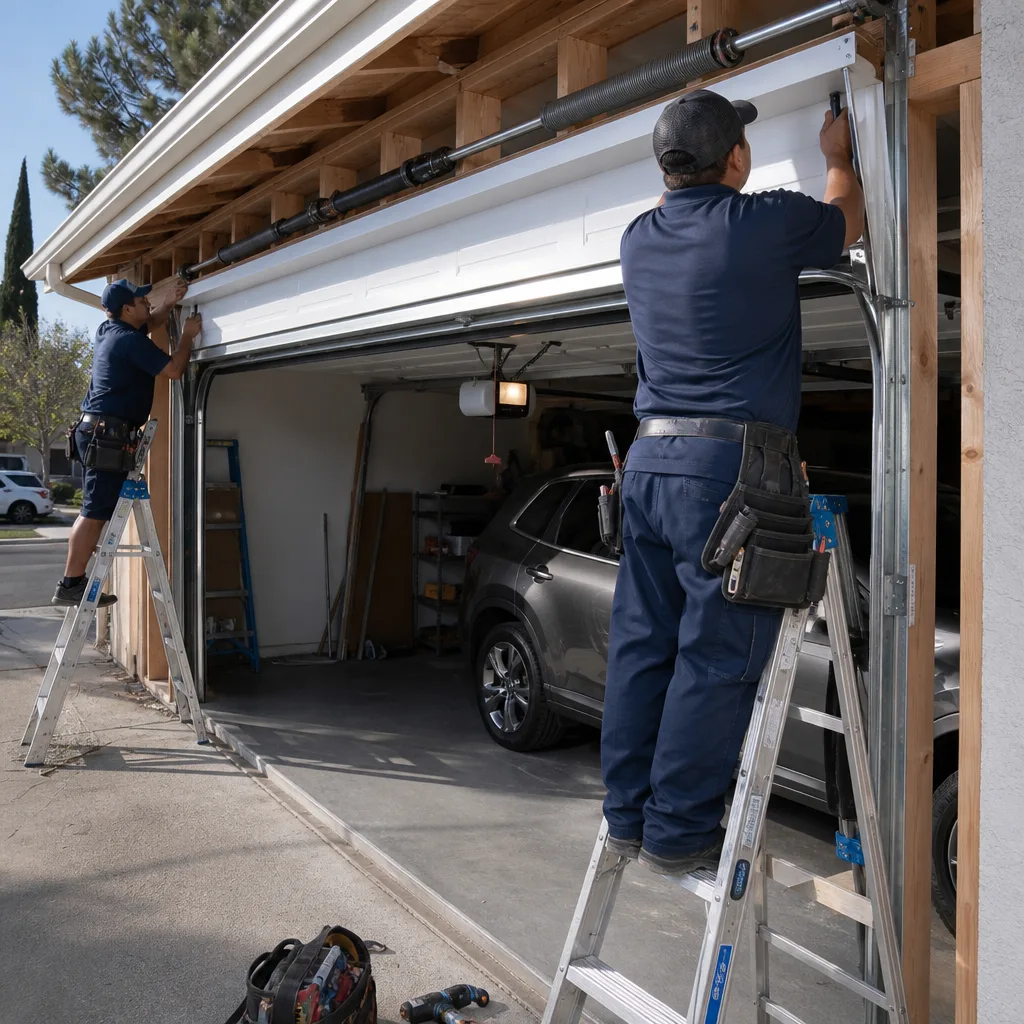
- Using WD-40 as a lubricant: It’s a solvent that cleans but doesn’t lubricate. It displaces existing lubrication and leaves the metal drier than before. Use a garage door lubricant, not a general-purpose spray.
- Lubricating the track: The rollers are designed to roll on the track, not slide. A lubricated track causes sliding, which wears flat spots on the rollers and makes the door noisy. The track should be clean and dry.
- Skipping the manual release test until the power goes out: The first time you pull the release handle shouldn’t be during a blackout in the middle of a Santa Ana event. Test it in calm weather, once per year, and confirm the door moves freely by hand.
- Delaying bottom seal replacement until winter: The best time to replace a UV-brittled bottom seal is October, before the rains arrive. The second best time is anytime you inspect it and find cracks. The worst time is January, when water is already inside the garage.
- Ignoring a noisy door: Garage doors don’t become noisy for no reason. Grinding, squealing, or rattling is the mechanical system telling you something specific; a rusted roller bearing, a loose hinge, a dry spring. Ignoring the noise postpones a cheap fix until it becomes an expensive repair.
- Attempting spring repair without training: The torsion spring is under significant tension, and an uncontrolled release can cause serious injury. If the spring is broken, uneven, or rusted, leave it alone and call a professional. The cost of the repair is less than the cost of the emergency room.
- Forgetting to document maintenance: Without a photo record, a warranty claim or an insurance claim turns into a he-said-she-said. A dated photo of a healthy spring or a freshly replaced bottom seal is worth more than the twenty seconds it takes to capture.
When to Call a Professional
Some tasks on this list are homeowner-appropriate. Replacing a bottom seal, lubricating hinges, torqueing track fasteners, and testing the manual release are all reasonable DIY tasks. Other conditions require a trained technician, and attempting them without the right tools or experience is genuinely dangerous. Call a professional if the torsion spring is broken, shows uneven coil spacing, or has visible rust blooming on the coils. Call a professional if the cables are frayed or the door is out of level. Call if the door drops or rises during the balance test, because that means the spring tension is wrong and the door is not safe. Call if the opener is behaving intermittently and you’ve ruled out the wall switch and the remote batteries. And call if the water intrusion is caused by slab grading or drainage, because that’s a structural or landscaping issue, not a door seal issue. Servo Garage Doors Los Angeles offers free estimates across Los Angeles; call (213) 348-6550 and we’ll walk you through what we’re seeing, and importantly, our written price and written scope are delivered before any work starts. If you have a competing written estimate, bring it; we’ll provide a free second opinion, no coupon required.
Frequently Asked Questions
If you live within about five miles of the coast, lubricate hinges, rollers, and the torsion spring every four months. If you live east of the 405, twice per year is sufficient; once in early March and once in early October. Use a garage door specific lubricant, never WD-40, and skip the track entirely. Call (213) 348-6550 for a free estimate if you’re unsure what to use or where to apply it.
Heat causes metal components to expand, and expansion changes the clearance between rollers, hinges, and the track. A door that runs quiet in cooler weather and louder in July is usually showing early signs of dry or worn hardware. This is particularly common in the San Fernando Valley, where uninsulated garages can exceed 120°F. Lubricate the hinges and rollers and inspect the roller wheels for flat spots before calling for service.
Yes, in most cases. The bottom seal is a consumable part that slides into a retainer channel on the bottom of the door, and replacement is a homeowner-accessible task with the right tools and a replacement seal that matches your door’s retainer profile. The most common mistake is buying a generic seal that doesn’t fit the retainer. If you want a professional to handle it, call (213) 348-6550 for a flat, written price before any work begins.
Bottom seal replacement in Los Angeles typically costs between $120 and $250 for most standard residential doors, including the part and labor. The exact price depends on the door width, the retainer profile, and whether the old seal needs to be extracted from a rusted or bent retainer. The price is always quoted and agreed before work starts; if we arrive and the retainer is damaged, we’ll show you the photo and adjust the written scope before proceeding.
The marine layer’s influence declines with distance from the coast, but it doesn’t stop at the 405. On heavy marine layer days, that moist air pushes into the basin and reaches as far as Pasadena and Glendale, though at reduced intensity. Inland homes still see condensation and occasional cable rust, just at a slower rate. The practical difference is lubrication frequency: every four months at the coast, twice per year inland.
Inspect the bottom seal for UV cracking, check the side jamb seals for gaps, test the threshold seal, and clear the driveway drains and downspouts. If the bottom seal is brittle, replace it before the rains arrive. Water damage inside a garage is almost always the result of a seal that was failing for months before the weather changed. Garage Door Repair in Los Angeles can inspect the seal and provide a written price the same day.
The Bottom Line
Los Angeles garage doors don’t follow the same seasonal rules as garage doors in Minneapolis or Chicago, but they fail in a pattern that’s just as predictable once you know what to look for. The marine layer attacks metal in the spring, summer sun destroys rubber and vinyl and pushes opener circuit boards to their thermal limit, Santa Ana winds loosen the hardware that holds the door in its tracks, and El Niño rain finds every seal that the summer sun already weakened. Four inspections per year, one annual torque-and-documentation pass, and a habit of photographing everything you touch is all the maintenance plan most Los Angeles homes need. If any of this feels like more than you want to take on, we’re Garage Door Installation in Los Angeles specialists as well, and we’ll give you a written price and a documented photo record before you decide anything. Our work is backed by the 365-Day Done Right Promise, and a live person answers our phone day or night.
Call Servo Garage Doors Los Angeles at (213) 348-6550 for a free estimate, written price, and the parts and labor we stand behind.
Written by Marcus Deller, Owner at Servo Garage Doors Los Angeles, serving Los Angeles since 2015. Browse our more guides & resources for additional maintenance tips.