
Last updated September 19, 2026
Full 25-point door and opener safety check with every visit - springs, cables, rollers, tracks, and your LiftMaster or Chamberlain opener included
You get a price before we start. It does not change when the truck arrives.
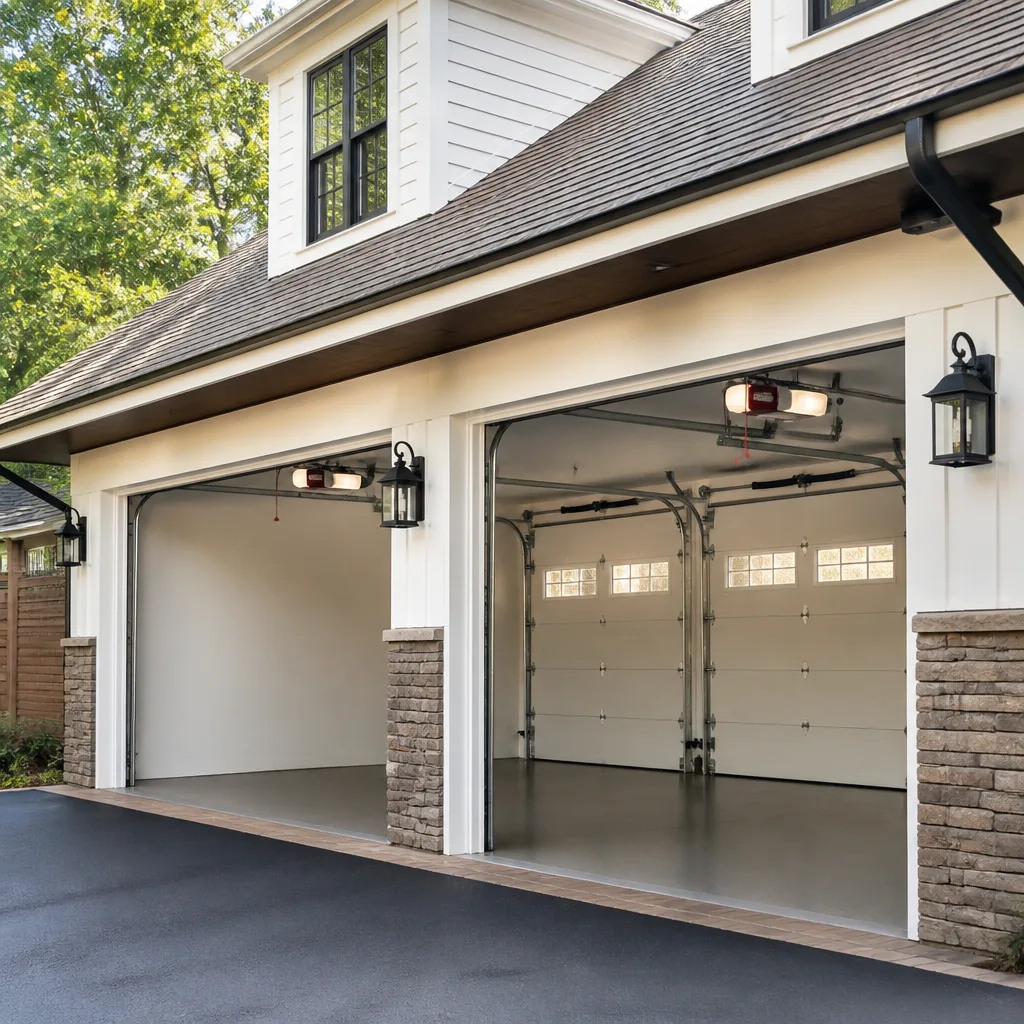
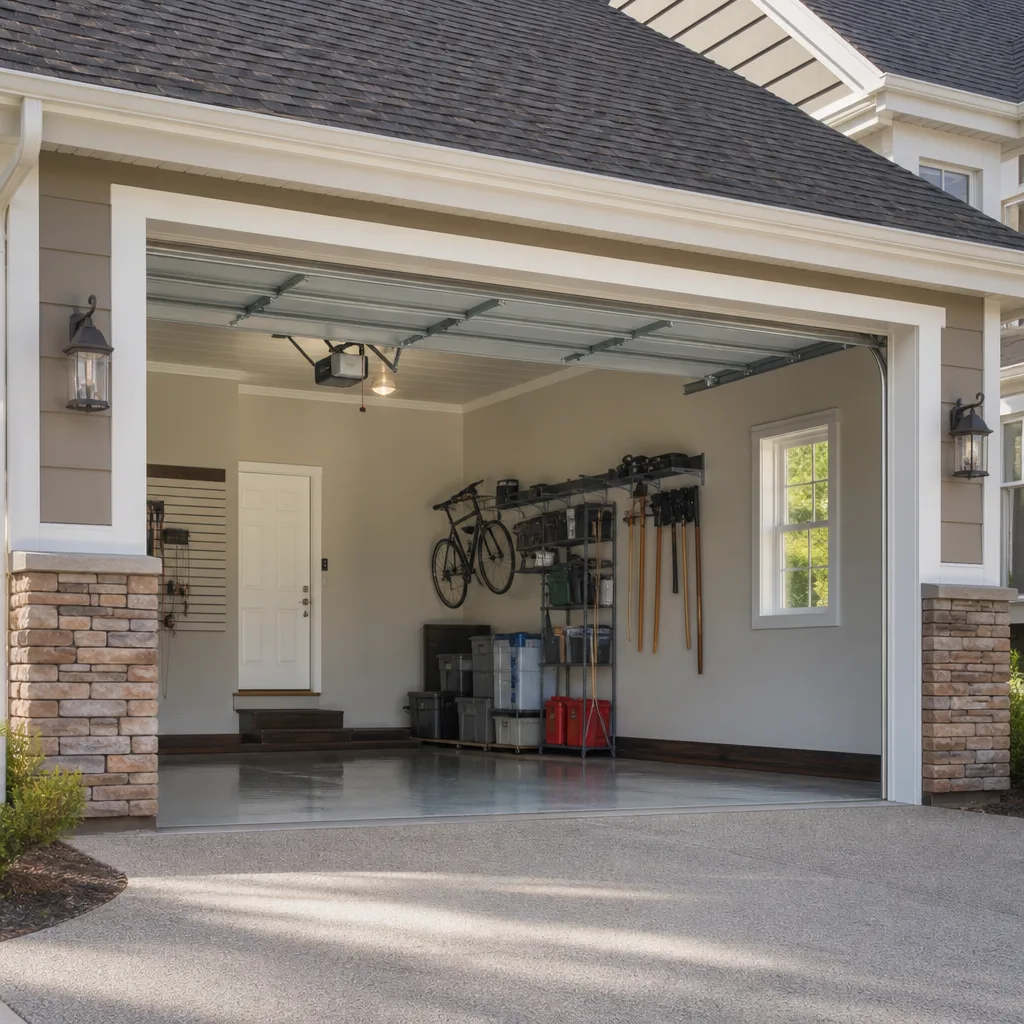
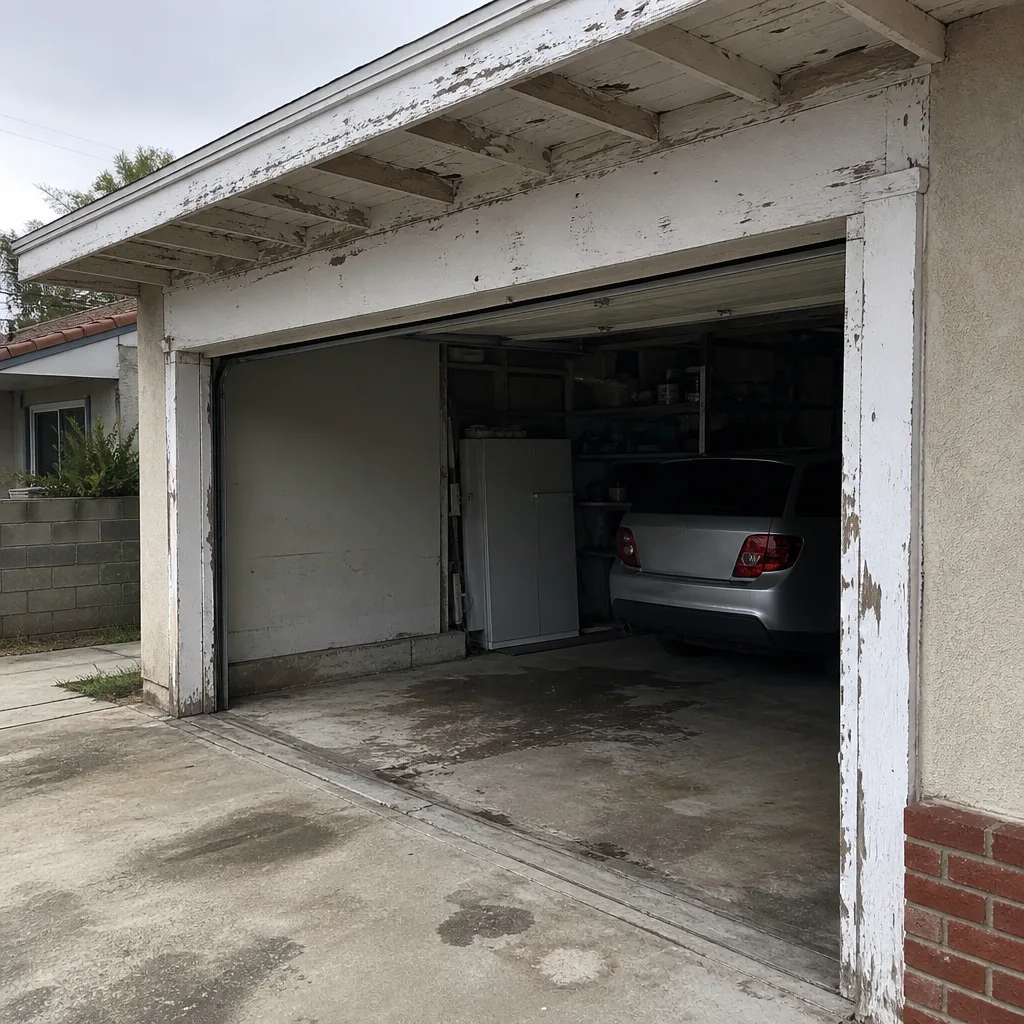 Before
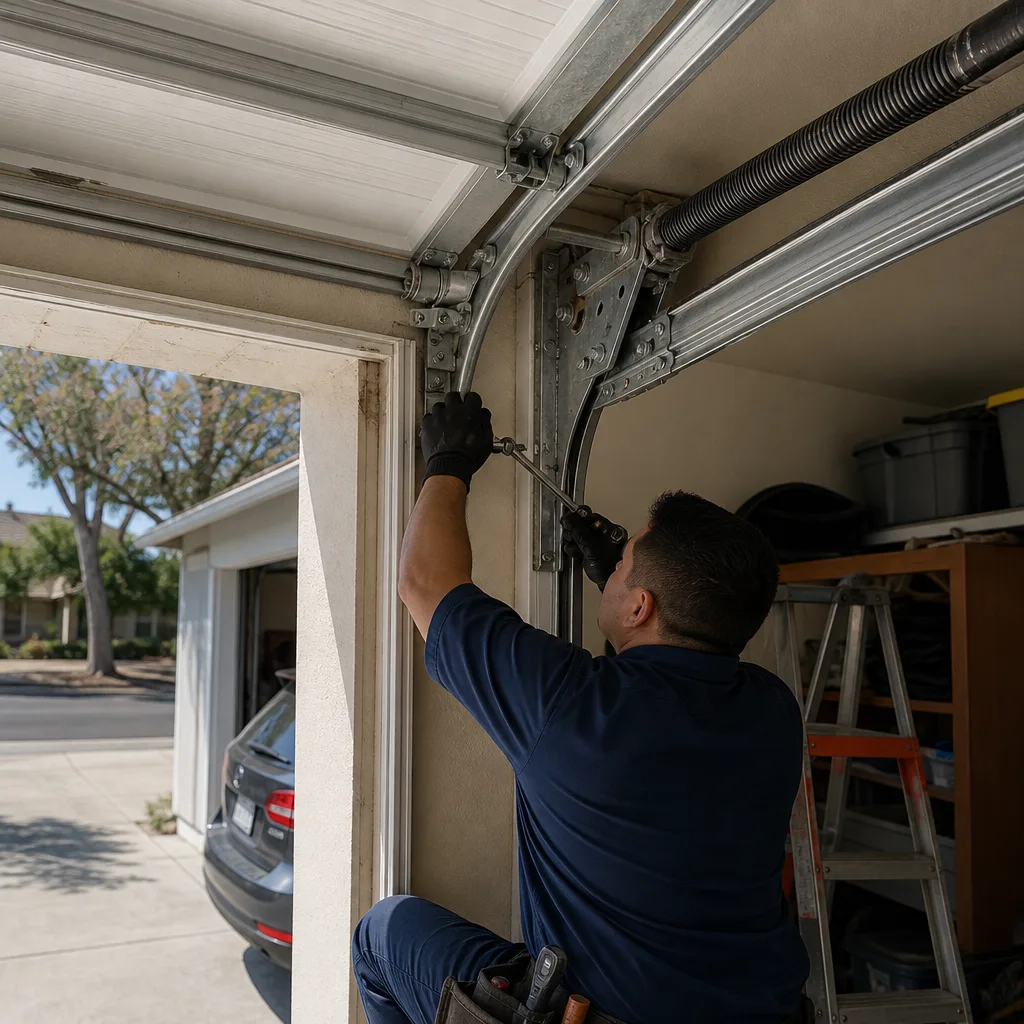 After
After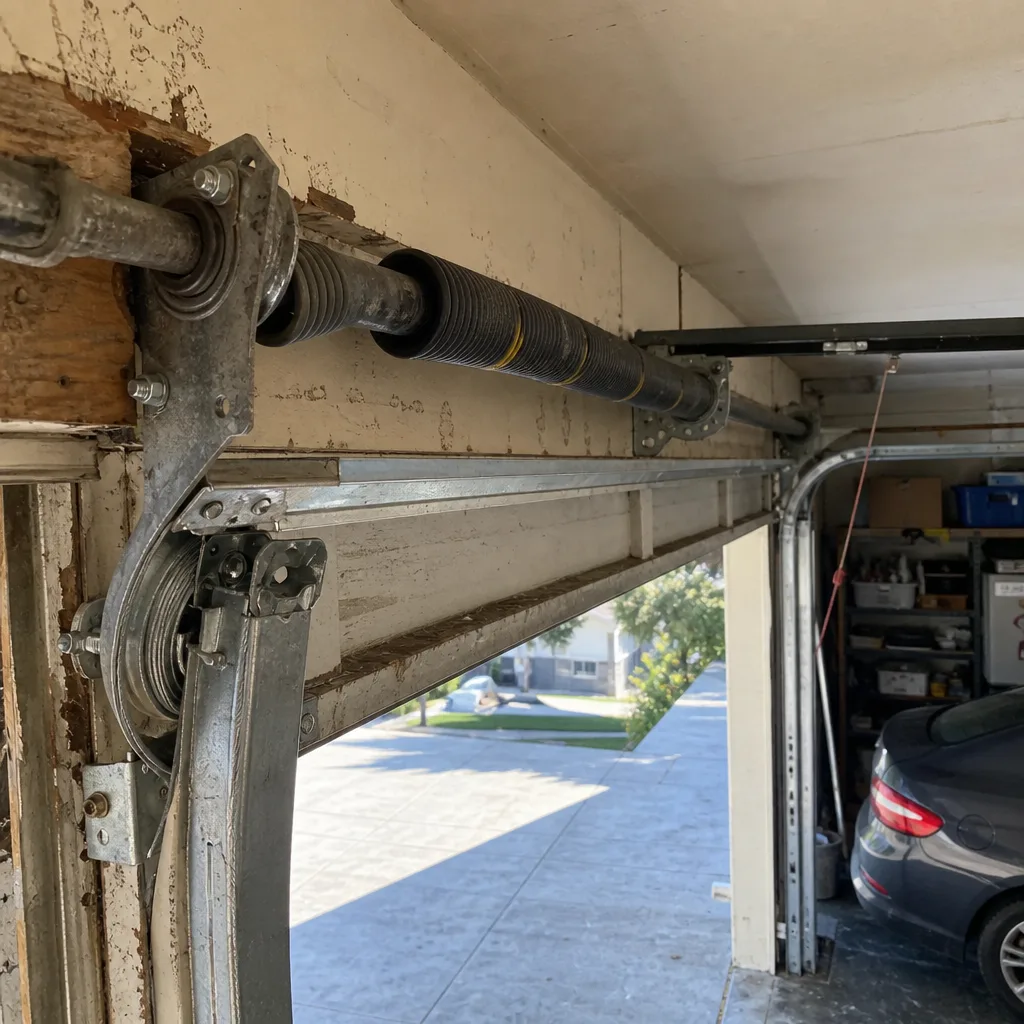 Before
 After
After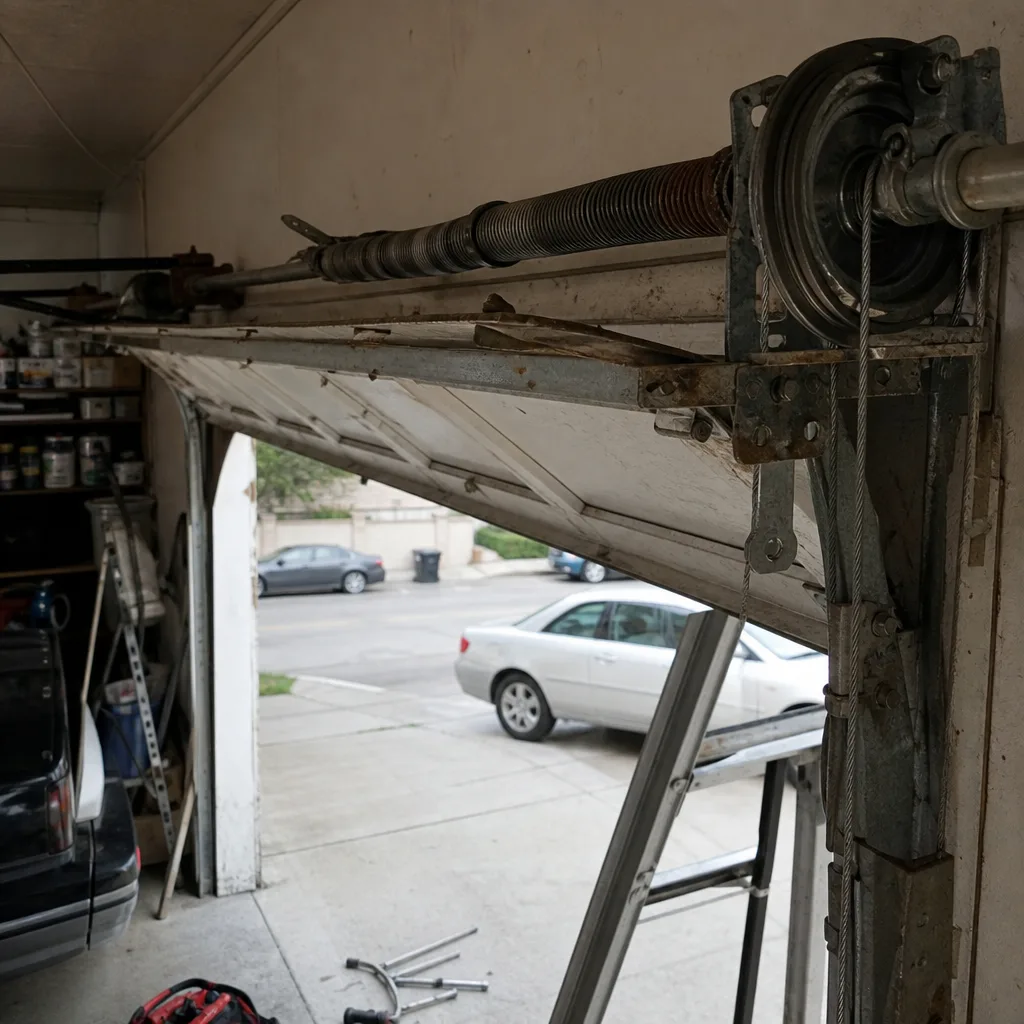 Before
 After
AfterDIY vs Professional Garage Door: The Los Angeles Homeowner’s Decision Guide
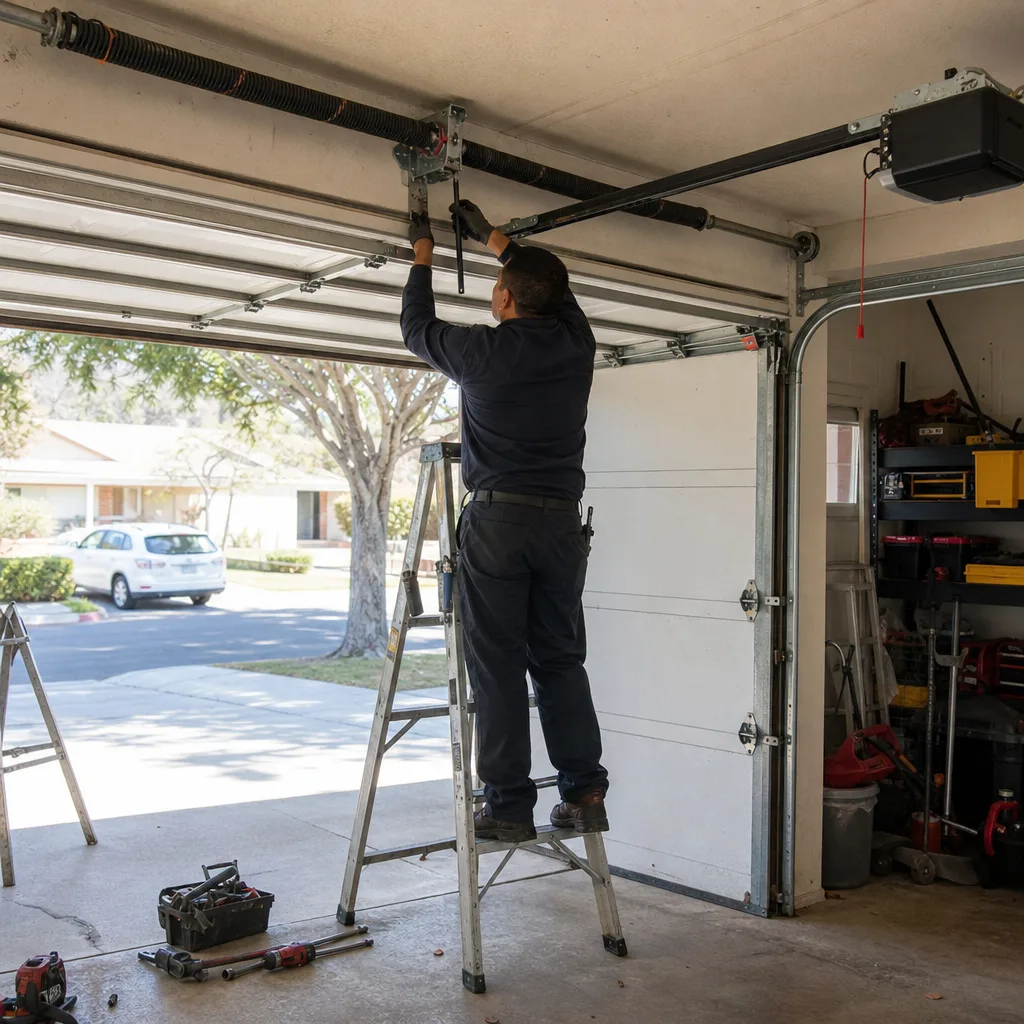
Torsion spring replacement is the most searched DIY garage door task in the country. It is also the one with the highest documented injury rate. A fully wound torsion spring stores roughly 100 foot-pounds of torque, and a slip with the wrong winding bar has sent steel rods through drywall in videos that have millions of views. The question is not whether you’re capable. It’s whether the consequence of one mistake is a scratch or a hospital bill. This guide walks Los Angeles homeowners through every major garage door task, separates what’s genuinely doable from what California law, physics, and warranty terms prohibit, and shows you how to use a written professional quote as your decision-making tool. For Garage Door Repair Maintenance Checklist for Los Angeles Homeowners and more guides & resources, see our blog.
Quick Answer
For most Los Angeles homeowners, the DIY-versus-professional decision comes down to four tasks: weatherstripping, roller replacement, lubrication, and opener remote programming are safe and legal to do yourself. Torsion spring replacement, cable replacement, track realignment, and panel replacement are not. The dividing line is stored energy. Components under high tension or load can cause serious injury with a single misstep, and the cost of professional repair in Los Angeles, typically $180 to $340 for spring replacement, is far less than an emergency room visit. Get a written, itemized quote first, compare it to DIY parts cost, and let the labor delta tell you whether the job is worth your time and risk.
Table of Contents
- The Real Question: Skill Is Not the Limiting Factor
- Task-by-Task: What You Can Do vs. What You Shouldn’t
- Torsion Springs vs. Extension Springs: Why the Distinction Matters
- How DIY Work Affects Your California Homeowner’s Insurance
- Parts Sourcing in Los Angeles: Where the DIY Savings Actually Go
- The Written-Price-First Test: A Better DIY Decision Tool
- Common Mistakes to Avoid
- When to Call a Professional
- Frequently Asked Questions
- The Bottom Line
BeforeAfterThe Real Question: Skill Is Not the Limiting Factor
Most homeowners who attempt garage door repair are not unskilled. They’ve assembled furniture, replaced faucets, maybe rewired a light switch. The problem with garage doors is that the danger is silent and invisible. A torsion spring does not look threatening. It looks like a coiled metal rod above your head. But the energy stored in that coil is what lifts a 150 to 250 pound door every single time you press the button. When that spring fails, it releases that energy in a fraction of a second. If your hand, arm, or face is in the path, the result is not a bruise.
We’ve seen what happens when a homeowner in Silver Lake or Sherman Oaks uses screwdrivers instead of proper winding bars. The screwdriver slips out of the cone, the spring unwinds violently, and the tool becomes a projectile. The videos online make it look manageable because the person filming got lucky. What the videos do not show is the follow-up hospital visit, the shattered car windshield, or the door that came off its tracks and pinned someone against the wall.
Los Angeles adds another layer. Many homes in the hills have doors on a slope, which means the door’s weight distribution is uneven. Older homes in Echo Park and Highland Park often have doors that were installed decades ago and modified by previous owners. The manual that came with the door, if you have it at all, no longer describes what’s actually on your ceiling. That’s the real question: not whether you can follow instructions, but whether the instructions match the reality in your garage.
Task-by-Task: What You Can Do vs. What You Shouldn’t
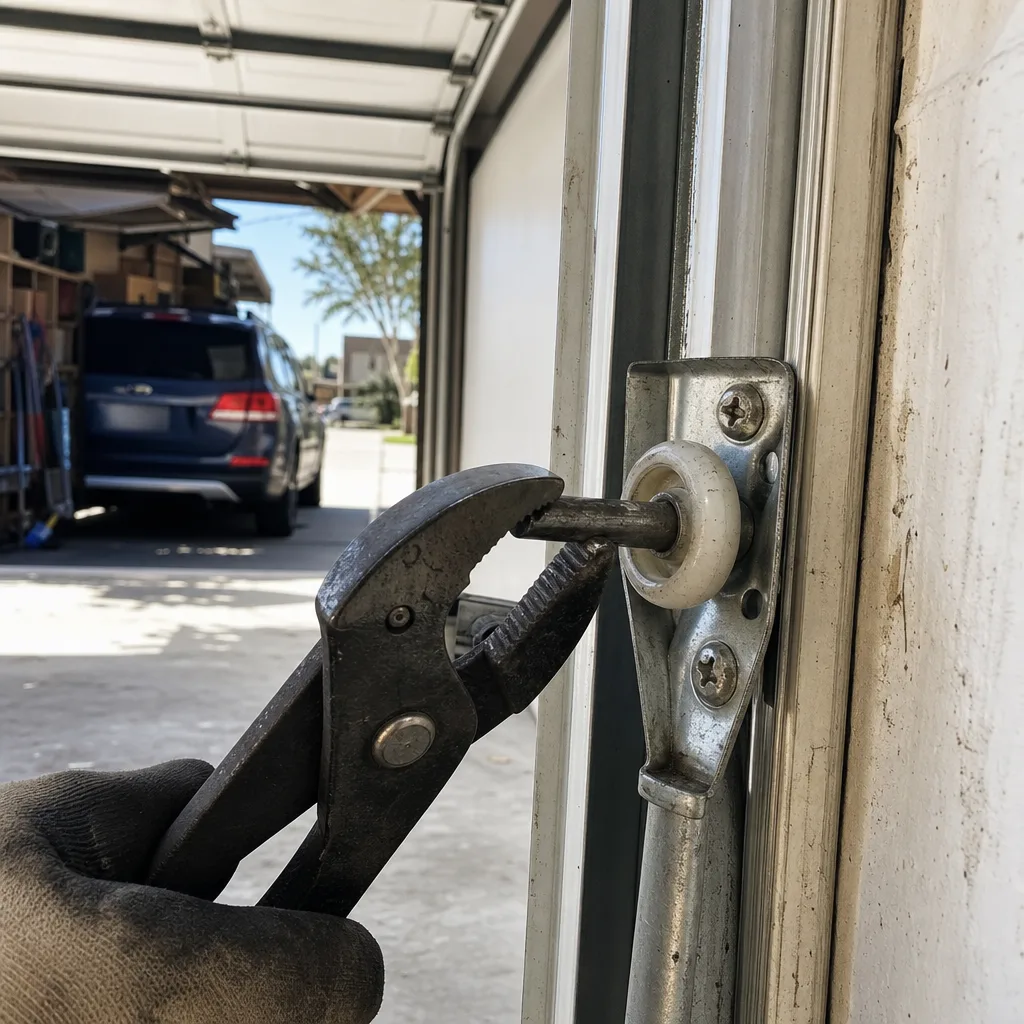
Not all garage door work is dangerous. Some of it is genuinely straightforward, takes under an hour, and requires nothing more than basic tools. The key is knowing where the line is. Here’s the breakdown.
Safe and Legal for Homeowners
- Weatherstripping replacement: The rubber seal along the bottom of the door and the vinyl trim around the frame. No tension involved. Takes 30 to 60 minutes. Parts cost $20 to $60 at any Los Angeles hardware store.
- Roller replacement: The small wheels that ride in the tracks. On most doors, you can pop out the old roller and slide in a new one using a flathead screwdriver to pry the track slightly. Exception: the bottom two rollers on a door with a lift cable are under cable tension. Leave those alone unless you know how to release the cable safely.
- Lubrication: White lithium grease on the chain or screw drive, silicone spray on rollers, hinges, and springs. Do this every six months in Los Angeles, especially in coastal neighborhoods like Venice and Playa del Rey where salt air accelerates corrosion. Ten minutes. Under $15.
- Opener remote programming: Reprogramming a remote or keypad is a button-press sequence. The manual for your LiftMaster or Chamberlain opener is available online. No tools, no risk, five minutes.
- Sensor realignment: The photo-eye sensors at the bottom of the door tracks get bumped out of alignment by bikes, trash cans, and kids. Loosen the wing nut, adjust until the indicator lights are steady, tighten. This fixes most “door won’t close” problems.
Not Safe, Not Legal, or Not Worth It for Homeowners
- Torsion spring replacement: Requires releasing and re-winding stored torque of 100+ foot-pounds. Wrong tool, wrong technique, one slip, and you’re in an ambulance. California does not prohibit homeowners from doing this, but manufacturer warranties are voided and insurance claims become complicated.
- Cable replacement: The lift cables run from the bottom brackets up to the spring assembly. They are under full door weight when the door is down. A snapped cable under tension cuts like a wire whip. Not a DIY job.
- Track realignment: The vertical and horizontal tracks must be perfectly plumb and parallel. A door that’s off by half an inch binds, jumps, and eventually derails. Adjusting tracks requires releasing tension from the spring system first.
- Panel replacement: A single panel on a sectional door weighs 40 to 80 pounds and is under spring counterbalance. Disconnecting it without knowing the door’s balance point risks a cascading failure of the entire door system.
- Full door installation: A new door is 150 to 250+ pounds, assembled in sections, and must be balanced against the spring system precisely. California building codes apply to new installations, and most manufacturers require licensed installation to honor the warranty. Garage Door Installation in Los Angeles requires permits in some municipalities and always requires precision.
Torsion Springs vs. Extension Springs: Why the Distinction Matters
Most homeowners do not know there are two fundamentally different spring systems, and the difference is not cosmetic. It’s the difference between a controlled, guidable release of energy and an uncontrolled, unpredictable one.
Extension springs run along the horizontal tracks on both sides of the door. They stretch when the door closes and contract when it opens. When an extension spring fails, it typically snaps and flies backward along the track. If a safety cable is installed, which California code requires on new installations, the spring is contained. If not, the spring becomes a metal missile traveling at high speed toward whatever is behind it, which in many Los Angeles garages is a parked car, a water heater, or a human being.
Torsion springs are mounted on a steel tube above the door opening. They work by twisting, not stretching. The spring is wound under tension, and that wound tension is what lifts the door. A torsion spring under full load stores enough energy to lift the door completely on its own. When the spring fails, the release is explosive: the spring unwinds in a violent burst, the winding cone can shatter, and any tool inserted into the cone becomes a projectile. The math is straightforward. A typical residential torsion spring is wound 7 to 8 full turns, each turn adding approximately 12 to 15 foot-pounds of stored torque. Total stored energy: 84 to 120 foot-pounds. That’s enough to break bone.
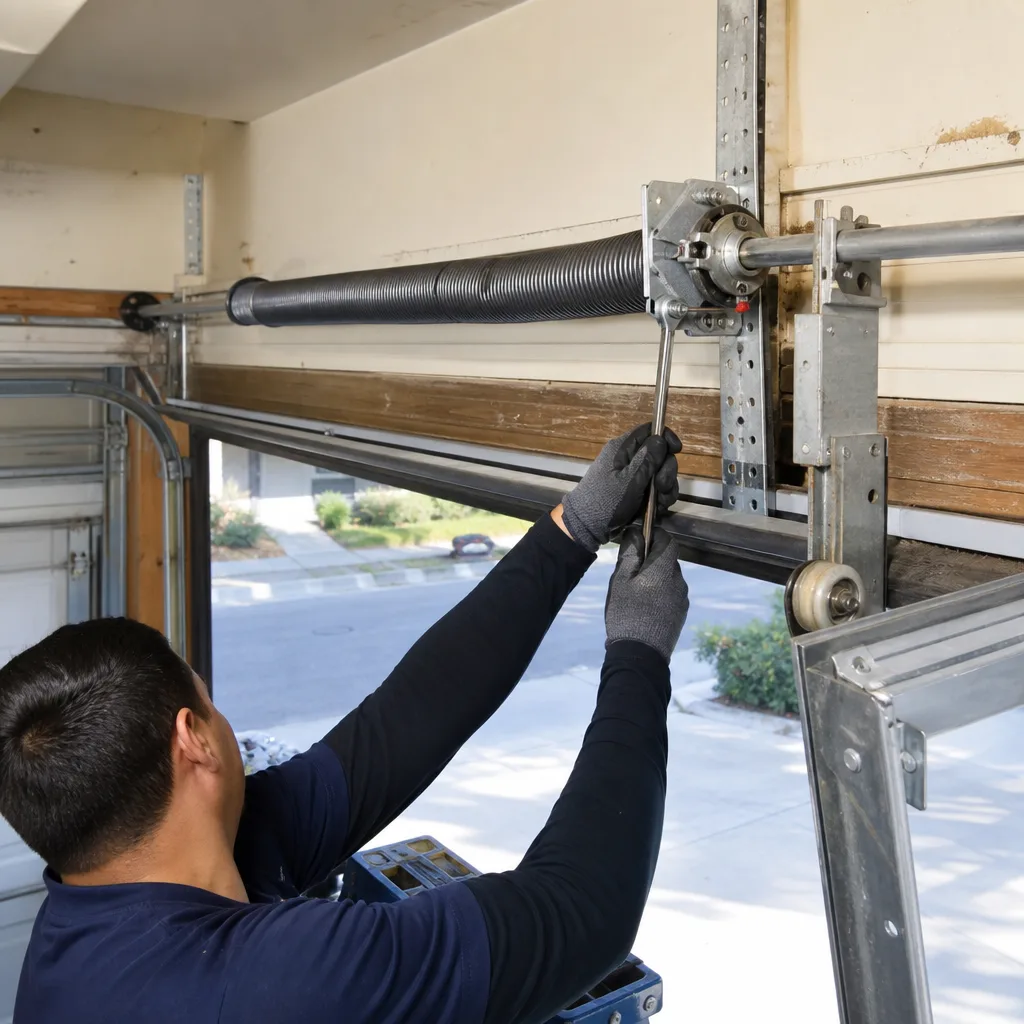
The tooling matters. Professional technicians use hardened steel winding bars that are exactly the right diameter for the cone’s holes. They’re typically 18 inches long, giving the technician mechanical advantage and keeping their hands and face out of the release path. Homeowners improvise with screwdrivers, Allen wrenches, or rebar. Those tools are the wrong diameter, the wrong length, and the wrong steel. They slip. Every technician working on Garage Door Repair in Los Angeles has seen the aftermath.
“I watched a video” is not sufficient preparation. The video does not show you the feel of a winding bar starting to slip. It does not show you how to know when the spring has reached proper tension without a torque gauge. It does not show you what happens when the set screws on the winding cone are not tightened in the correct sequence. Those are the details that separate a completed repair from a 911 call.
How DIY Work Affects Your California Homeowner’s Insurance
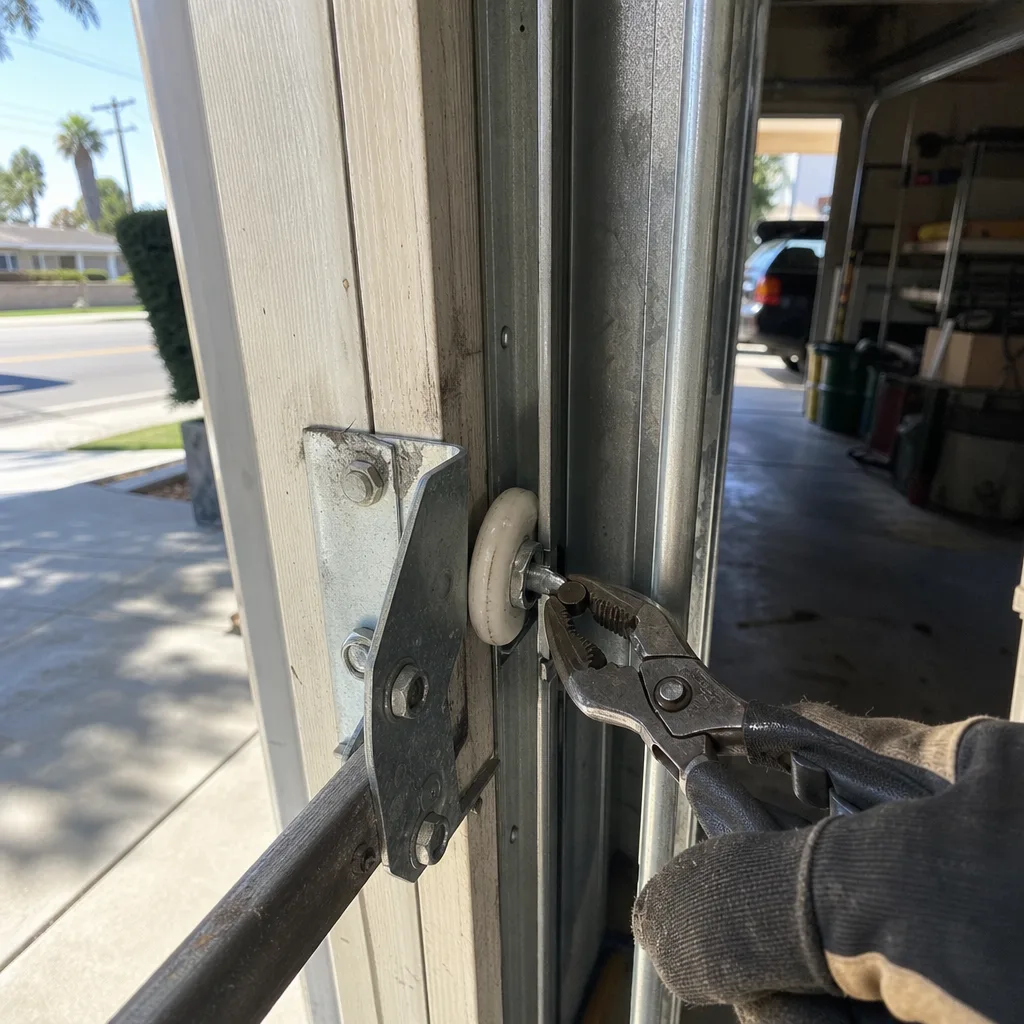
This is the section most guides skip, and it’s the one that matters most after something goes wrong. California homeowner’s insurance policies do not blanket-exclude DIY repairs. But they do investigate, and the documentation you cannot produce is what determines whether a claim is paid or denied.
Here’s what a carrier will request after a garage door-related injury or property damage event:
- Proof of the component’s condition before the repair. If you cannot document the spring, cable, or track condition before you touched it, the carrier can argue the damage was pre-existing or caused by your intervention.
- Proof of proper parts and tooling. If you installed a spring rated for a different door weight or used an improvised winding tool, the carrier may classify the loss as resulting from negligence.
- Proof of manufacturer compliance. Most door manufacturers require professional installation for warranty coverage. If the failed component was DIY-installed and the door was under warranty, the carrier may deny the claim on the basis that the manufacturer would not have covered it.
- Photographic evidence of the work. Insurance adjusters in Los Angeles routinely ask for before, during, and after photos. Most DIY repairs produce none.
This is where the documentation difference becomes concrete. A professional repair produces a paper trail: a written scope, an itemized invoice, a photo record of the failed part, and a warranty. A DIY repair produces a credit card receipt for parts. When an adjuster asks you to prove the spring was correctly rated for your door, what do you show them?
In Los Angeles, where property values in neighborhoods like Brentwood, Los Feliz, and Pasadena make garage door claims worth tens of thousands of dollars, insurers scrutinize every claim. The cost of professional repair, even on the high end, is a rounding error compared to a denied claim for a door that fell on a car or a family member.
Parts Sourcing in Los Angeles: Where the DIY Savings Actually Go
The DIY math looks simple on paper: a torsion spring costs $60 to $100 online, while a professional charges $180 to $340 for the same repair. That’s a $100 to $240 savings. But the math changes when you look at what you can actually buy as a homeowner in Los Angeles, and what it actually costs you.
Here’s the parts reality:
- Public distributors in Los Angeles stock generic parts. Places like Home Depot, Lowe’s, and local hardware stores carry universal springs, generic rollers, and basic cables. These are not the same as OEM parts. A generic spring may be the right length and the right wire gauge but have a different inner diameter, which changes the fit on the tube. A generic roller may have unsealed bearings that fail in 18 months instead of 10 years.
- OEM parts for Clopay, Amarr, Wayne Dalton, and Raynor doors are dealer-only. You cannot buy a genuine Clopay torsion spring at a retail store in Los Angeles. You can buy a “compatible” spring with a different coil count, different wire diameter, or different inner diameter. That difference means the door balance is slightly off, which means the opener motor works harder, which means the opener fails sooner.
- Dealer-only markup erases the savings. When a homeowner can find OEM parts online, they typically pay a significant markup over dealer cost. A spring that costs a Los Angeles dealer $35 wholesale sells to a homeowner for $90 to $120 online. Add shipping, and your $100 DIY savings is suddenly $20 before you factor in your time and risk.
- Wrong-part corrections cost double. If you buy the wrong spring, which happens frequently because door weight is not stamped on the old spring that snapped, you install it, test the door, realize the balance is wrong, and start over. You have now paid for two springs and lost a Saturday.
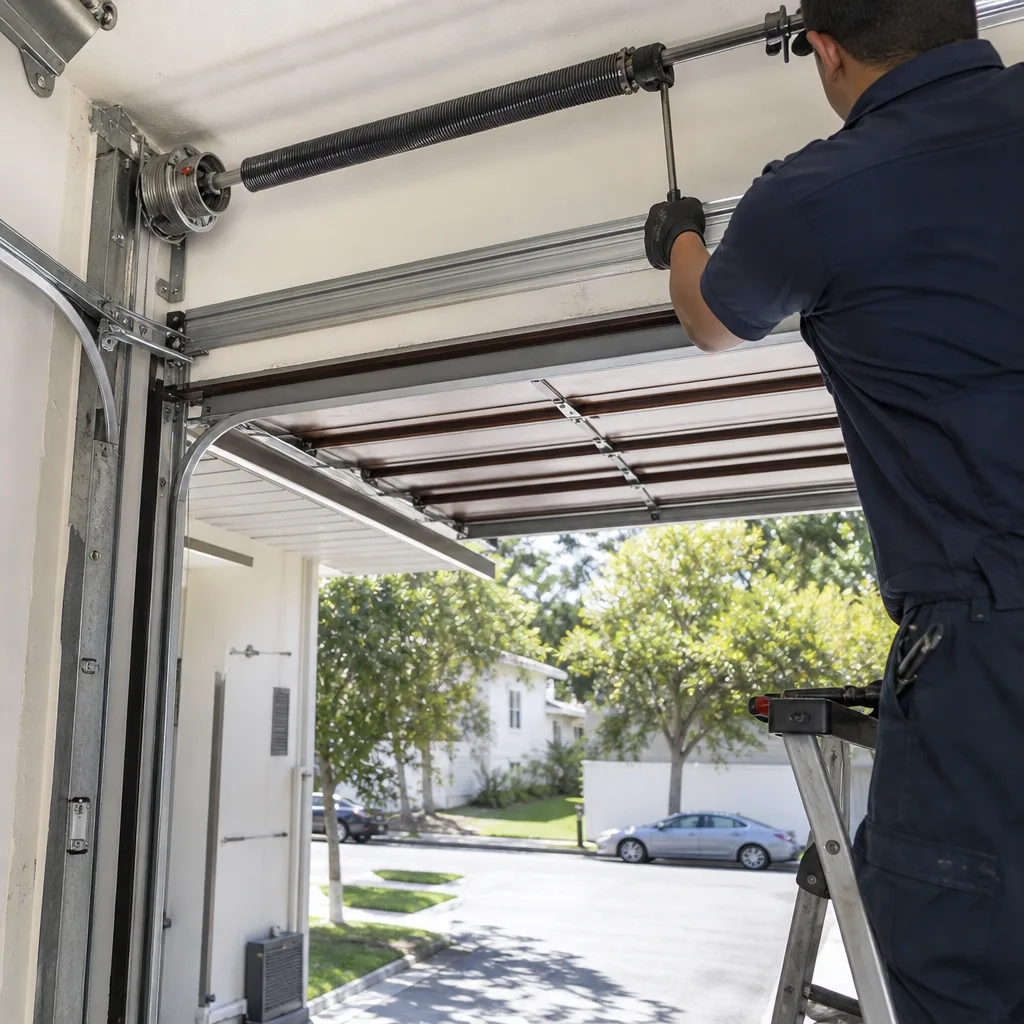
Professionals in Los Angeles carry multiple spring sizes on the truck. A technician arrives with a scale to weigh the door, calculates the correct spring spec, and installs a matched pair the same day. The parts are OEM or equal-spec, and the work carries a written warranty. When you factor in the cost of a wrong part, a second trip to the hardware store, and the value of your time, the DIY savings on most repairs is under $100, which does not account for the risk of a mistake.
The Written-Price-First Test: A Better DIY Decision Tool
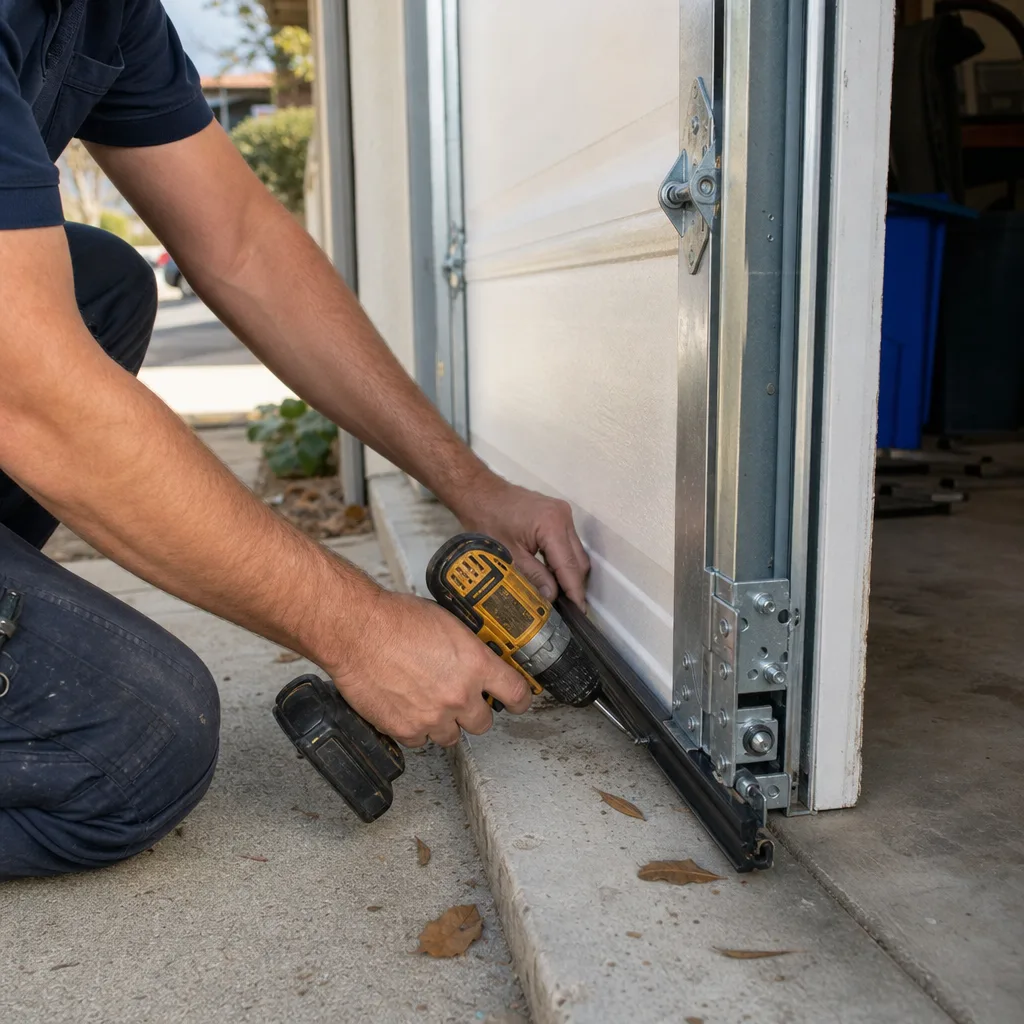
Here’s a method we recommend to every homeowner who is on the fence, and it works for any contractor, not just us.
- Get a written, itemized quote from a licensed professional. The quote should list the part, the part number or spec, the labor line item, and the total. If a contractor won’t put it in writing, that’s the end of the conversation. Clause 1 of The Haven Standard, the documentation system Servo Garage Doors operates under, requires a flat, written price and written scope before any work starts, with no exceptions.
- Look at the parts line item. That’s what the component actually costs at retail or dealer cost. It should be a real number, not “parts and labor” lumped together.
- Price the same part as a DIY purchase. Search for the exact part number or spec. If the quote lists a 0.225-inch wire diameter, 2-inch inner diameter torsion spring, search for that. Don’t search for “garage door spring” and grab the cheapest result.
- Calculate the labor delta. Subtract the professional parts cost from the DIY parts cost. The difference between that number and the total quote is the labor delta, and that labor delta is the actual cost of doing it yourself versus hiring out.
Here’s a real example from a recent Los Angeles job. A homeowner in Studio City had a snapped torsion spring. The written quote was $265 total: $95 for a matched pair of springs, $170 for labor. The homeowner priced the same spec springs online at $85 with shipping. The labor delta was $180. That $180 bought the homeowner a licensed technician, the right tooling, a written warranty, a photo record of the failed spring, and zero risk of a winding bar through the drywall. The homeowner hired us.
Run this test on your own repair. If the labor delta is under $50, and the task is on the safe list above, DIY is reasonable. If the labor delta is over $100 and the task involves tension, the professional is the cheaper option when you price in risk, time, and the possibility of buying the wrong part twice.
For homeowners dealing with an opener rather than the door itself, the same test applies to Garage Door Opener Repair & Installation in Los Angeles. A logic board replacement is a board swap, but diagnosing a failed logic board versus a failed limit switch versus a bad trolley carriage requires a multimeter and experience. The written quote tells you what the technician actually found.
Common Mistakes to Avoid
- Using screwdrivers or Allen wrenches as winding bars. These tools are not hardened for the torque load of a torsion spring. They bend, slip, or snap, and when they do, the stored energy releases into whatever is closest. This is the single most common cause of garage door injuries.
- Replacing one spring instead of a matched pair. Torsion springs wear at roughly equal rates. If one snapped, the other is near the end of its cycle life. Replacing one leaves you with an unbalanced door and a second repair visit within months. Professionals replace both springs together.
- Skipping the door balance test after any spring work. Disconnect the opener and manually lift the door halfway. A properly balanced door stays in place. A door that drops or rises has incorrect spring tension, which will burn out your opener motor, whether it’s a Chamberlain, LiftMaster, or any other brand, within months.
- Buying the cheapest spring online without verifying the wire diameter, inner diameter, and length. A spring that’s off by one gauge or one inch changes the door’s balance point. The opener compensates by working harder, which shortens its life. A $40 spring that kills a $300 opener is not savings.
- Working alone. If a door panel slips or a spring releases while you’re on a ladder, there’s no one to call 911. In Los Angeles, response times for medical emergencies vary widely by neighborhood. A second person is not a luxury.
- Ignoring the safety cable on extension springs. Many older Los Angeles homes have extension spring systems without safety cables. If the spring snaps, it becomes a projectile. Installing safety cables is straightforward, but if you’re not sure it’s done right, hire it out.
- Assuming the door is the problem when the opener is the problem, or vice versa. Homeowners frequently replace an opener when the real issue is a failing spring that’s overloading the motor. A written diagnostic from a professional solves this before you spend $200 on the wrong fix.
When to Call a Professional
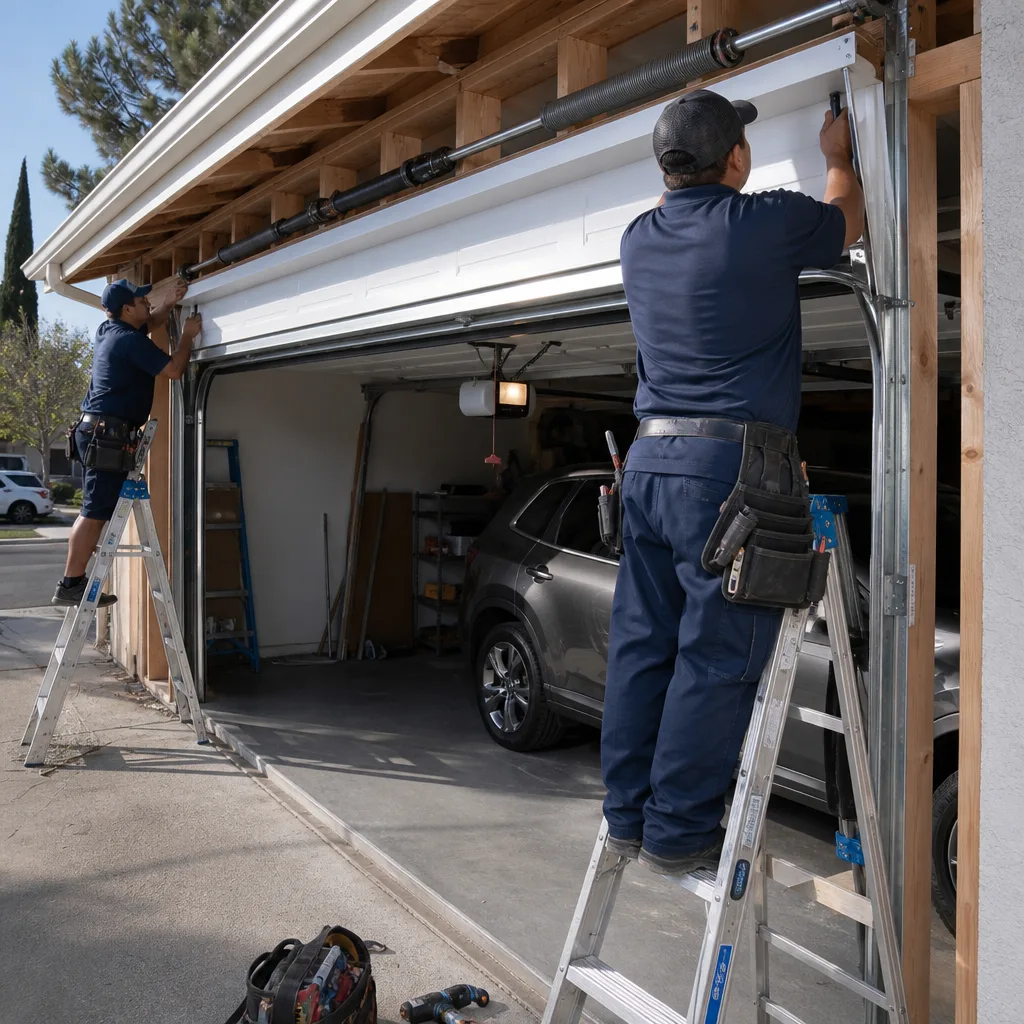
Call when the job involves stored energy, structural weight, or a warranty you want to keep. That means torsion springs, extension springs, lift cables, tracks, panels, and full door installations. Call when the door is off its tracks, when a cable has snapped, when the door is grinding or shaking, or when the opener is making noise but the door isn’t moving. Call when you’ve already tried a DIY fix and the problem is worse than it was before, which is unfortunately common. Servo Garage Doors Los Angeles offers free estimates in Los Angeles, and every quote is a flat, written price with a written scope before any work starts. Call (213) 348-6550 and a real person answers, 24/7, including holidays.
Frequently Asked Questions
Garage door spring replacement in Los Angeles typically costs $180 to $340 for a matched pair of torsion springs, including parts and labor. Extension spring replacement runs $150 to $250. For a full breakdown of what drives these numbers, see our Garage Door Cost Breakdown: The Los Angeles Homeowner’s Reference for 2026. The price depends on the door’s weight, the spring’s wire diameter and length, and whether the springs are standard or high-cycle rated. High-cycle springs, rated for 25,000 to 50,000 cycles instead of the standard 10,000, cost $30 to $60 more per spring and are worth it for any door that opens more than twice a day. Call (213) 348-6550 for an exact written quote, estimates are free.
Yes, California law does not prohibit a homeowner from replacing their own garage door spring. For details on permits and compliance, see Garage Door Permits, Codes & Inspections in CA: What You Need to Know. However, doing so voids most manufacturer warranties, complicates homeowner’s insurance claims if something goes wrong, and requires specialized tooling that most homeowners improvise incorrectly. Legal is not the same as safe or smart. The stored energy in a wound torsion spring is enough to break bone, and the injury rate for DIY spring replacement is the highest of any home repair task.
Weatherstripping replacement, roller replacement on the top and middle positions, lubrication, opener remote programming, and photo-eye sensor realignment are all safe for a homeowner with basic tools. None of these tasks involves releasing or rewinding stored spring tension. Any task that touches the springs, cables, tracks, or bottom brackets requires releasing tension first, and that’s where the risk begins.
Look at the spring above the door. If you see a visible gap in the coil, the spring is already broken. If the door feels heavy when you disconnect the opener and lift it manually, the spring is losing tension. If the door opens unevenly or the opener sounds like it’s straining, the spring is near the end of its cycle life. Most standard springs in Los Angeles fail after 7 to 10 years of normal use, sooner in coastal neighborhoods where salt air accelerates metal fatigue.
It depends on the specifics of your policy and the documentation you can produce. California carriers typically cover sudden and accidental damage, but they also investigate. If the damage resulted from a repair that used incorrect parts or improvised tooling, the carrier may deny the claim on the basis of negligence. If the damage was to the door itself, not a person or a third party, many policies exclude it outright as a maintenance issue.
Servo Garage Doors services all eight major brands: LiftMaster, Chamberlain, Genie, Clopay, Amarr, Wayne Dalton, Craftsman, and Raynor. Our technicians carry OEM and equal-spec parts for these brands on the truck, so most spring replacements, opener repairs, and roller replacements are completed same-day. Every job includes a written scope and price before work starts, and a documented photo record when the technician leaves.
Yes, and the process is simpler than most homeowners expect. Bring your written estimate from another company, and Servo Garage Doors will provide a free second opinion, no coupon or code required. A legitimate written quote should itemize parts and labor separately. If it doesn’t, that’s a red flag. The right response to a vague quote is not to negotiate, it’s to get a better quote.
The Bottom Line
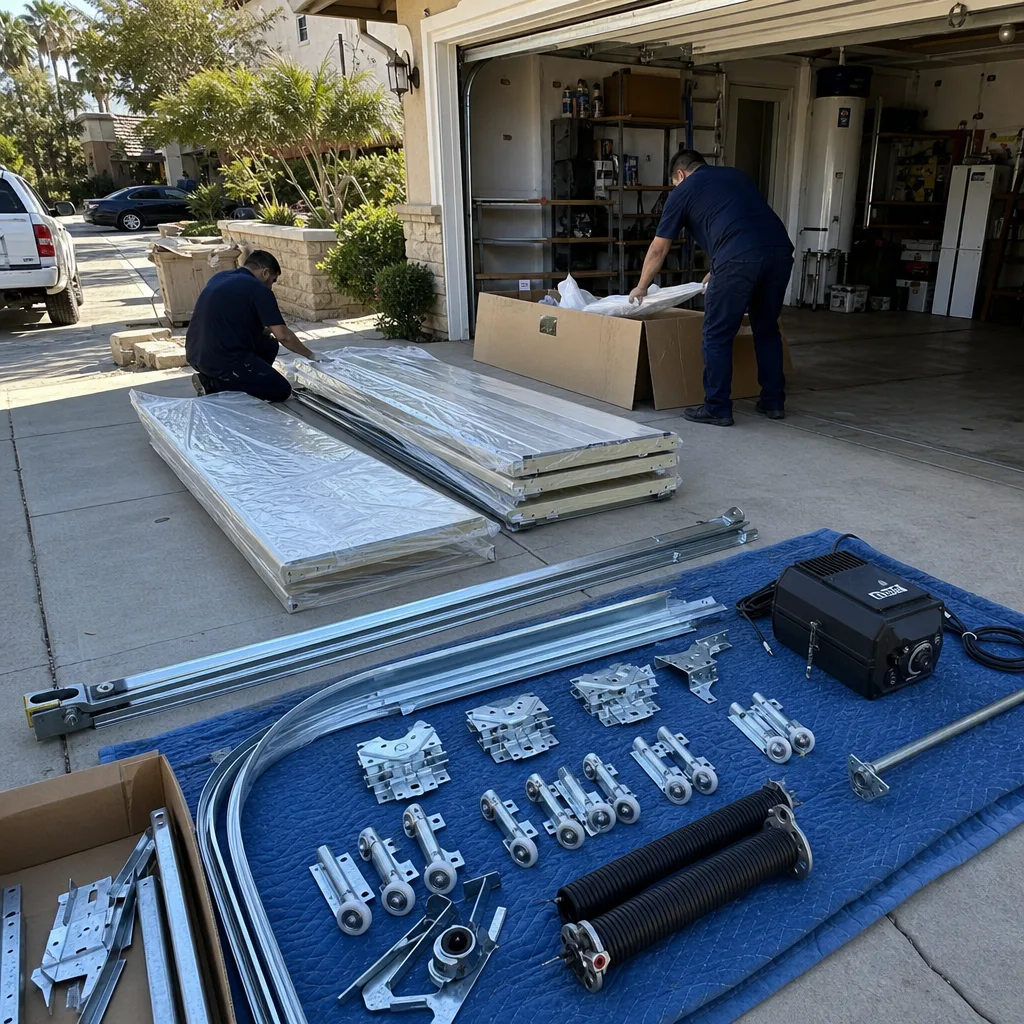
The DIY-versus-professional decision for garage doors in Los Angeles comes down to one variable: stored energy. Weatherstripping, lubrication, remote programming, and top roller replacement are safe, straightforward, and genuinely DIY-appropriate. Torsion springs, lift cables, tracks, and panels require specialized tooling, carry serious injury risk, and void warranties when done wrong. Run the written-price-first test on any repair: get an itemized quote, price the parts yourself, and look at the labor delta. When that delta is under $50 and the task is on the safe list, do it yourself. When it’s over $100 and involves tension, hire a professional. The cost of getting it wrong in Los Angeles is rarely just the cost of the repair.
For a free estimate on any garage door repair or installation in Los Angeles, call (213) 348-6550. A real person answers, 24 hours a day, 7 days a week. Every job is quoted with a flat, written price and written scope before any work begins, and every visit closes with a documented photo record of what we found and what we did. That’s Clause 1 and Clause 4 of The Haven Standard, and we’ve never made an exception since 2015.
Written by Marcus Deller, Owner at Servo Garage Doors Los Angeles, serving Los Angeles since 2015.