
Last updated September 19, 2026
Full 25-point door and opener safety check with every visit - springs, cables, rollers, tracks, and your LiftMaster or Chamberlain opener included
You get a price before we start. It does not change when the truck arrives.
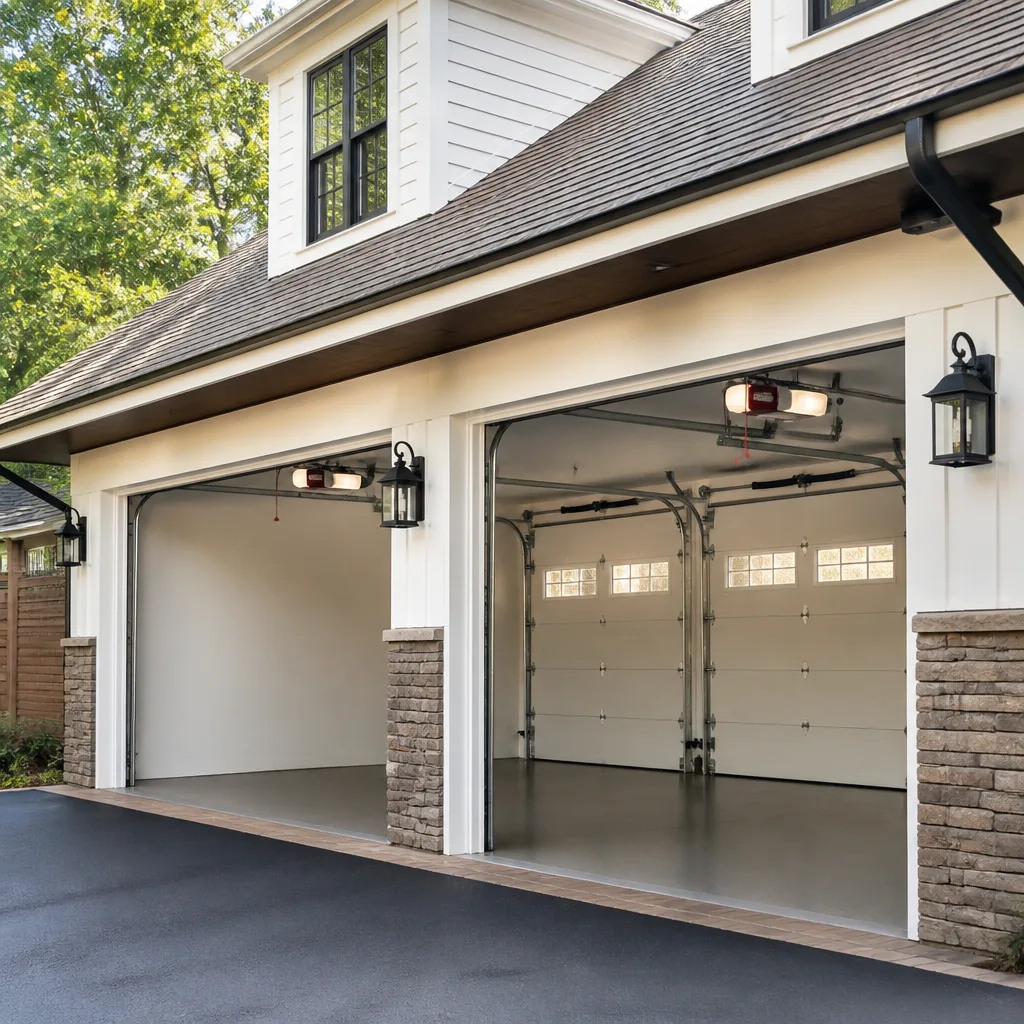
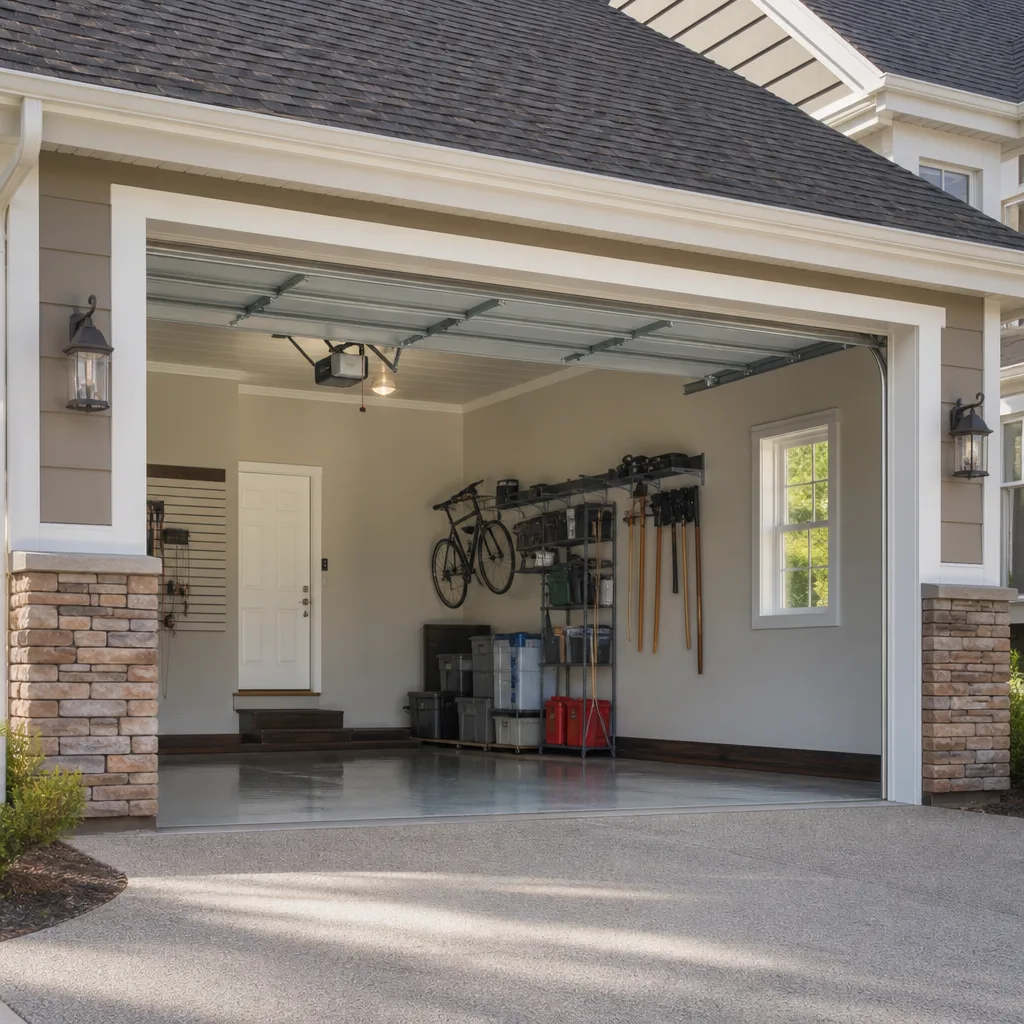
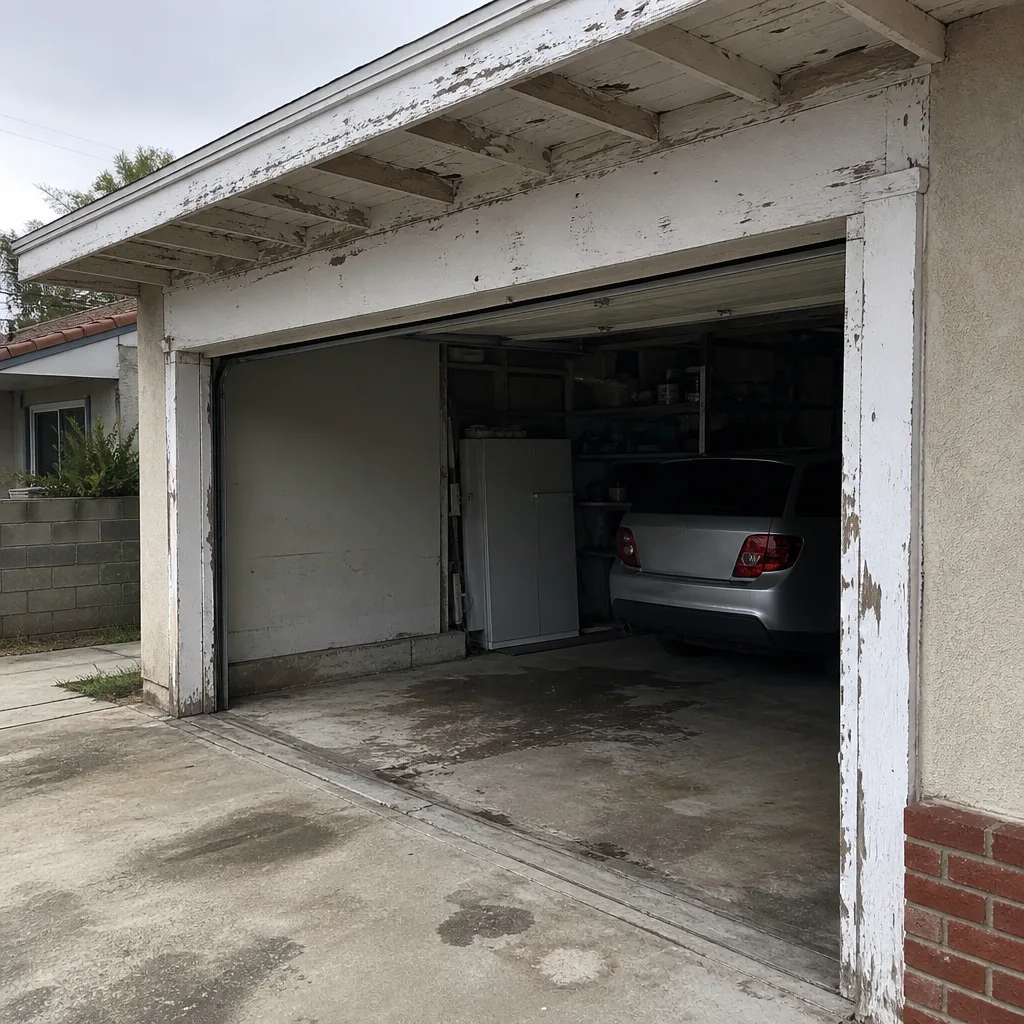 Before
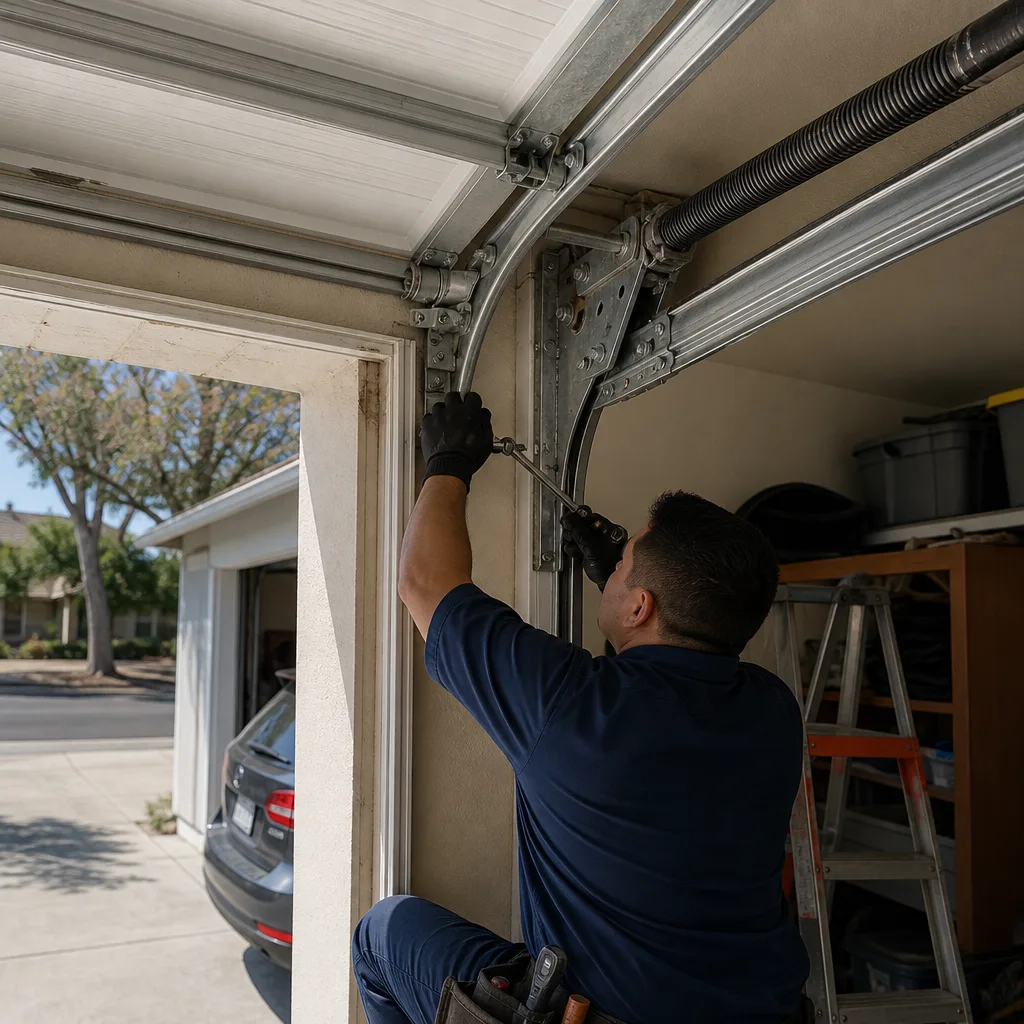 After
After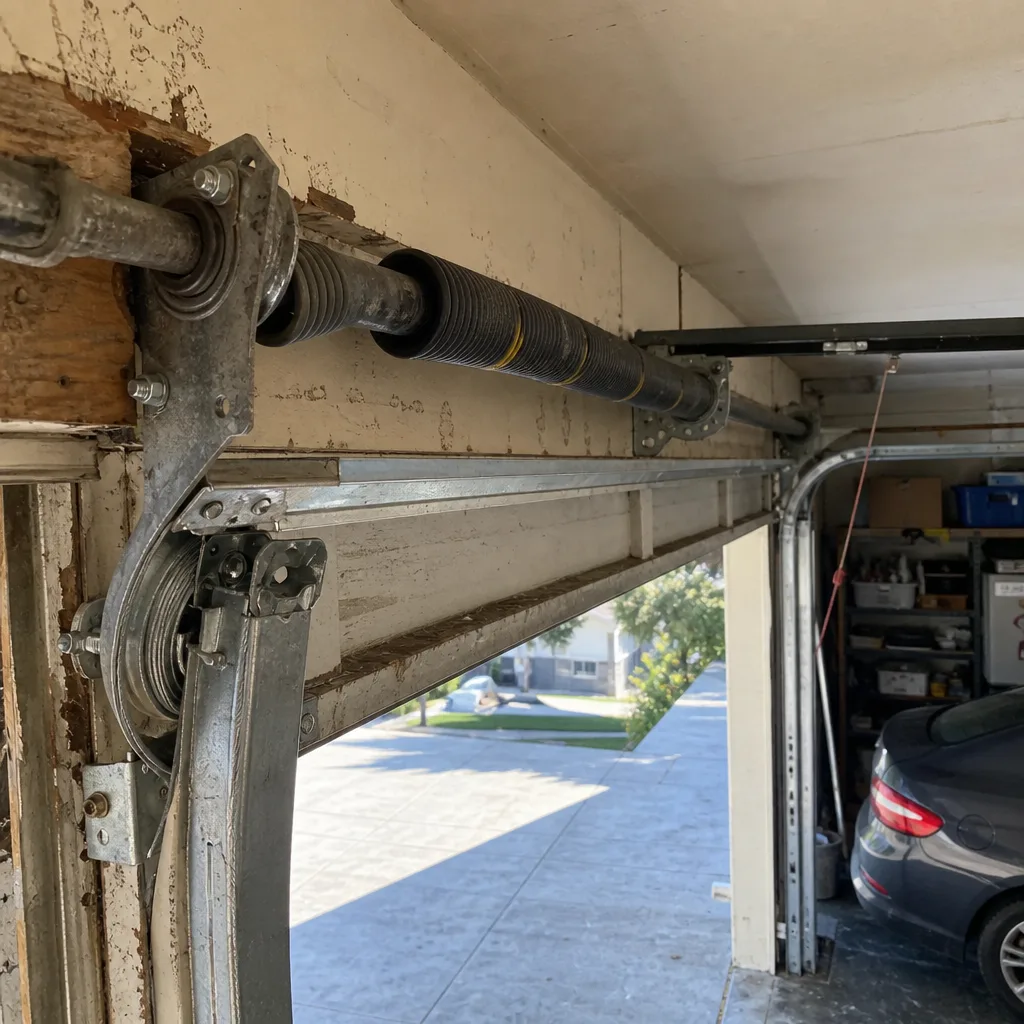 Before
 After
After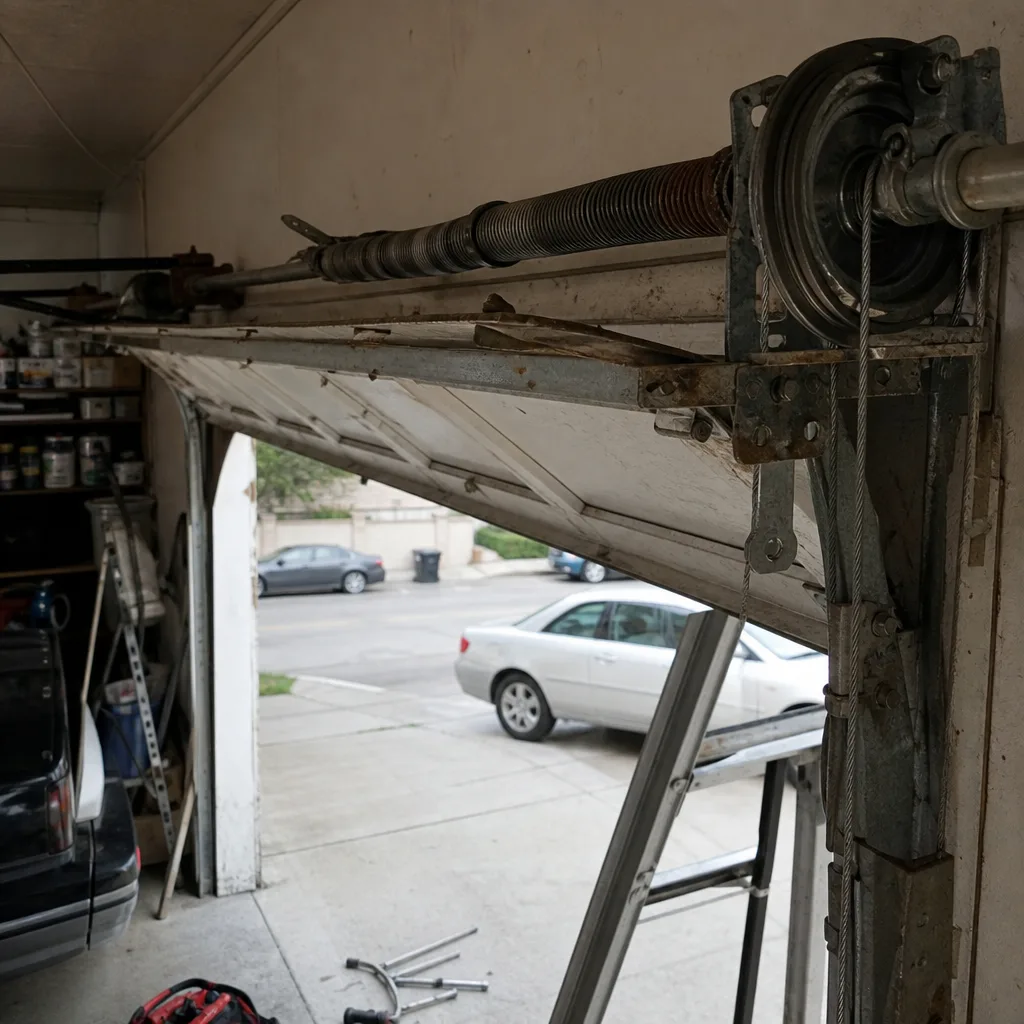 Before
 After
AfterGarage Door Warning Signs: A Los Angeles Homeowner’s Reference Guide
Most garage door warning-sign guides start with the obvious: the door won’t open, the spring snapped, the cable is dangling. By then, you’re already in an emergency call at 11 p.m. This guide is different. The signs that predict failure three to six months out are mechanical and auditory patterns that a homeowner in Los Angeles can document with a phone camera and send to a technician before the emergency ever happens. A garage door that hesitates for half a second before reversing on the way down isn’t “acting up.” It’s a force-sensitivity threshold drifting out of UL 325 compliance, meaning the auto-reverse may not stop the door on a child or a pet before the next service visit. That half-second hesitation has a name, a cause, and in many cases a $0 adjustment if you catch it early.
We’re going to walk through what to listen for, what to look at, how to document it, and when to make the call. You’ll learn how to identify a failing torsion spring without touching it, how to test your door’s balance in ten seconds, and how to photograph a warning sign so a technician can quote you accurately before they ever arrive at your door.
Quick Answer
The most common early garage door warning signs in Los Angeles are rhythmic squeaking from a torsion spring losing lubrication, popping sounds from a spring beginning to fatigue, grinding from a worn opener gear, cable slap from loose cables, and a door that hesitates before reversing or drifts down when stopped. Most of these can be documented with a phone camera before calling a technician, and several are repairable for under $200 if caught before the component fails completely.
Table of Contents
- Auditory Warning Signs by Component: What Grinding, Popping, Squeaking, and Cable Slap Actually Mean
- Visual Inspection Protocol for Torsion Spring Fatigue: Finding Hairline Cracks Without Touching the Spring
- The 10-Second Door Balance Test: How to Measure Spring Counterbalance at Home
- Slow Door, Two Causes: Opener Motor Strain vs. Track Misalignment
- How to Photograph a Warning Sign Before Calling a Technician
- Los Angeles Climate and Code Factors That Accelerate Garage Door Wear
- Common Mistakes to Avoid
- When to Call a Professional
- Frequently Asked Questions
BeforeAfterAuditory Warning Signs by Component: What Grinding, Popping, Squeaking, and Cable Slap Actually Mean
Your garage door talks before it fails. The sounds it makes are specific to the component that’s wearing out, and once you know the vocabulary, you can identify the problem with your ears before you ever look at the hardware. We’ve had customers in Silver Lake and Pasadena describe sounds over the phone with surprising accuracy because the patterns are that distinct.
Here’s what each sound indicates:
- Rhythmic squeaking that matches the door’s travel speed: This is almost always a torsion spring losing lubrication. The spring coils rub against themselves as they wind and unwind, and the friction creates a squeak that rises and falls as the door moves. It’s a maintenance issue, not a structural one, but left alone for six months it accelerates spring wear because the friction generates heat.
- A single loud pop or bang from above the door: That’s a torsion spring breaking. The spring is under hundreds of pounds of tension, and when it fails, the release of that energy sounds like a gunshot inside the garage. If you hear this, stop using the door and call a professional. The spring has snapped and the door now weighs its full 150 to 300 pounds with no counterbalance.
- Grinding or growling from the opener motor housing: This is the nylon gear inside the opener stripping. Chamberlain and LiftMaster openers made before 2010 used a white nylon worm gear that’s a known wear point. The gear teeth shear off gradually, and the grinding gets louder until the opener motor spins but the door doesn’t move. This is an opener repair, not a door repair.
- Cable slap against the track or wall: The lift cables on each side of the door should stay taut throughout the entire travel cycle. When they go slack at any point, they whip against the track or the wall and make a slapping sound. Slack cables mean the spring tension isn’t balanced across the door, or a cable is about to come off the drum. This is a warning sign you want to catch before the cable jumps and the door cocks sideways in the opening.
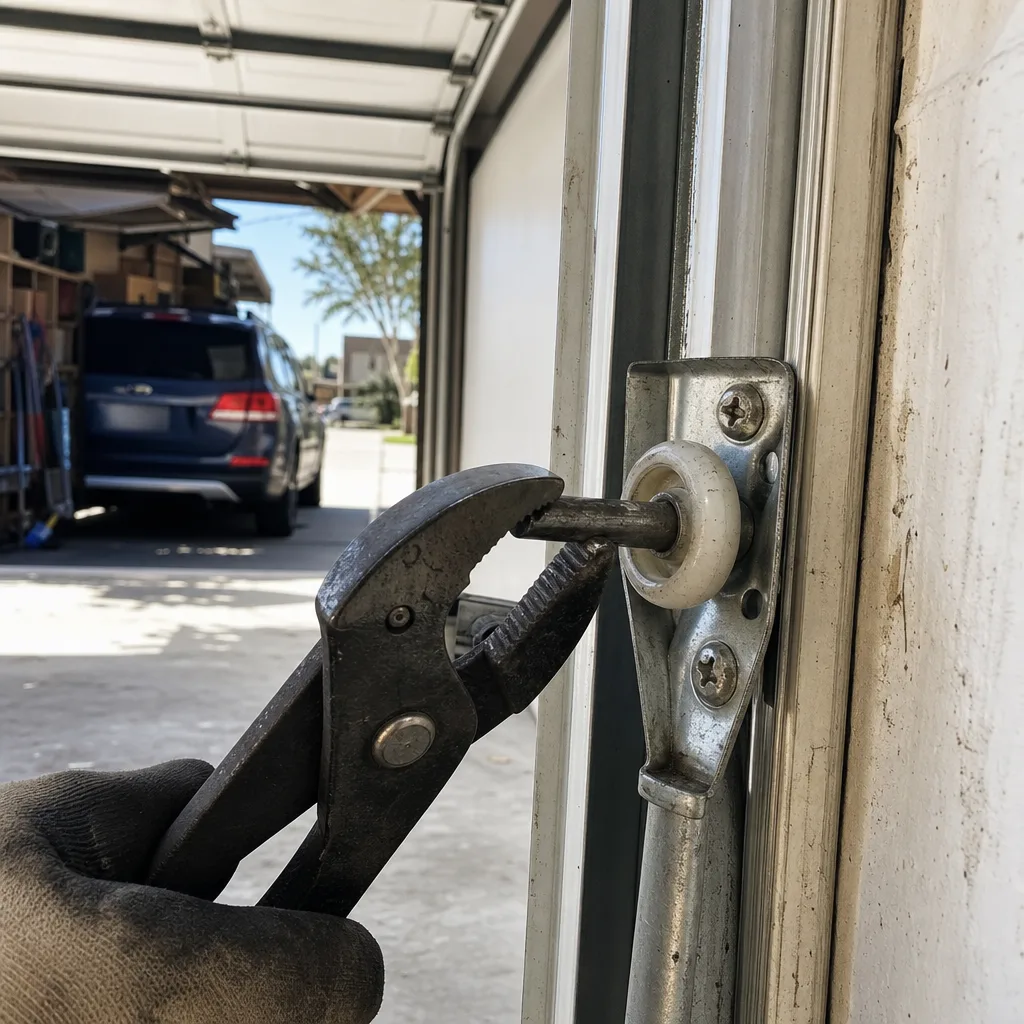
- Rattling from the roller track area: Worn rollers with flat spots or loose bearings rattle as they travel through the track. Genie and Clopay doors with nylon rollers that have gone dry will rattle at specific points in the track where the roller housings have worn oval.
Each of these sounds is documentable. Record a fifteen-second video of the door moving with your phone close enough to pick up the audio clearly. That recording is often enough for a technician to make a preliminary diagnosis before they even schedule the visit. It’s the same principle as Garage Door Repair in Los Angeles technicians use on-site: identify the component, name the failure, then quote the fix.
Visual Inspection Protocol for Torsion Spring Fatigue: Finding Hairline Cracks Without Touching the Spring
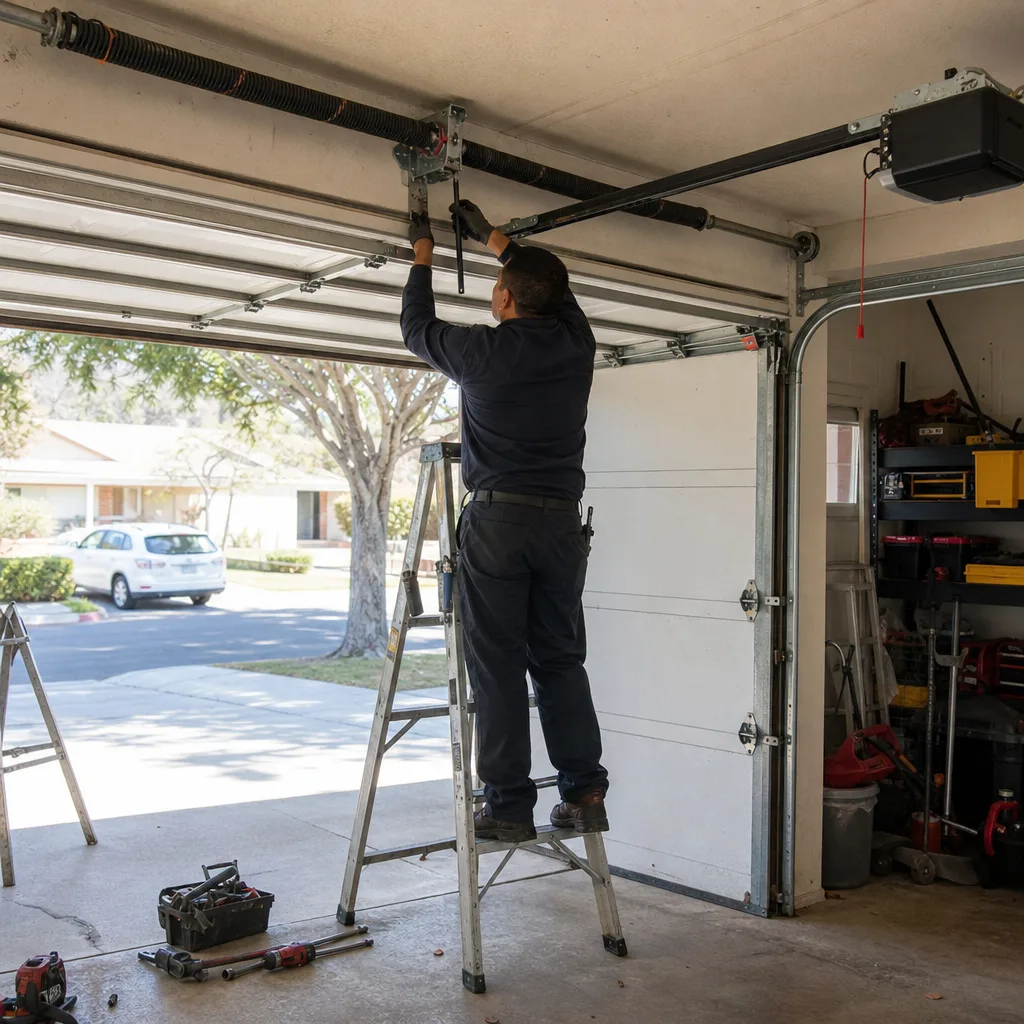
Torsion springs don’t fail without warning. In our experience across thousands of doors in Los Angeles, most springs show visible fatigue for weeks or months before they snap. The trick is knowing where to look and what to look for, and doing it without ever touching the spring, which is under enough tension to cause serious injury.
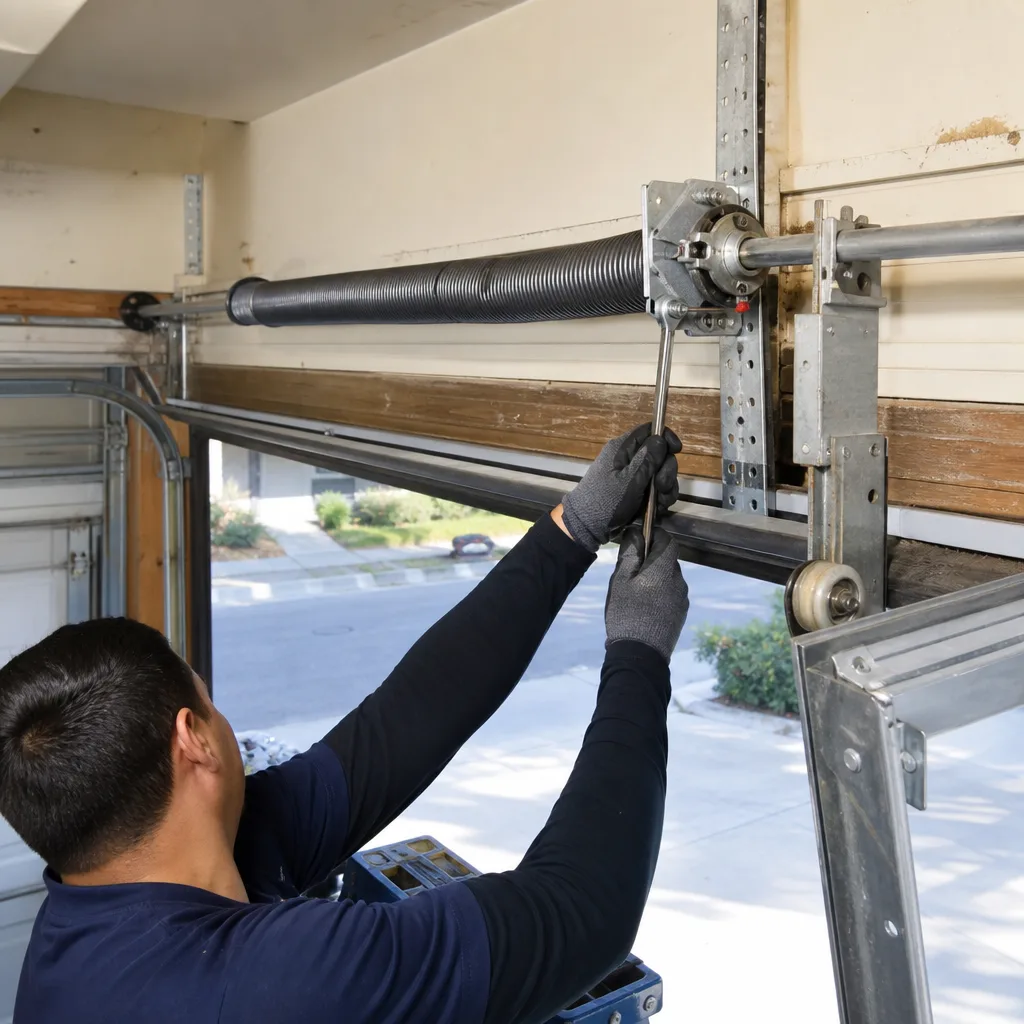
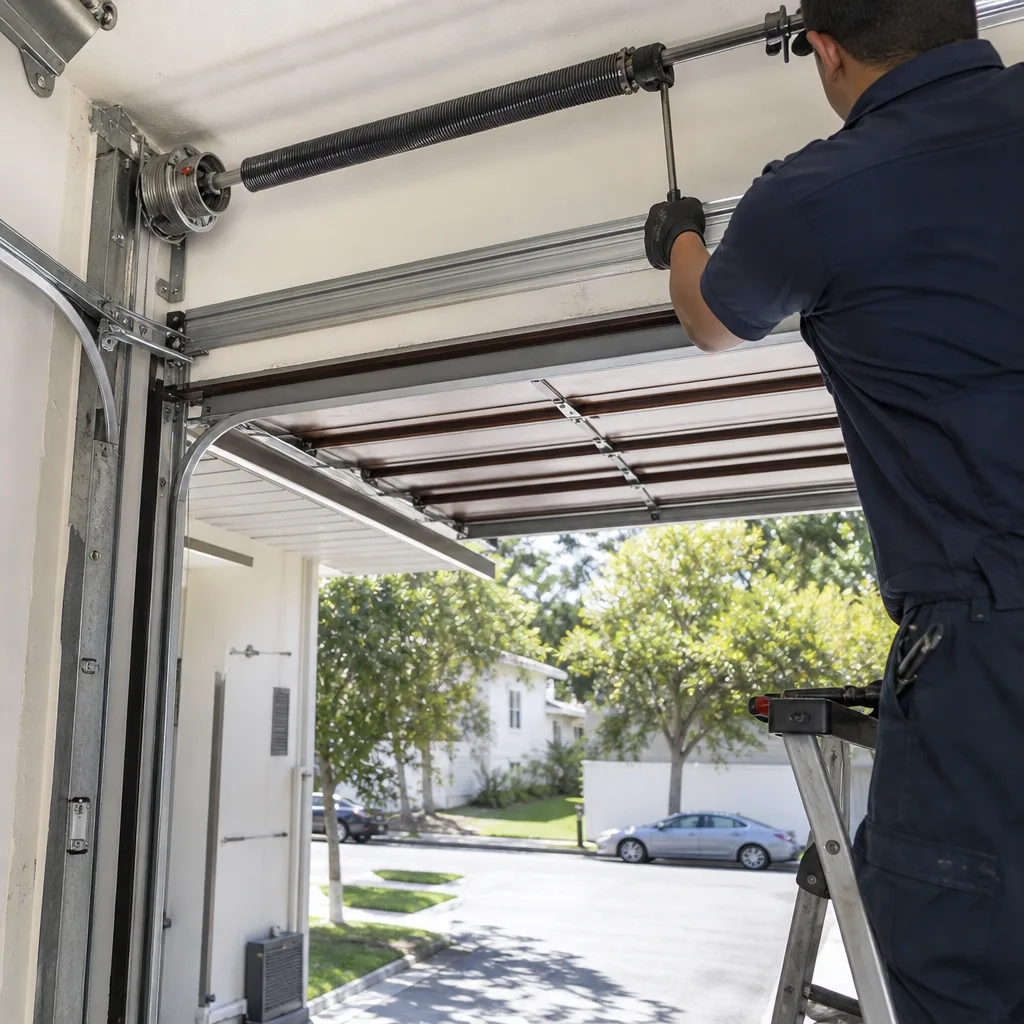
Safety note before we start: a torsion spring is the single most dangerous component on your garage door. It holds hundreds of pounds of torque, and if it releases suddenly, the hardware that holds it in place becomes a projectile. You can inspect it. You should never adjust it, remove it, or tap it to “test” it. If you see any of the signs below, document them and call a professional. This is the one component where DIY is genuinely dangerous.
Here’s the inspection protocol, step by step:
- Close the door and stand inside the garage. You want the door down so the springs are under full tension and any gaps in the coils are at their widest.
- Look at the torsion spring, which is the long coiled spring mounted horizontally above the door opening. You’ll typically see one spring on a single-car door or two springs on a double-car door.
- Shine a flashlight at the end of the spring where the coil meets the stationary cone. Hairline fatigue cracks almost always start at the coil end, where the spring wire is anchored. You’re looking for a thin, dark line running across the wire diameter, not along it. It looks like a scratch but it’s actually a fatigue fracture starting.
- Check for coil gap separation. Torsion springs are wound tight, with each coil touching the next. If you see gaps opening between coils, or one section of the spring that’s stretched out while the rest is tight, that spring is in the early stages of failure.
- Look for rust or pitting on the spring surface. Los Angeles coastal areas like Santa Monica, Venice, and Long Beach put salt air on every metal component in the garage. Surface rust isn’t automatically a failure, but pitting, where the rust has eaten small depressions into the wire, creates stress points where fatigue cracks start.
- Photograph what you see. Use the macro mode on your phone and get within six inches of the coil end. A clear photo of a hairline crack is worth more than a twenty-minute phone description. This is exactly what we mean when we talk about the documented photo record we deliver on every visit: the evidence comes first, the quote follows.
If you find a crack, the spring is done. It’s not repairable. It needs replacement before it fails under tension and damages the door, the opener, or worse. Spring replacement in Los Angeles typically runs $180 to $340 per spring depending on wire diameter, spring length, and whether you’re replacing one or both springs as a matched set. A free second opinion on any written estimate from another company is available, and the paperwork approach applies here: if someone else quoted you, bring the paperwork and we’ll review it line by line.
The 10-Second Door Balance Test: How to Measure Spring Counterbalance at Home
A properly balanced garage door feels almost weightless. The springs are doing the heavy lifting, and the opener only adds the push to move the door, not to hold it up. When springs start to lose tension or wear unevenly, the door drifts, and the opener has to work harder. This is the single most reliable test you can do at home, and it takes ten seconds.
- Close the door.
- Pull the red emergency release cord hanging from the opener rail. This disconnects the door from the opener carriage. The door is now free to move manually. Note: do this only when the door is fully closed. Releasing the door while it’s open with weak springs can bring a 200-pound door down in seconds.
- Grab the door handle and lift it to waist height, around three feet off the ground. Does the door stay where you left it, or does it drift up or down?
- Lift it to chest height. Same question. A balanced door will stay at any position you put it. The springs are within a pound or two of perfect counterbalance.
- Observe the drift. If the door drifts down toward the closed position, the springs are losing tension and the door is effectively heavier than the springs can hold. If the door shoots up on its own, the springs are over-tensioned, which is less common but also a sign of improper adjustment.
What does a failing test mean in practical terms? A door that drifts down by more than a couple of inches when you release it is asking the opener to hold back the full weight of the door on every close cycle. That’s when you start seeing premature opener motor failure, stripped gears, and eventually a door that won’t stay closed because the opener’s internal clutch can’t hold it. The fix is almost always spring replacement or spring adjustment, and it’s cheaper in the under-$200 range than replacement in the $500 to $900 range. The Garage Door Opener Repair & Installation in Los Angeles side of our business sees a steady stream of openers that were destroyed by doors that were out of balance for months first.
Slow Door, Two Causes: Opener Motor Strain vs. Track Misalignment
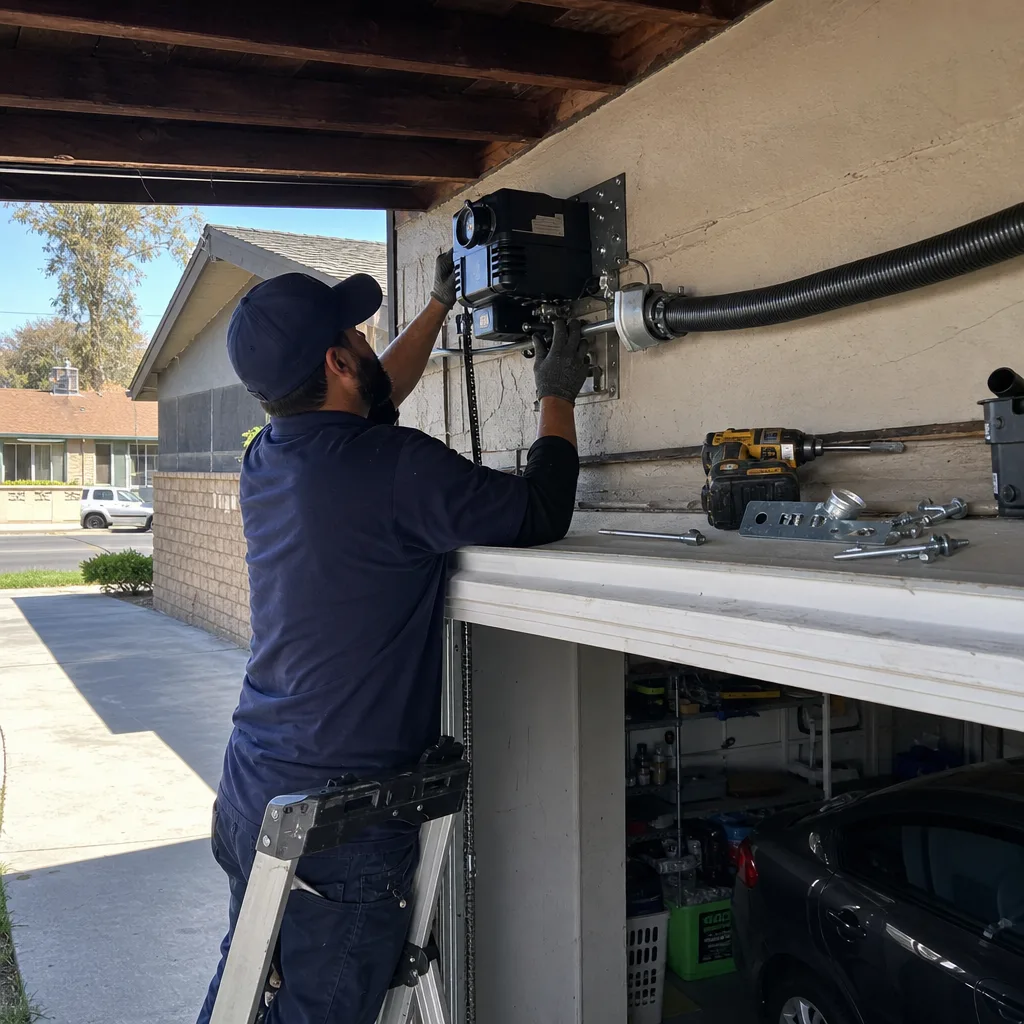
A garage door that opens or closes noticeably slower than it used to is telling you something. The question is whether the problem is in the opener or the track, and misdiagnosing this is one of the most common ways Los Angeles homeowners end up paying for an opener replacement when the track was the real issue all along.
Opener motor strain presents as a door that moves slowly but smoothly. It doesn’t bind, doesn’t jerk, doesn’t make grinding sounds. It just moves like it’s tired. This happens when the opener motor is working harder than it was designed to, usually because the springs have weakened and the opener is now lifting more of the door’s weight than it should. The motor is a symptom, not the cause. Replace the opener without addressing the springs, and the new opener fails the same way in two to three years. Chamberlain and Genie openers have a built-in thermal overload that trips when the motor gets too hot, so a door that suddenly stops midway and starts again after a cooldown period is telling you the motor is straining against excessive door weight.
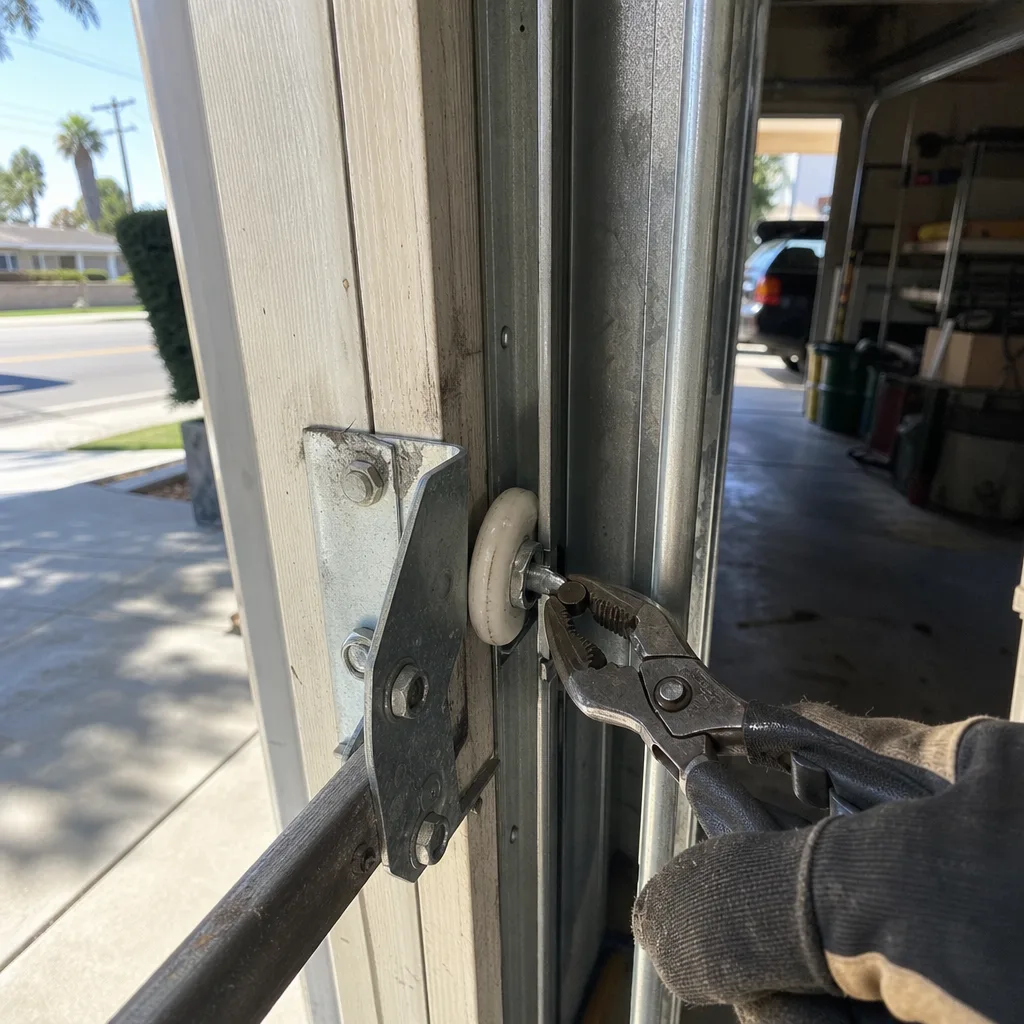
Track misalignment presents differently. The door slows at specific points in its travel, usually where the track has shifted or where a roller is binding in the track channel. It may speed up past the binding point and slow again at the next one. Rollers may squeak at those spots, and you may hear a scraping sound where a misaligned track is rubbing against the door edge or the weather stripping. The giveaway is inconsistency: motor strain is uniform, track misalignment is patchy.
Here’s the diagnostic: run the door through a full cycle and watch the roller wheels as they pass through the track. If the slowdown coincides with a point where a roller visibly struggles, the track is the problem. Track repair in Los Angeles typically runs $125 to $250 depending on whether it’s a simple re-alignment with new track brackets or a track section that needs replacement due to being bent. Opener replacement typically starts around $350 and goes up from there. Knowing the difference before you call means the quote you get is for the right repair.
How to Photograph a Warning Sign Before Calling a Technician
We built Servo on a founding rule: the customer sees the failed part before anyone quotes a replacement. That’s Clause 4 of The Haven Standard, and it means the photo record isn’t an afterthought, it’s the entire framework for how we quote and how we work. You can apply the same principle before you ever pick up the phone.
When you document a warning sign, you’re creating the evidence that a technician will use to diagnose the problem remotely. A good photo record answers four questions: what failed, where it is, how far the damage has progressed, and what the surrounding hardware looks like. Here’s how to get those photos:
- Take a wide shot of the whole door from inside the garage. This gives context: door type, spring configuration, opener model, track layout. It takes five seconds and tells the technician more than any verbal description.
- Take a close-up of the suspect component. If it’s a spring, get within six inches and use macro mode. Capture the coil end where cracks start. If it’s a roller, get the wheel in frame with the track. If it’s a gear, open the opener cover if you’re comfortable doing so (unplug it first) and photograph the gear teeth.
- Take a video of the door moving through a full open-close cycle. Hold the phone still and capture both the door and the opener. Audio matters here: the video should include the sound of the door operating.
- Note the brand and model. Photograph the manufacturer label on the opener and on the door. LiftMaster, Chamberlain, Genie, Clopay, Amarr: each has quirks, and knowing the model number lets a technician check parts availability before they arrive.
- Send the photos by text or email before the appointment. This is where the documentation changes the phone quote. Instead of “sounds like it might be a spring, we’ll know when we get there,” a technician who has seen your photos can say “that’s a 0.225-inch wire diameter spring with a fatigue crack at the cone end, replacement will run $X to $Y, parts are on the truck.” The difference is the difference between a vague estimate and a written price before work starts, which is Clause 1 of The Haven Standard: the price is quoted and agreed before any work begins.
Every service visit from Servo Garage Doors Los Angeles closes the same way: you get a documented photo record of what was found and what was done. The same standard applies to the Garage Door Installation in Los Angeles side of the business, where you see the old door removed and the new door installed in photographs, not just described.
Los Angeles Climate and Code Factors That Accelerate Garage Door Wear
Garage doors in Los Angeles wear differently than garage doors in Phoenix, Seattle, or Chicago. The climate, the building stock, and the local code requirements all shape what fails and when. If you live in Eagle Rock, Sherman Oaks, or the San Fernando Valley, you’re dealing with conditions that a homeowner in another part of the country doesn’t face.
Heat is the first factor. Valley summers regularly push garage temperatures above 110°F, and that heat does two things to a torsion spring. It accelerates the breakdown of the spring’s lubricant, which leads to the metal-on-metal squeaking described above. It also causes the spring wire to expand and contract daily, which accelerates fatigue cracking. Springs in the Valley typically last three to five years, compared to five to seven in coastal areas where temperatures are more moderate.
Salt air is the coastal factor. In Santa Monica, Marina del Rey, and Long Beach, the marine layer carries salt that settles on every metal surface in the garage. Springs rust and pit faster, track brackets corrode, and roller bearings seize. The visual inspection protocol above matters more in these neighborhoods, because the rust pitting that creates fatigue cracks develops faster.
Building age matters too. Much of Los Angeles’s single-family housing stock dates from the 1950s through the 1980s, and many garages still have the original door hardware. Track systems that were installed forty years ago were built for lighter doors than what most homeowners have now. If you’ve replaced a wood door with a steel insulated door without upgrading the track, you’ve put more weight on a track that wasn’t designed for it, and misalignment follows.
Local code requirements are relevant here as well. Los Angeles enforces California Building Code Chapter 30, which incorporates UL 325 standards for garage door auto-reverse systems. That half-second hesitation before reverse that we opened this guide with is a UL 325 compliance issue. Your door’s auto-reverse is required to stop and reverse the door when it encounters resistance equivalent to a two-inch block. If the force sensitivity has drifted, the door may not pass that test. Testing your auto-reverse monthly is a code-compliance issue, not just a safety preference.
Common Mistakes to Avoid
- Ignoring a squeak because it’s “always done that.” Squeaking is friction, and friction wears springs. A $50 lubrication service today prevents a $250 spring replacement in six months. If your door has squeaked for years, the wear is already happening.
- Replacing the opener when the door is out of balance. This is the expensive one. A new opener on an unbalanced door fails the same way the old one did. Test your door’s balance first, fix the springs if needed, then evaluate the opener.
- Lubricating a cracking spring hoping to extend its life. Lubricant reduces friction. It doesn’t repair metal fatigue. A spring with a visible hairline crack is done, and lubricating it just makes it quieter while it continues to fail.
- Releasing the emergency cord while the door is open and the springs are weak. This drops the full weight of the door. Never pull the release handle unless the door is fully closed.
- Getting one quote and calling it done. Los Angeles has a competitive garage door market, and pricing varies widely. If you get an estimate that seems high, get a second one. Any written estimate from another company can be brought in for a free second opinion, no coupon required.
- Assuming “same-day” means “well-done.” Speed and quality are different things. A technician who photographs the failed component and quotes a written price before touching the door is working to a standard, not a stopwatch.
When to Call a Professional
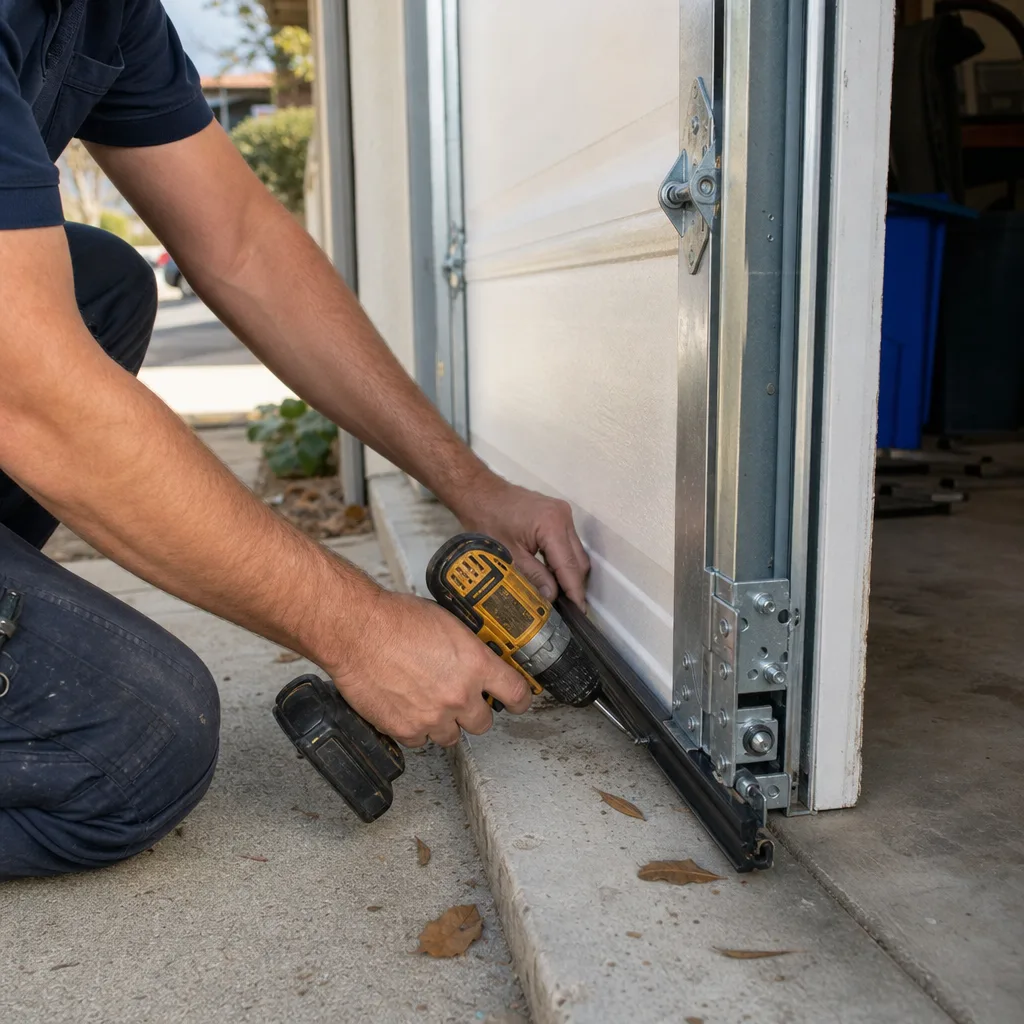
Some warning signs are documentation projects. Others are call-now situations. If you hear a loud pop from above the door and the door won’t open, the torsion spring has snapped and the door is unsafe to operate. If the door comes off the track and cocks sideways in the opening, the cables have failed and the door needs professional re-alignment. If the door reverses on its own while closing, or fails the two-inch-block auto-reverse test, that’s a UL 325 compliance failure that needs a technician today, especially if you have children or pets. If you see a visible gouge in a cable or a frayed strand, that cable is near failure. These are not documentation projects. These are phone calls. For everything else, see our more guides & resources. Servo Garage Doors Los Angeles offers free estimates in Los Angeles. Call (213) 348-6550 and a real person answers, 24/7, including holidays. You’ll get a named technician and an on-the-way text, not a callback window.
Frequently Asked Questions
Garage door spring replacement in Los Angeles typically ranges from $180 to $340 per spring, depending on the wire diameter, spring length, and whether you replace one or both springs as a matched set. For help choosing a contractor, read How to Hire a Garage Door Contractor in Los Angeles: A Step-by-Step Guide. Warmer areas like the Valley tend to see shorter spring life due to heat-related fatigue. Call (213) 348-6550 for a written quote, and remember that the price is agreed before any work starts.
Torsion springs in Los Angeles typically last three to seven years depending on location. Coastal neighborhoods see three to five years because salt air accelerates rust pitting. Inland areas see five to seven years in moderate temperatures, but Valley heat can shorten that to three to five. Most springs are rated for 10,000 cycles, which translates to roughly seven years of twice-daily use, but Los Angeles climate conditions usually cut that short.
No. Torsion springs are under hundreds of pounds of tension, and the hardware holding them in place becomes a projectile if the spring releases suddenly. This is the one garage door component where professional service is non-negotiable. A trained technician has the winding bars, the know-how, and the insurance to do the job safely. You can inspect and document the spring, but you should never adjust or replace it yourself.
Squeaking during door travel is almost always a torsion spring losing lubrication. The spring coils rub against each other as they wind and unwind, and the friction creates the sound. It’s a maintenance issue that accelerates spring wear if left unresolved. A professional lubrication service typically resolves it, and the fix costs far less than the spring replacement it prevents.
Run the 10-second balance test described above. Disconnect the opener with the door closed, lift the door manually, and see if it holds position. If it drifts down, your springs are failing and the opener is working harder than it should. If the door balances fine but the opener motor runs without moving the door, the problem is the opener’s drive gear. The balance test is the diagnostic that separates spring problems from opener problems.
Yes. Every job from Servo Garage Doors Los Angeles home starts with a free estimate, delivered as a flat written price and written scope before any work begins, per Clause 1 of The Haven Standard. You’ll also receive a documented photo record of findings and completed work on every visit, and the 365-Day Done Right Promise means if a repair isn’t right, Servo makes it right.
The Bottom Line
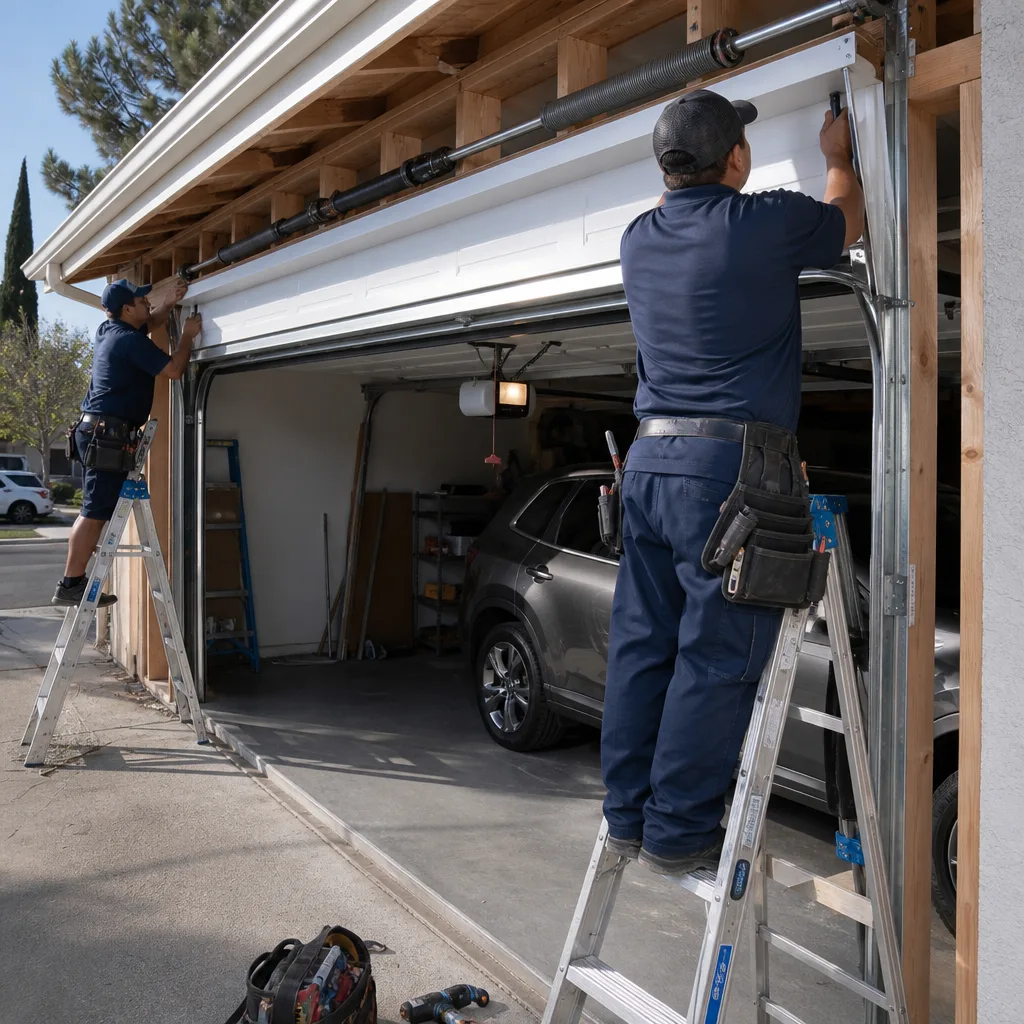
Your garage door gives you three to six months of warning before it fails. The signs are audible (grinding, popping, cable slap), visual (hairline cracks, coil gaps, pitting), and behavioral (hesitation, drift, patchy slowdowns). You can document every one of them with a phone camera, and that documentation changes the accuracy of any quote you get. The balance test takes ten seconds and tells you whether your springs are within a pound or two of counterbalance or failing outright. When you call, ask for a written price before work starts. If the company won’t put it in writing, call someone else. Servo Garage Doors Los Angeles will photograph the failed part, name the dollar range, and hand you the paperwork before touching the door. Call (213) 348-6550.
Written by Marcus Deller, Owner at Servo Garage Doors Los Angeles, serving Los Angeles since 2015.