
Last updated September 19, 2026
Full 25-point door and opener safety check with every visit - springs, cables, rollers, tracks, and your LiftMaster or Chamberlain opener included
You get a price before we start. It does not change when the truck arrives.
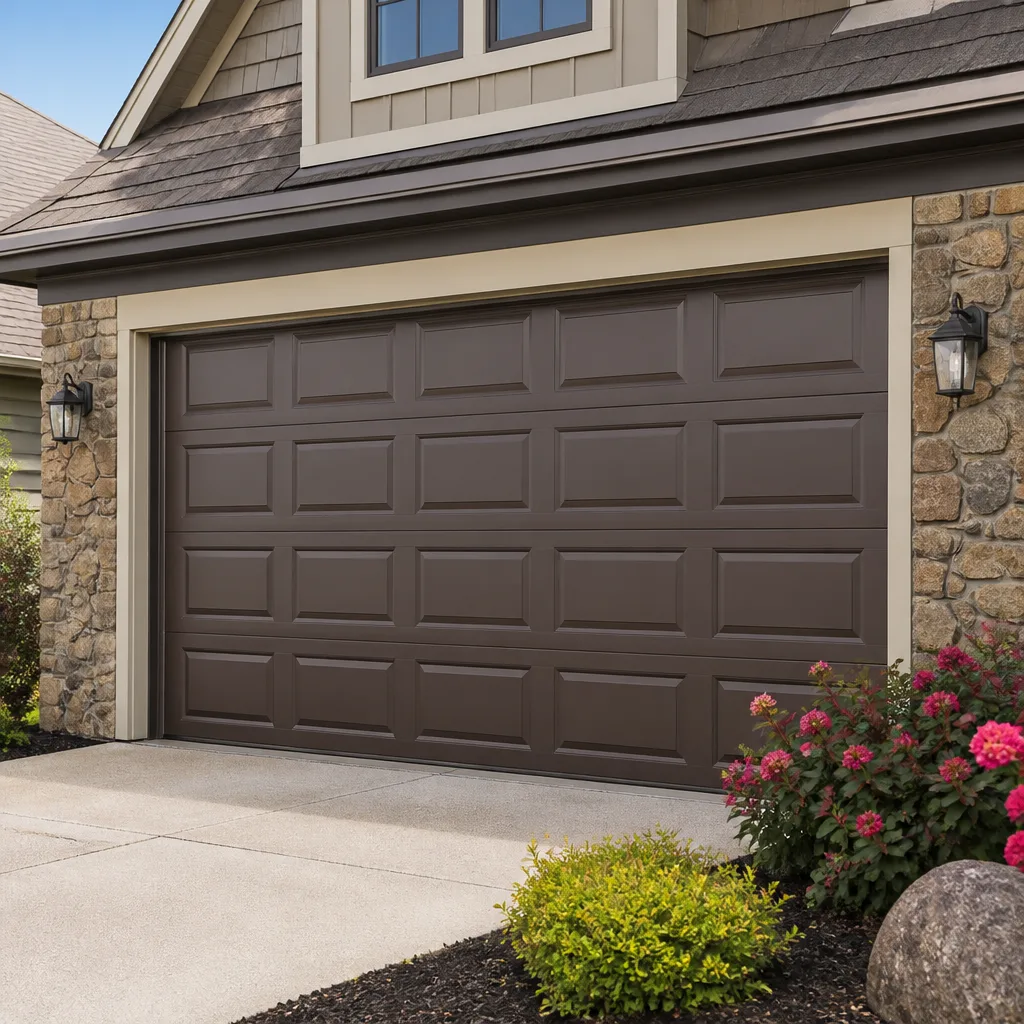
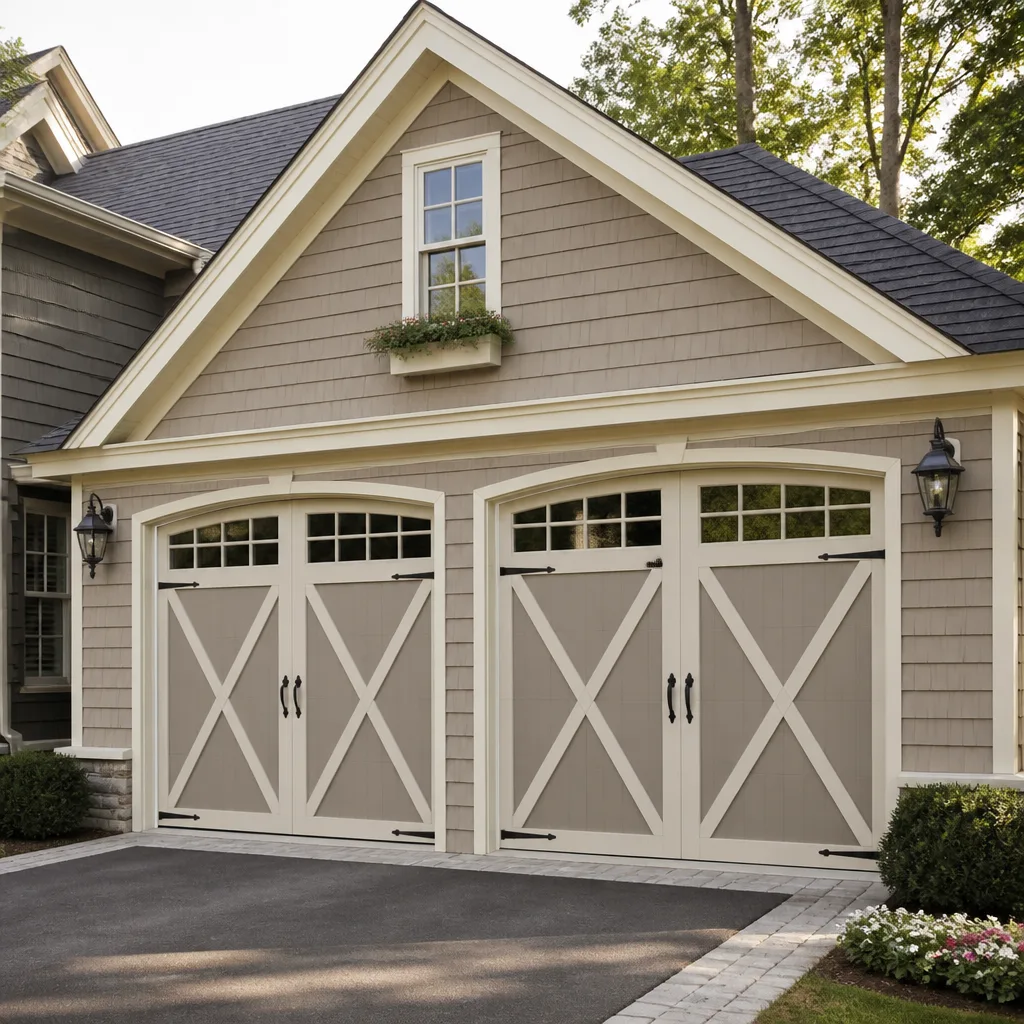
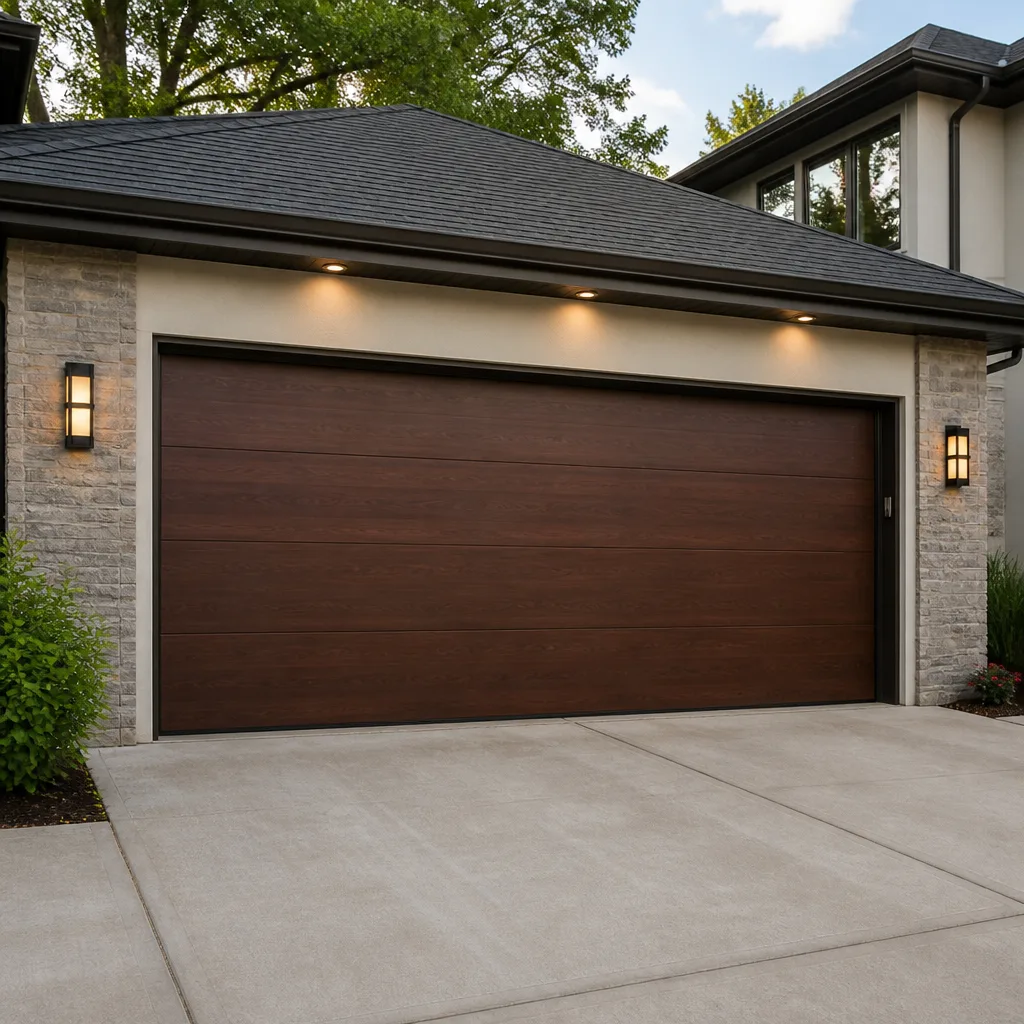
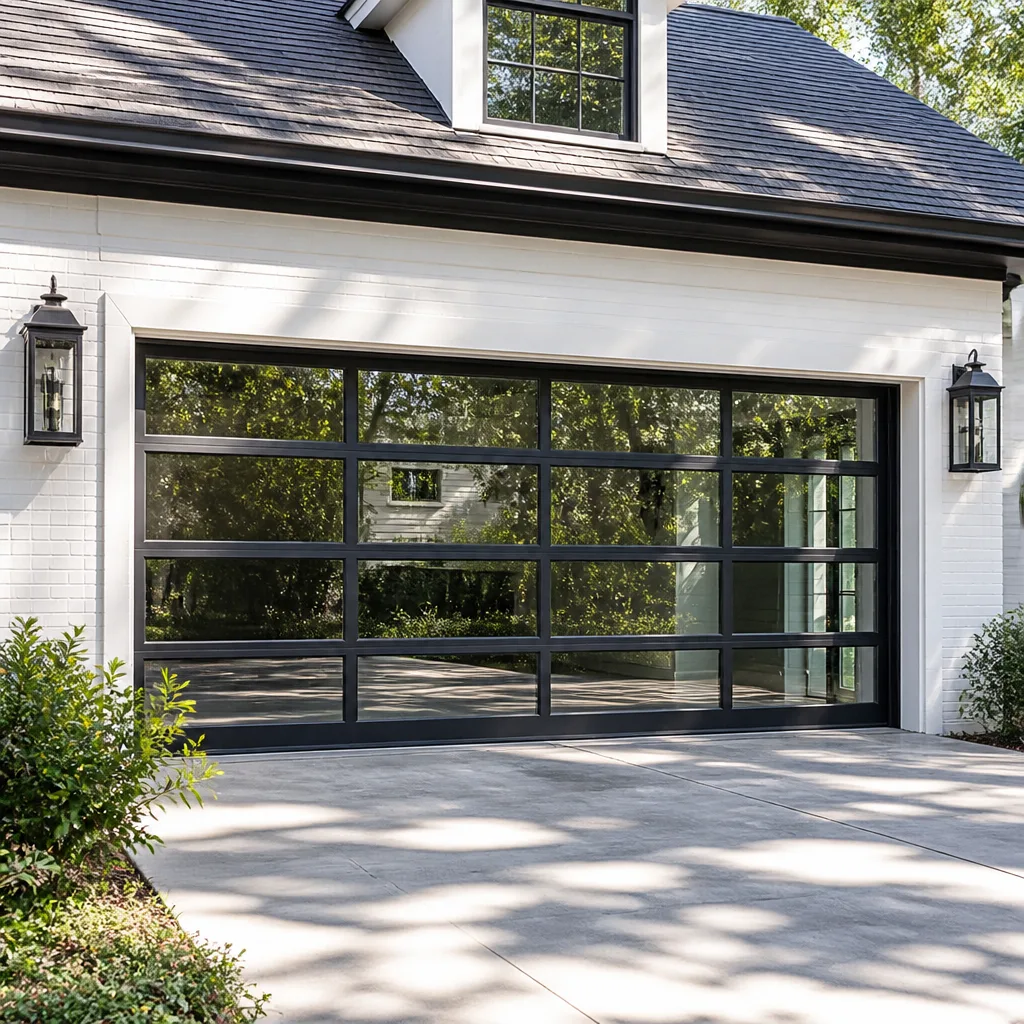
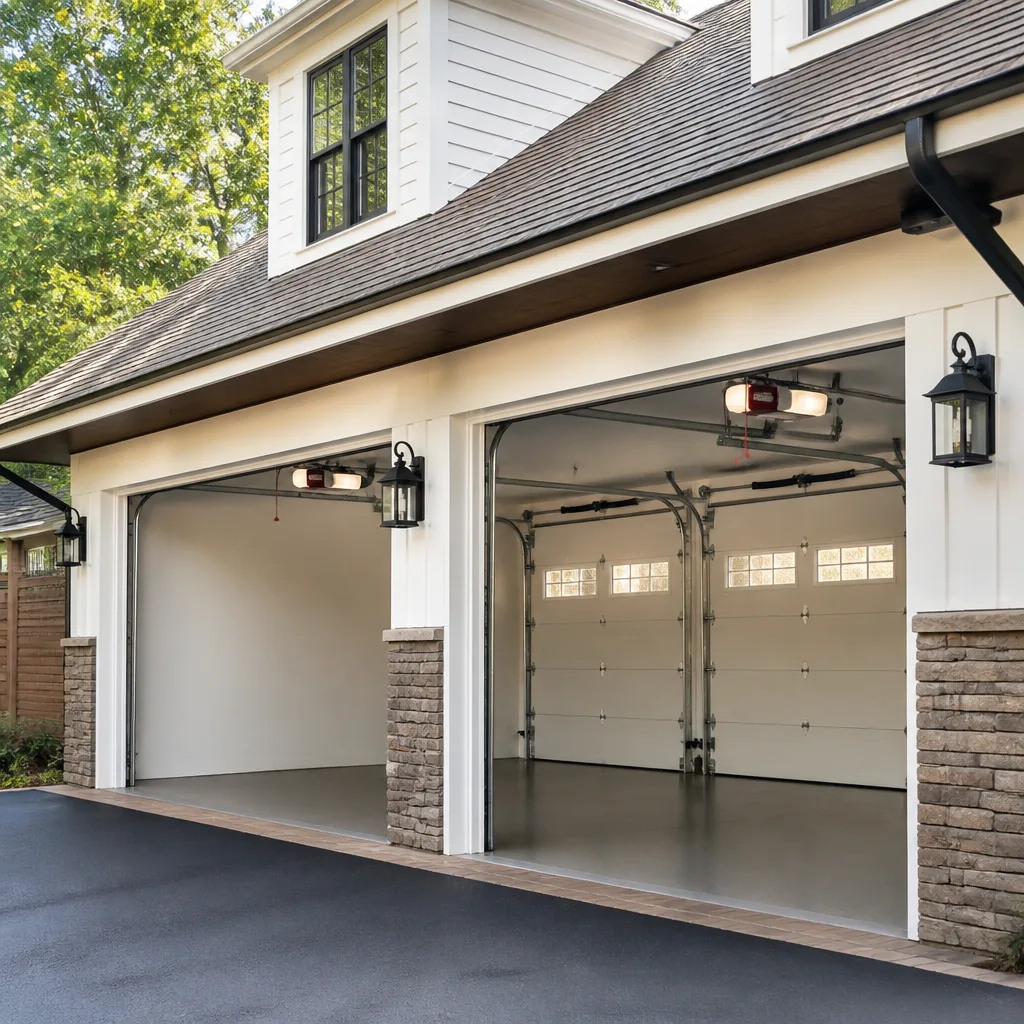
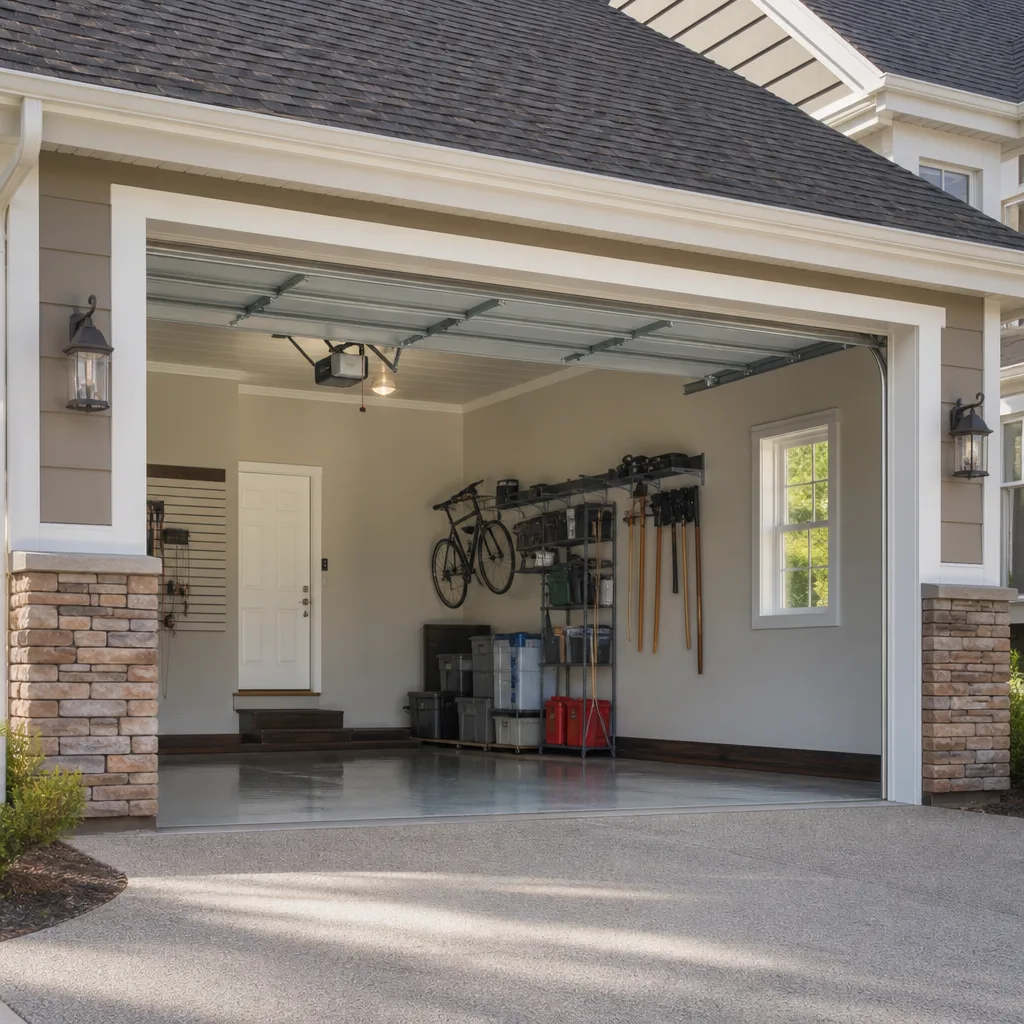
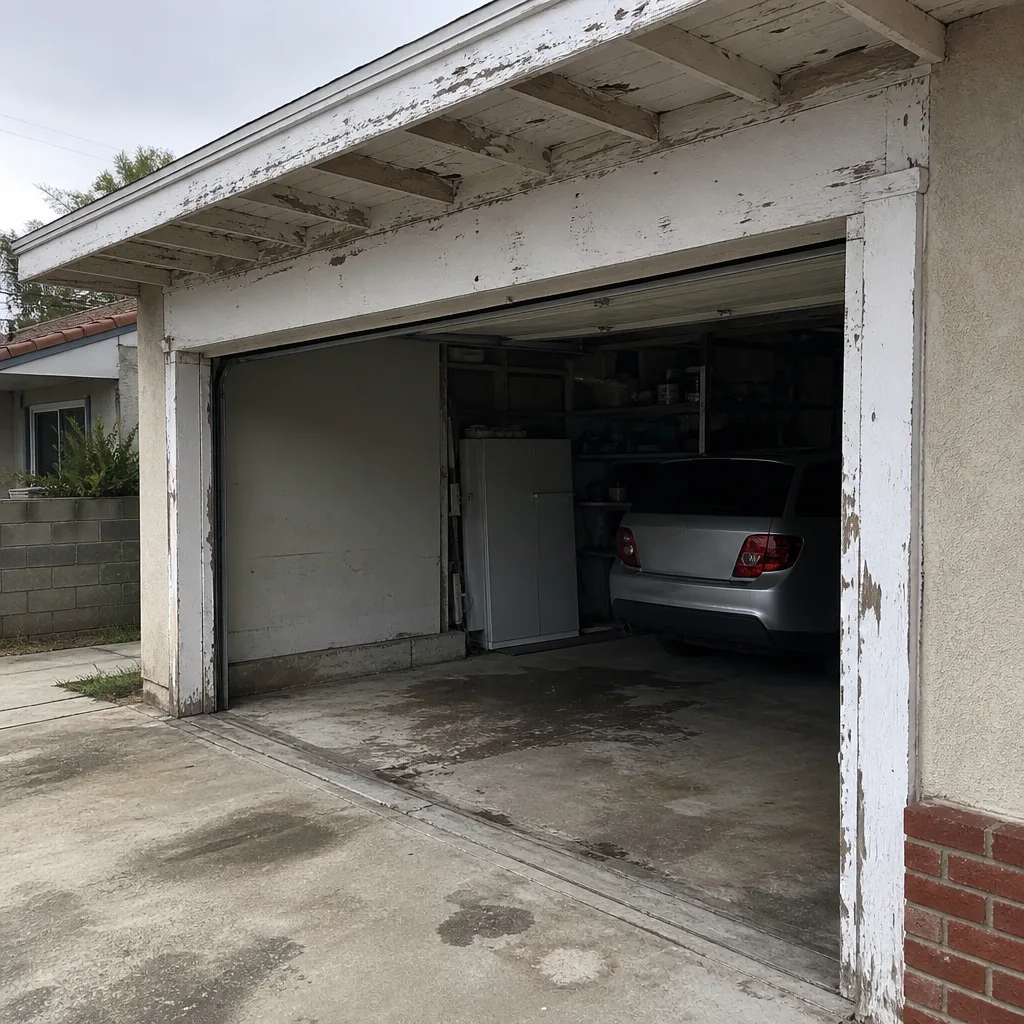 Before
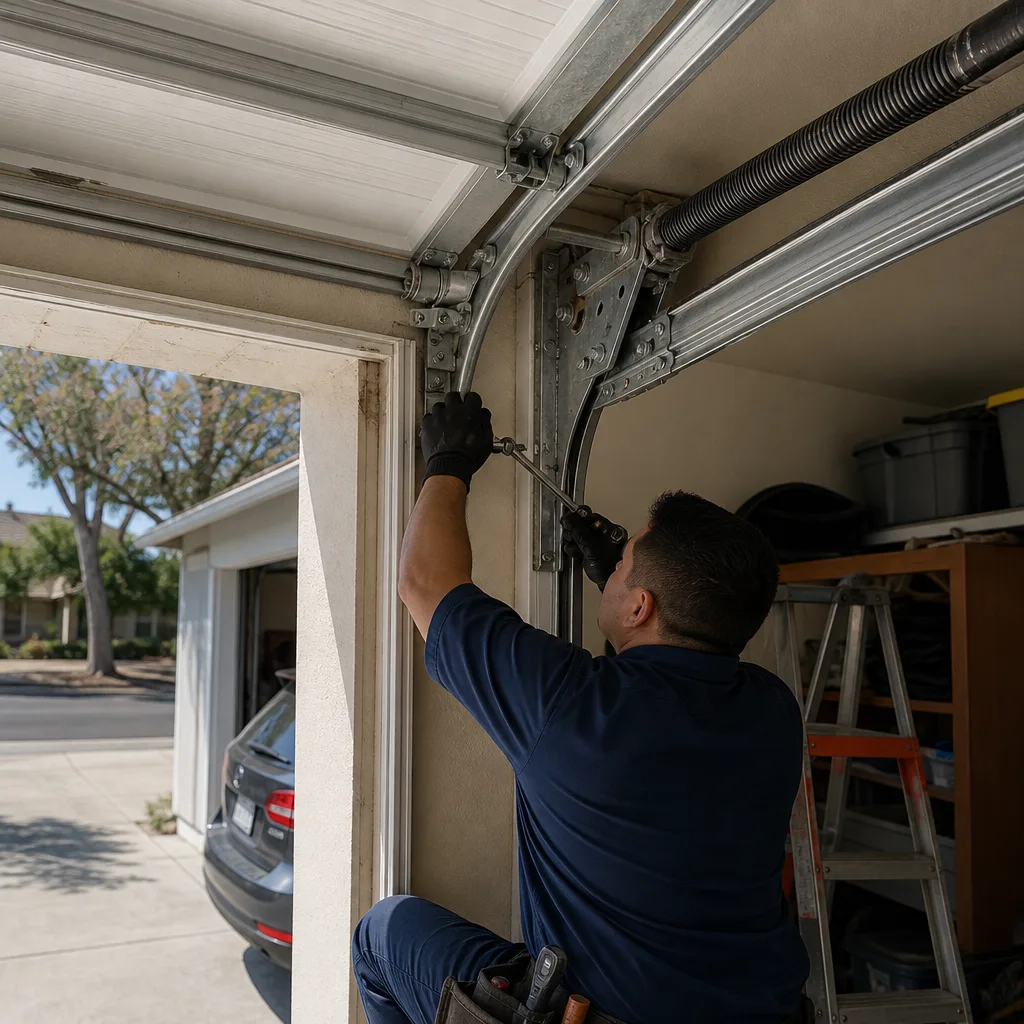 After
After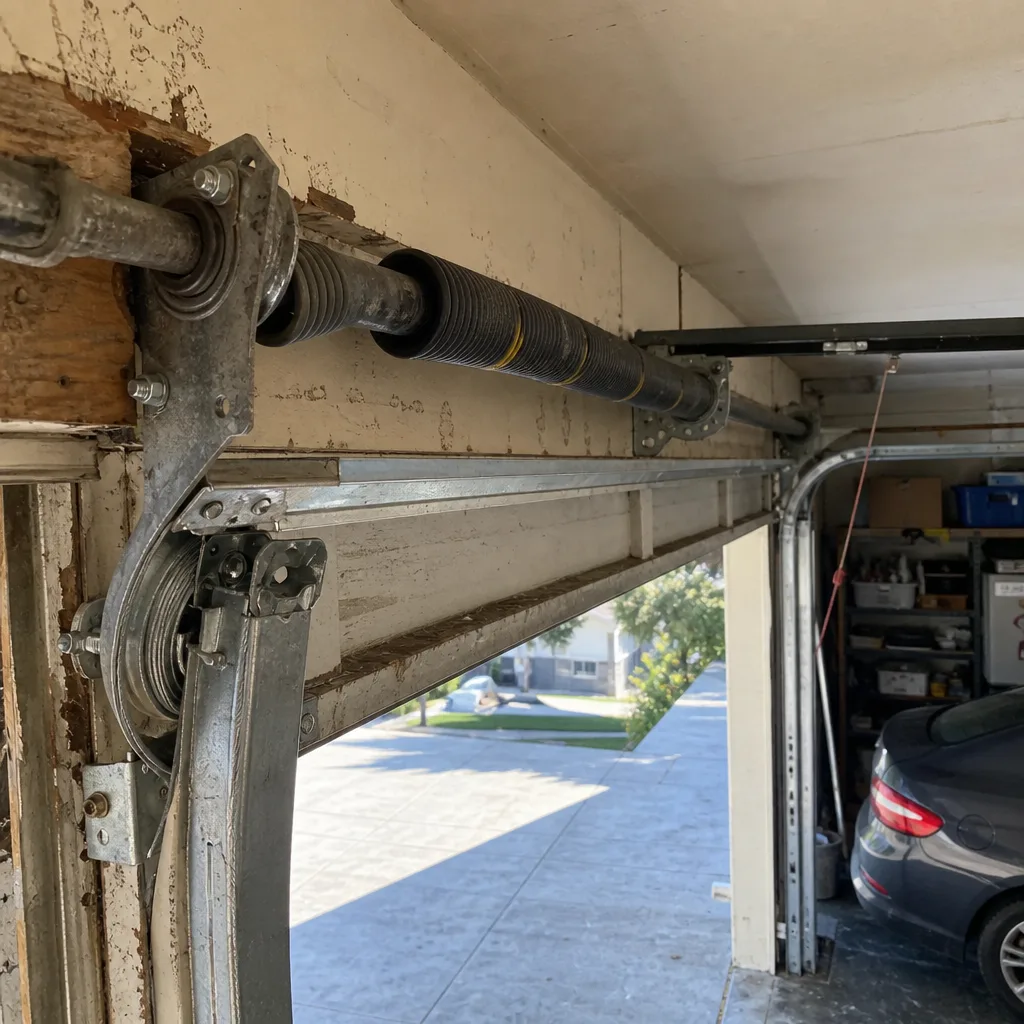 Before
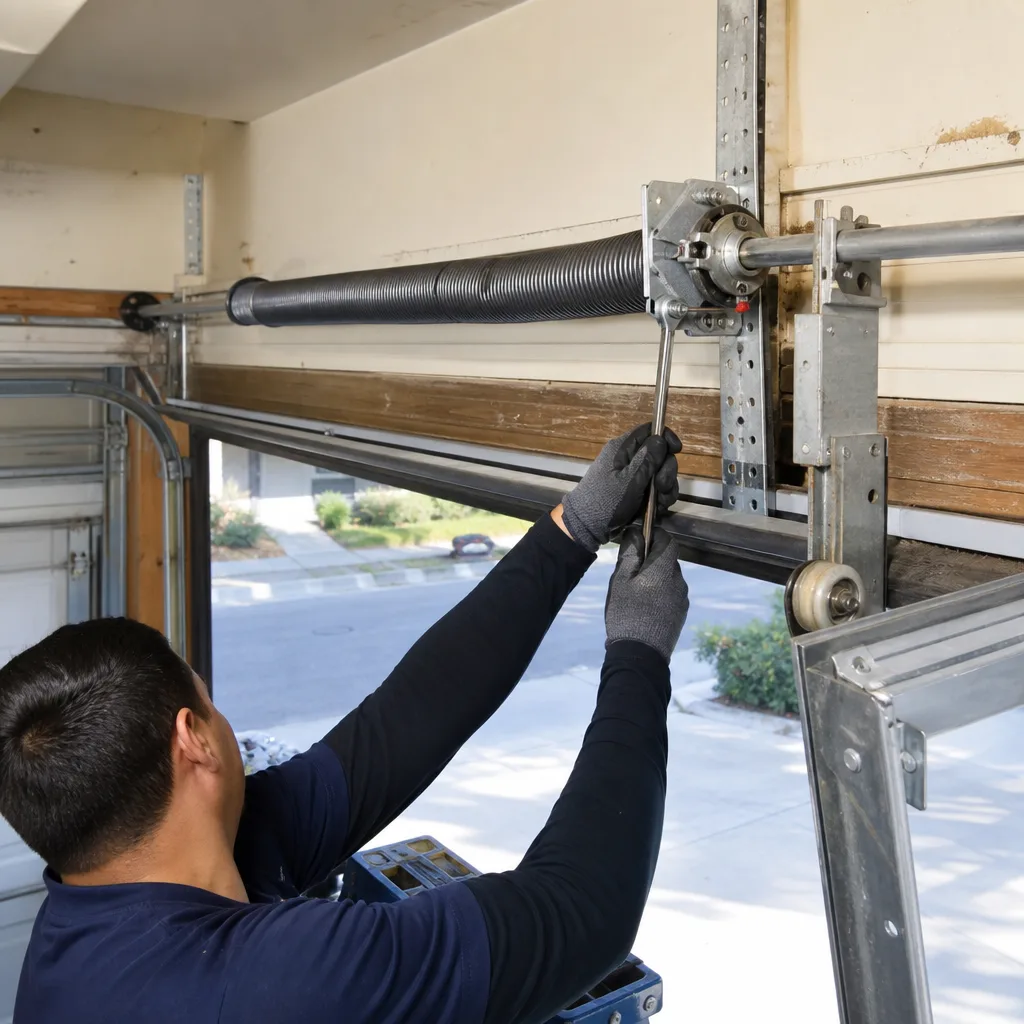 After
After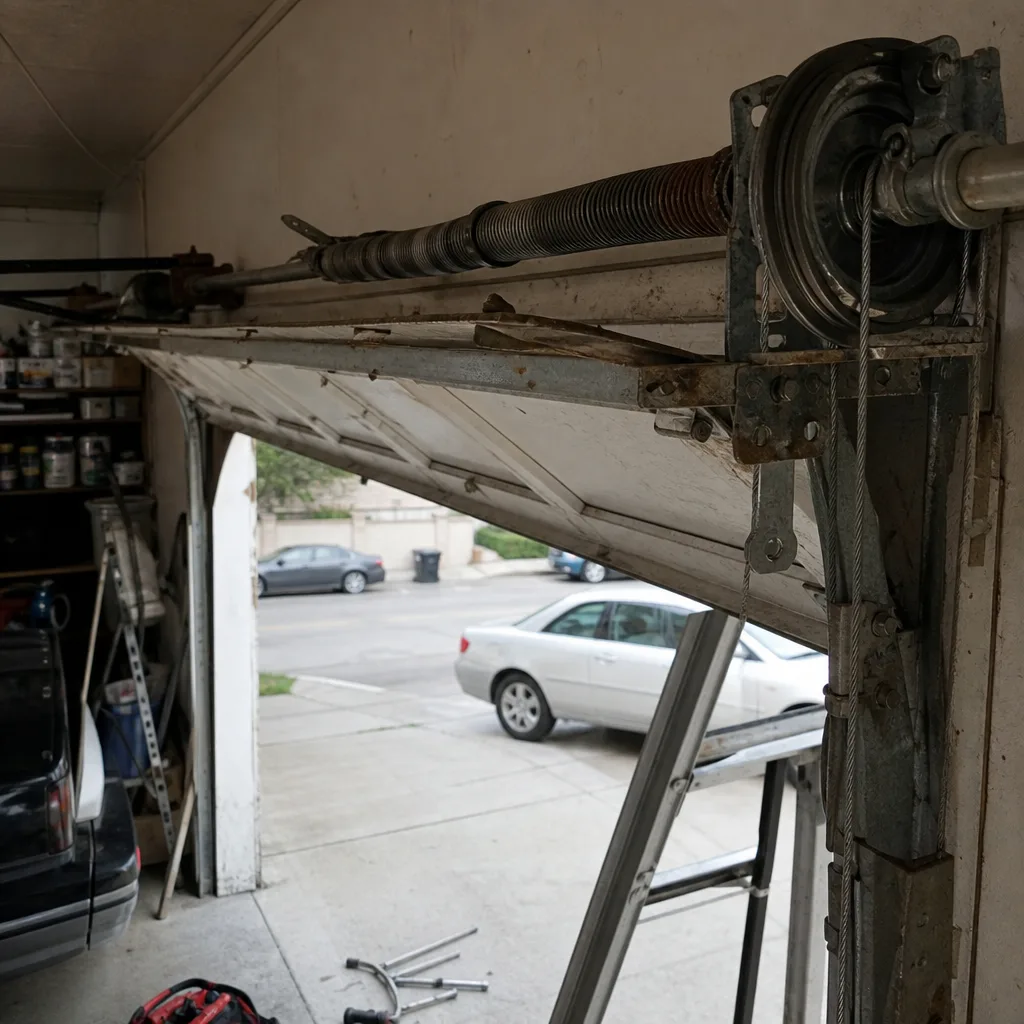 Before
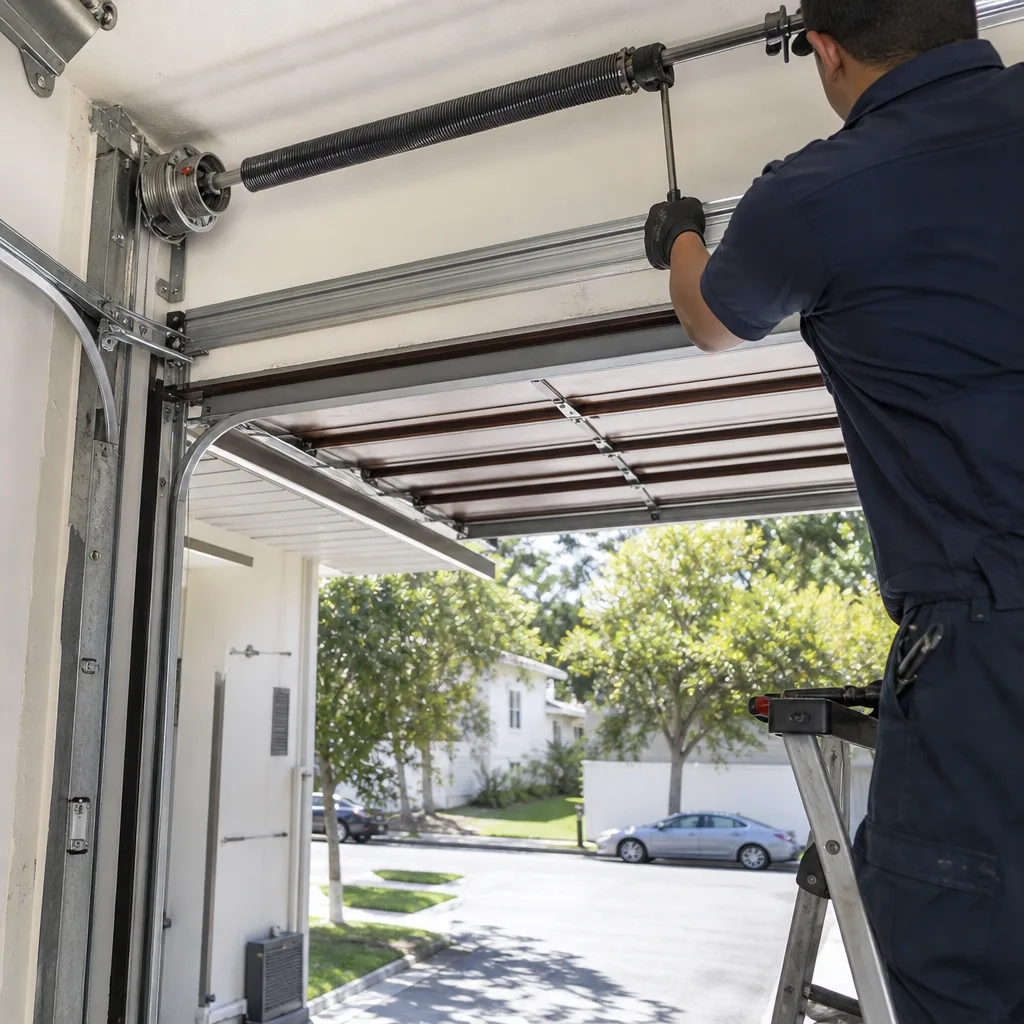 After
AfterGarage Door Permits, Codes & Inspections in CA: What You Need to Know
A full garage door replacement in Los Angeles does not automatically require a permit. But adding a new pedestrian door cutout, widening the opening, or installing a door on a structure that was previously unenclosed triggers a building permit and a setback review. Thousands of LA homeowners have unpermitted work on record that surfaces at escrow, and the distinction between repair and alteration is where most of them went wrong. This guide covers the specific code sections, the inspection process, and what an unpermitted door change actually does to a title report when you sell, plus links to Garage Door Warning Signs: A Los Angeles Homeowner’s Reference Guide and more guides & resources.
Quick Answer
In California, like-for-like garage door replacement typically does not require a permit, but any work that changes the door’s size, material fire rating, or opening configuration does. Los Angeles follows the California Residential Code with local amendments through the Los Angeles Municipal Code, and work that alters the opening triggers a building permit, an inspection, and potentially a fire-separation review.
Table of Contents
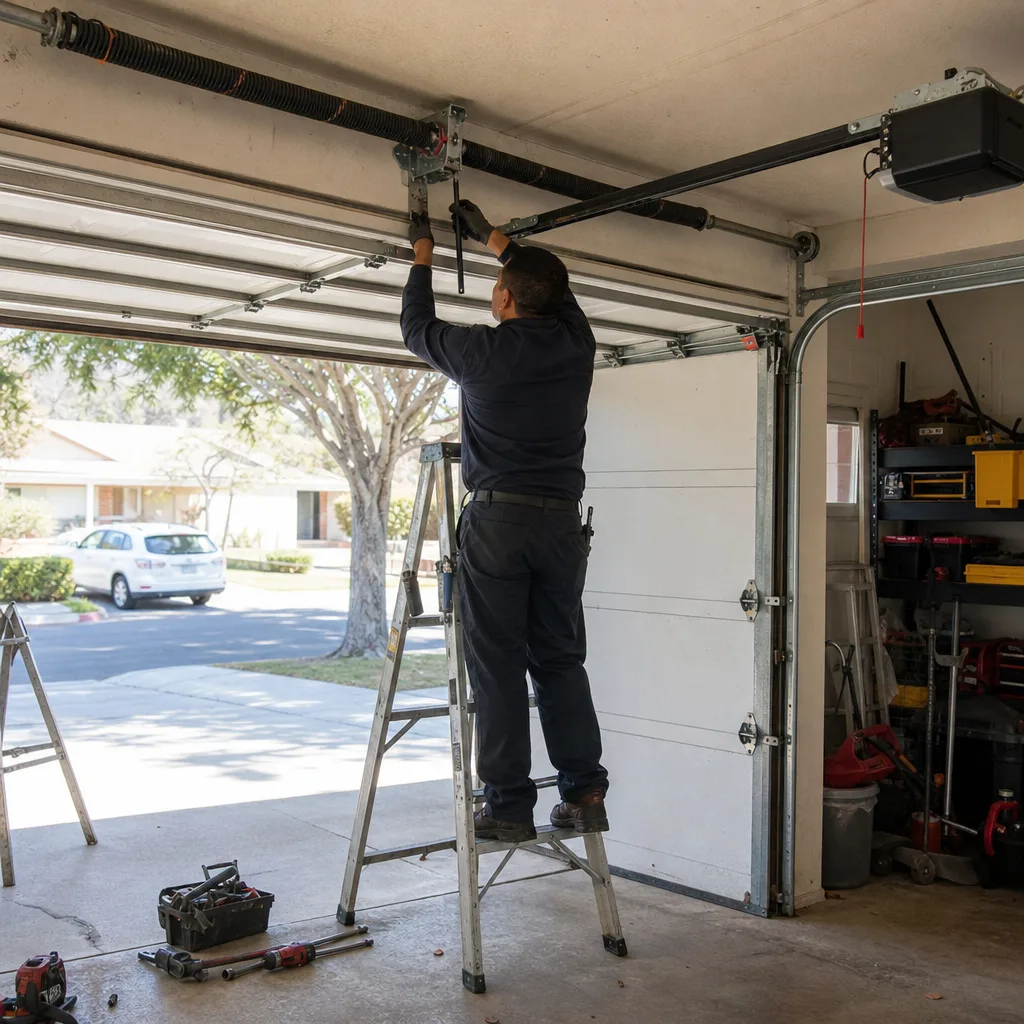
- Like-for-Like Replacement vs. Alteration: The Distinction That Matters
- What the Los Angeles Municipal Code Actually Says
- Fire Separation: When a New Door Triggers a Fire-Rated Assembly
- How LADBS Handles Garage Door Permits: Over-the-Counter vs. Plan Check
- Seismic Anchorage After ADU Conversions: Why Track and Header Brackets Matter
- Unpermitted Garage Door Changes on a Preliminary Title Report
- Step-by-Step: What the Permit and Inspection Process Looks Like
- What a Garage Door Permit Costs and How Long It Takes in Los Angeles
BeforeAfterLike-for-Like Replacement vs. Alteration: The Distinction That Matters
The entire California garage door permit question hinges on a single underappreciated distinction: whether the work constitutes a like-for-like replacement or a change in size, material, or opening configuration. Getting that wrong means a failed inspection that clouds your title report when you sell. So let’s define the terms precisely, because inspectors use them precisely.
A like-for-like replacement means the new door occupies the same rough opening, uses the same mounting method, and serves the same function as the old door. You can swap a wood sectional door for a steel sectional door of the same dimensions without a permit in most California jurisdictions, Los Angeles included. The door’s aesthetic material changes, but the structural and fire-safety characteristics do not. The inspector cares about the opening, not the panels.
An alteration is different. Any of the following moves the work into permit territory:
- Widening or narrowing the rough opening, even by a few inches
- Cutting a new pedestrian door into the garage wall or into the garage door itself
- Enclosing a previously open carport or porte-cochere with a garage door
- Converting a window opening into a door opening, or vice versa
- Changing the door’s fire rating when the wall assembly requires one
- Adding a second door where one did not previously exist
We’ve seen this specific scenario dozens of times in Los Angeles. A homeowner in Silver Lake buys a 1920s Spanish with a single-car garage, wants to park two cars, and hires a contractor to widen the opening from 8 feet to 16 feet. The contractor says no permit is needed because “it’s just a garage door.” The work gets done. Two years later the house is in escrow, the buyer’s preliminary title report shows no permit on record for the alteration, and the seller is now negotiating a price reduction to cover retroactive permitting costs. The door itself was fine. The opening was not.
The rule to remember: if the only thing changing is the door within an unchanged opening, you are replacing. If the wall, header, framing, or opening geometry changes, you are altering. Replacement is typically exempt. Alteration is not.
What the Los Angeles Municipal Code Actually Says
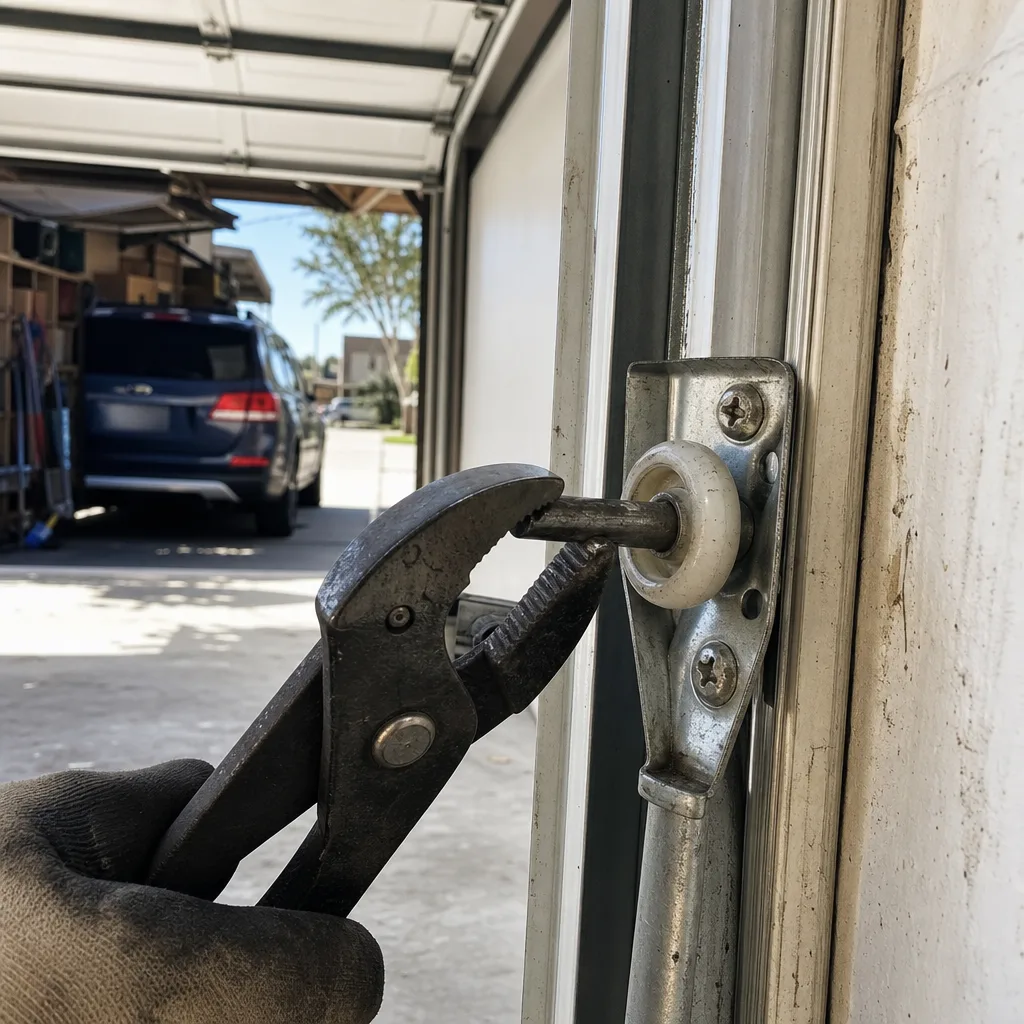
Los Angeles operates under the California Residential Code (CRC), which adopts and amends the International Residential Code, plus a set of local amendments codified in the Los Angeles Municipal Code (LAMC). The sections that govern garage door work are specific, and they are not the sections most homeowners find when they Google the question.
The primary code provision is LAMC Section 91.106, which adopts the California Residential Code and sets the administrative framework for permits. Under CRC Section R105.2, a building permit is required for any work that involves “the cutting away of any wall, partition, or portion thereof” or “the removal or cutting of any structural beam or load-bearing support.” A garage door header is a structural beam. When you widen an opening, you replace the header, and that replacement is structural work requiring a permit.
But the more interesting Los Angeles-specific provision is in the fire code. LAMC Section 57.105 adopts the California Fire Code with local amendments addressing garage fire separation. Under CRC Section R302.5, the wall separating a garage from a dwelling unit must be a fire-rated assembly, and the door between them must be a minimum 20-minute fire-rated door with a self-closing device. When a garage door alteration changes the wall assembly or adds a new opening between garage and living space, the fire-separation requirement attaches.
Inspectors distinguish replacement from alteration by looking at three things:
- The rough opening dimensions: an inspector will measure the existing opening against the as-built records on file with LADBS. If they match, replacement. If not, alteration.
- The header and framing: any new header, new king studs, new jack studs, or modified bearing point is structural alteration, full stop.
- The fire-separation assembly: any wall penetrated between garage and dwelling space must maintain the fire rating, and a new door in that wall triggers a fire-rated door requirement.
Marcus Deller, Owner at Servo Garage Doors, notes that “the code question is rarely about the door. It’s about the wall around the door. Once you understand that, the permit question answers itself.”
Fire Separation: When a New Door Triggers a Fire-Rated Assembly
California Residential Code Section R302.5 is the section that surprises people. It governs fire separation between a garage and the living space above or beside it. The wall and any door in that wall must resist fire for a minimum of 20 minutes, and the door must be self-closing. When your garage door work touches that wall, the fire-rating requirement attaches to the door you’re installing.
This matters in Los Angeles for a specific reason: many of the city’s older homes, particularly those built before 1950 in neighborhoods like Highland Park, Echo Park, and West Adams, have garages that were either added informally or built under older codes with no fire separation at all. A homeowner who owns one of these houses and decides to replace a deteriorated garage door with a modern one may discover, during the inspection, that the wall between the garage and the house was never fire-rated. The door replacement itself was exempt from permitting, but the inspector’s visit triggers the discovery, and now the owner is facing a retrofit requirement.
The trigger points are specific:
- New pedestrian door between garage and interior: any new door cut between the garage and the living space must be a 20-minute fire-rated door with self-closing hinges. This is not a suggestion. It is CRC R302.5.1 and it is enforced in Los Angeles.
- Garage-to-attic access: if your new garage door work exposes attic access from the garage, the hatch or door must meet the same fire-separation standard.
- Duct penetrations: any HVAC duct passing through the garage wall or ceiling must be minimum 26-gauge steel with no openings into the garage. Altering the garage door opening sometimes exposes duct work that is not compliant.
- Wall assembly changes: widening an opening means rebuilding portions of the wall, and the rebuilt wall must meet current fire-separation code even if the rest of the garage wall does not.
The practical takeaway: if your project involves any penetration of the wall between the garage and living space, expect a fire-rating review. Budget for a fire-rated door and self-closing hardware. The cost difference is real but predictable: a fire-rated 20-minute door runs roughly $100 to $200 more than a standard interior door, and self-closing hinges add about $30 to $60. It is cheaper than a failed inspection and a redo.
How LADBS Handles Garage Door Permits: Over-the-Counter vs. Plan Check
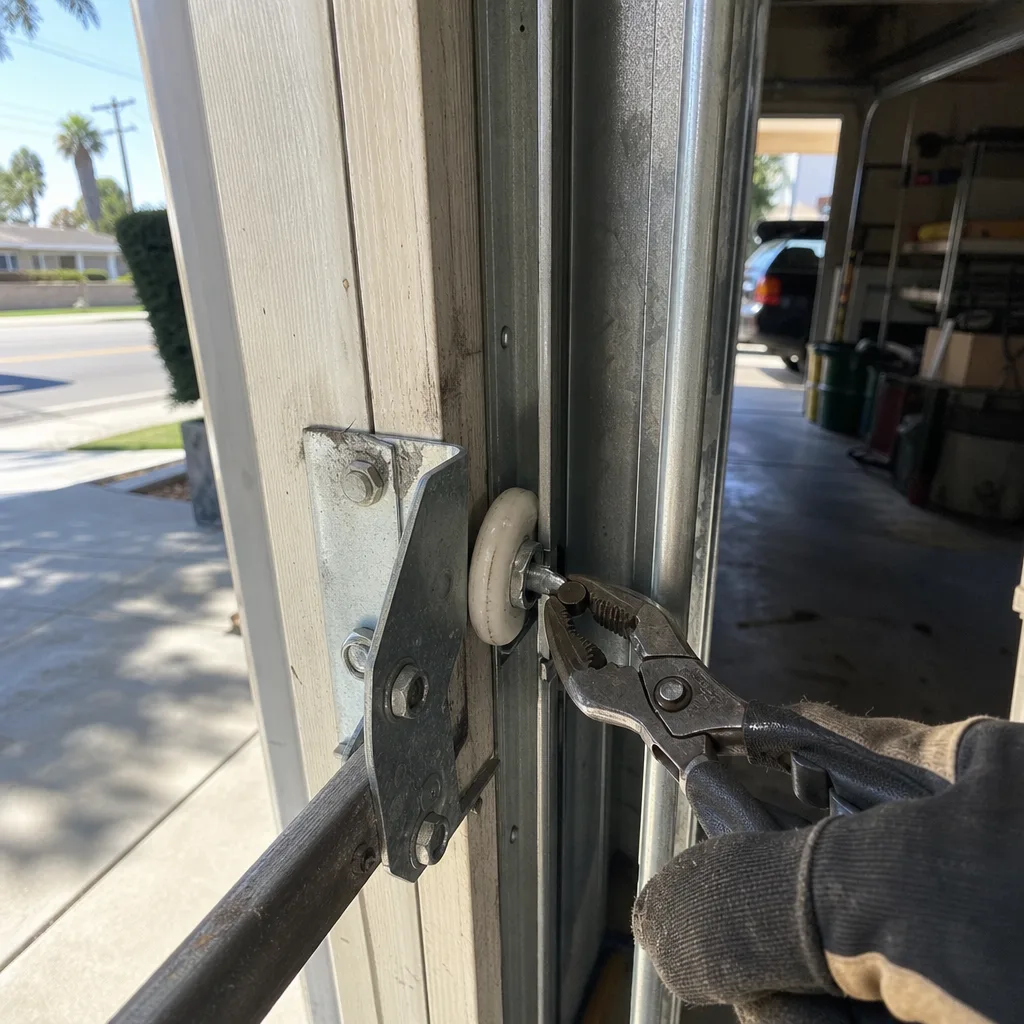
The Los Angeles Department of Building and Safety processes garage door permits in two tiers: over-the-counter review and full plan check. Which one applies to your project depends on scope.
Over-the-counter permits cover work that does not require structural or fire-safety analysis. A like-for-like garage door replacement with no opening changes generally falls into this category when a permit is pulled at all, though as established, most like-for-like replacements in Los Angeles do not require a permit in the first place. The over-the-counter route is a same-day process at any LADBS office: you submit a simple application describing the work, pay the fee, and receive the permit. No drawings are required beyond a basic site plan showing the garage location on the lot.
Plan check applies when the work involves any of the following:
- Widening or altering the rough opening, which requires a structural engineer’s letter or drawn detail on the new header
- Adding or relocating a pedestrian door between garage and living space, which triggers the fire-separation review under CRC R302.5
- Converting a carport to an enclosed garage, which requires setback verification and possibly zoning review
- Any work on a hillside lot or in a designated fire hazard severity zone, which activates additional review layers
Plan check in Los Angeles currently runs two to six weeks depending on workload, and the fees scale with the valuation of the work. A simple garage door opening alteration with a standard plan set might cost $400 to $900 in LADBS fees alone, before any engineering. That is the price of doing it correctly, and it is a line item worth knowing before you start.
One Los Angeles-specific nuance: LADBS historically operated a network of local offices (Van Nuys, West LA, San Pedro, Metro), but many services have consolidated. Garage door permit applications over the counter are typically processed by appointment at the Metro office on Figueroa Street or online through the LADBS e-permit portal, which now handles a broader range of simple permits than it did five years ago. Check the LADBS website before making the drive.
Seismic Anchorage After ADU Conversions: Why Track and Header Brackets Matter
The 2022 California Building Code changed what many Los Angeles homeowners need to know about garage door track and header brackets, especially after an ADU conversion. The issue is seismic anchorage, and it is the section most competitors skip entirely.
Under CBC Section 2208 and the referenced steel construction standards, garage door tracks and header brackets must be anchored to resist seismic forces in Seismic Design Categories D, E, and F. Most of Los Angeles falls into Category D. That means the fasteners holding the horizontal track to the ceiling and the vertical track to the wall framing must be specified for seismic loads, not just gravity loads.
The reason this matters after ADU conversions is structural. When a homeowner converts a garage to an accessory dwelling unit, the garage door is often removed and the opening infilled with a wall. Later, when a new owner wants to restore the garage or convert the space back, the new garage door installation must comply with current seismic anchorage requirements. The header may have been reworked during the ADU conversion, the original anchor points may be gone, and the load path may no longer exist. A proper installation under these conditions requires an engineer’s involvement, not a standard door installer’s default fastening pattern.
Even without an ADU conversion, Los Angeles inspectors are increasingly checking garage door anchorage during final inspection, particularly on new construction and major remodels. The inspection points include:
- Header bracket fasteners: through-bolts or specified lag screws, not drywall screws, at the manufacturer’s specified spacing
- Track hangers: struts or angle iron sized for the door weight and braced against lateral movement
- Spring anchor brackets: center-bearing plate and end-bearing plates bolted to the header, not toe-nailed
- Floor anchors: bottom fixture brackets bolted to the concrete slab, not driven into wood sills
The practical point for Los Angeles homeowners: if your garage door work involves a structure that has been converted, deconverted, or seismically retrofitted, assume the anchorage requirements are stricter than the old door met. Plan for an engineer’s detail and expect the inspector to look at it.
Unpermitted Garage Door Changes on a Preliminary Title Report
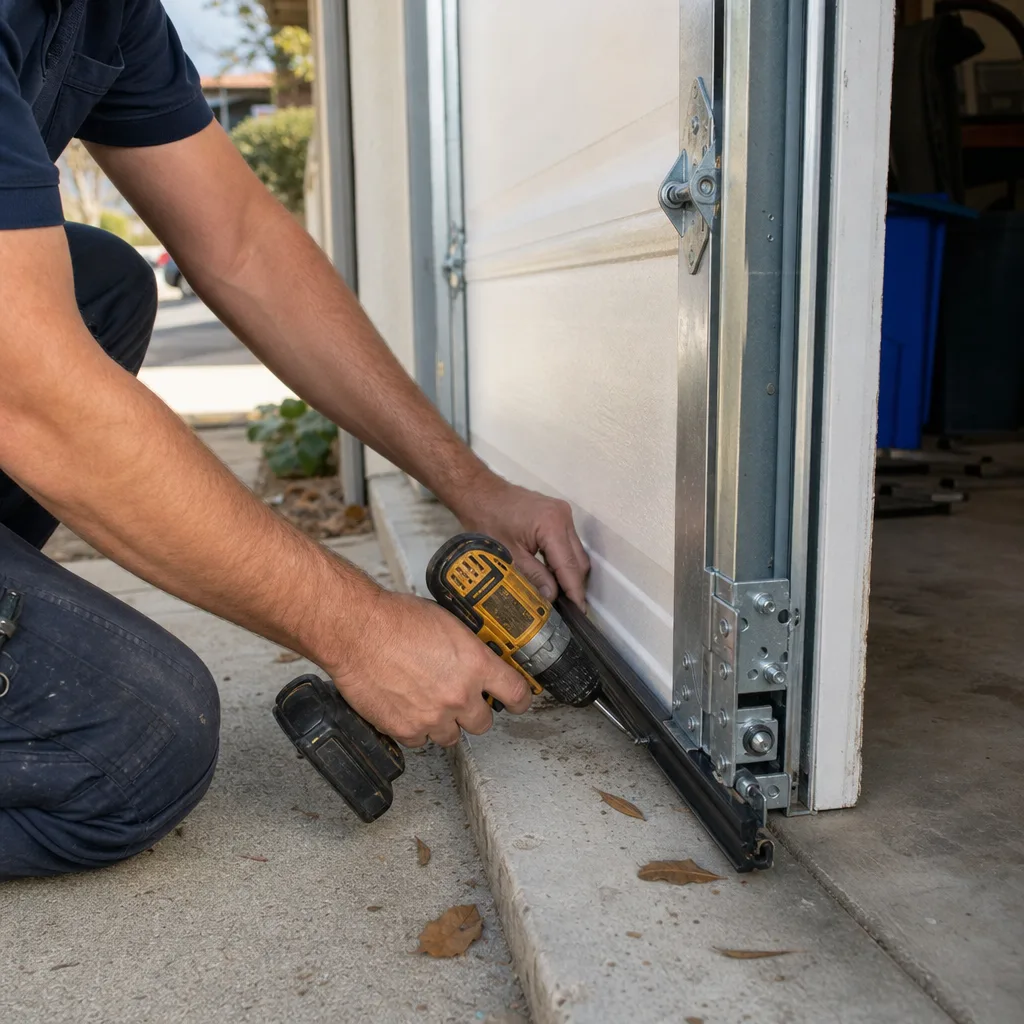
Here is where the permit question becomes a real estate problem. When you sell a house in Los Angeles, the buyer’s title company issues a preliminary title report. That report does not list building permits. What surfaces instead is evidence of work that does not match the county assessor’s records or the building permits on file with LADBS. A garage enlargement, a new garage door opening, or a carport enclosure that was never permitted may not appear as a “permit violation” on the title report, but it appears as a discrepancy between the as-built condition and the recorded building square footage. Escrow officers, appraisers, and buyers’ inspectors all notice it.
The failure chain works like this:
- The buyer’s home inspector notes that the garage door opening was clearly widened, or a pedestrian door was added, and the finished work does not match the age of the rest of the structure.
- The appraiser notes the garage square footage claims a condition that the county records do not support.
- The buyer’s lender conditions the loan on resolution of the unpermitted work.
- The seller is now retroactively permitting work that should have been permitted at the time, paying late fees, and negotiating a credit.
Retroactive permitting in Los Angeles is possible but not painless. LADBS accepts “as-built” permit applications, in which a licensed engineer or architect documents the existing condition and certifies it as compliant with current code. The problem: current code is often stricter than the code in effect when the work was done. A garage door opening widened in 2005 may have met 2005 code but does not meet 2025 seismic anchorage or fire-separation requirements. The retrofit cost can exceed the original project cost.
The lesson from a documentation perspective, which is how Servo approaches every job: keep the paper trail. If you do any work on your garage door or opening, get the permit when one is required, keep the permit number, keep the inspection sign-off, and file it with your house records. The buyer in your eventual escrow will ask, and a seller with the documentation in hand negotiates from a stronger position. For ongoing upkeep tips, see our Garage Door Repair Maintenance Checklist for Los Angeles Homeowners.
Step-by-Step: What the Permit and Inspection Process Looks Like
For projects that do require a permit in Los Angeles, here is the process end to end, including the inspection points.
- Determine scope. Write down exactly what is changing: opening size, material, fire rating, pedestrian door addition, structural header work. If the only thing changing is the door within an unchanged opening, you likely do not need a permit. If anything structural changes, proceed.
- Check the LADBS portal. Visit the LADBS e-permit system and search for your address. Look at the permits on record. If the existing garage has no permit on file at all, flag that now before you start any work.
- Apply over the counter or online. For simple alterations with no structural change, submit the application and a site plan. For structural alterations, you will need a plan set prepared by a licensed engineer or architect.
- Pay the fee and receive the permit. Fees vary by project valuation. Keep the permit posted on site during the work.
- Complete the work. Follow the approved plans exactly. Deviation from plan is the most common cause of failed inspections.
- Rough inspection. If structural work was involved, the inspector checks the header, framing, anchorage, and fire separation before the door is installed.
- Final inspection. The inspector verifies the installed door, the anchorage, the self-closing device if required, and the fire rating. The inspector signs off, and the permit is closed.
We have shepherded homeowners through this process in Los Angeles neighborhoods from Sherman Oaks to Leimert Park, and the single biggest failure point we see is step 1: the homeowner or a general contractor fails to identify the work as an alteration rather than a replacement, and the permit never gets pulled. By the time it surfaces at inspection or escrow, the cost of correction is three to five times what the permit would have cost originally.
What a Garage Door Permit Costs and How Long It Takes in Los Angeles
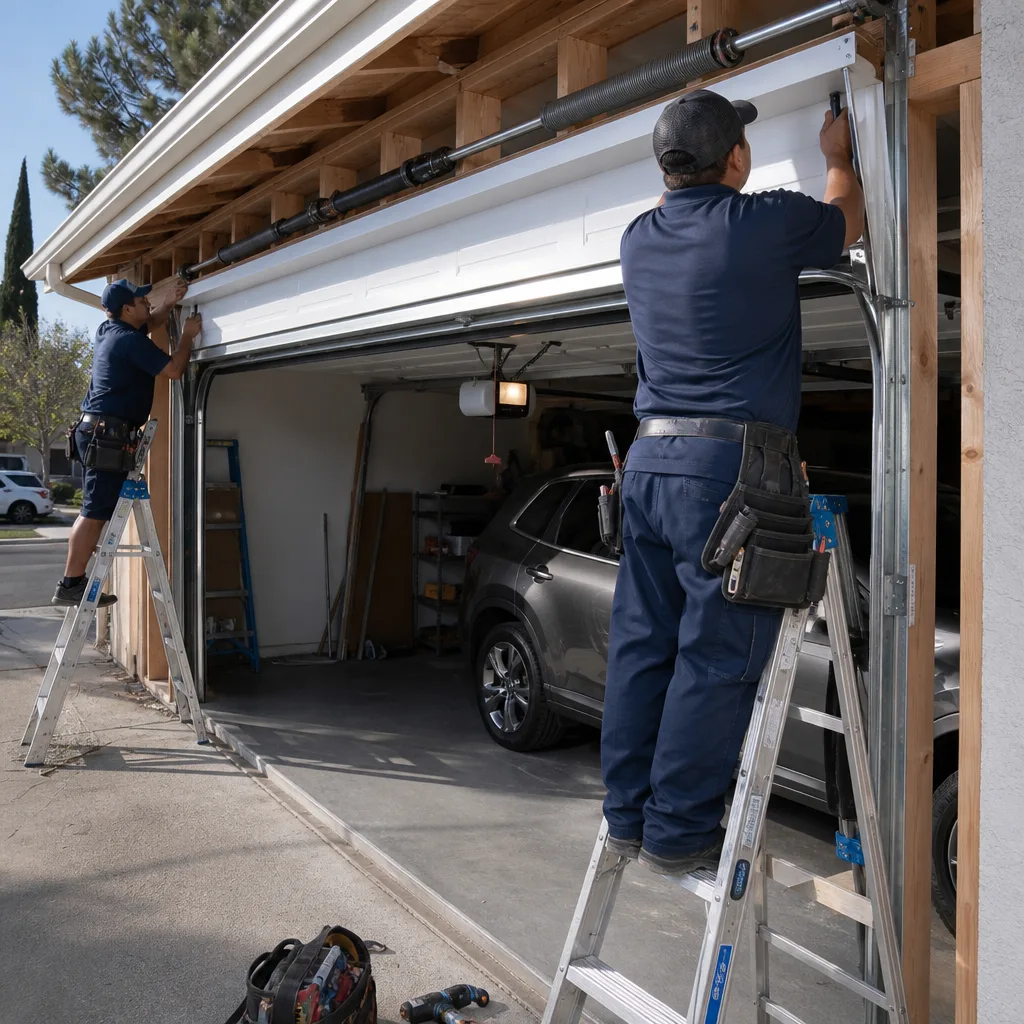
Permit costs in Los Angeles scale with project valuation, but the range for typical garage door work is predictable.
- Over-the-counter permit for simple door replacement (rarely needed): $80-$200, same day
- Over-the-counter permit for opening alteration without structural change: $150-$400, one to three business days
- Plan check for structural header work or new pedestrian door: $400-$900 plus any engineering fees, two to six weeks
- Retroactive “as-built” permit for unpermitted prior work: the same fees plus a late penalty up to double the original fee, and compliance work that can add $1,000-$5,000
Timeline depends on the LADBS workload at the time. The over-the-counter route can be same-day when you bring a complete application. Plan check runs in parallel with your engineering, assuming you are not doing engineering during the plan check period, and typical total timeline from application to issued permit for a structural alteration is four to ten weeks. Inspections are scheduled within a one to three day window in most parts of the city.
For a Los Angeles homeowner replacing a garage door in kind, the answer to “do I need a permit” is usually no, and a well-run replacement can happen in a single day. For a Los Angeles homeowner altering the opening, adding a pedestrian door, or enclosing a carport, the permit is not optional, and the budget should include both the permit fees and the compliance work the inspector will require. Understanding this distinction before you start is the difference between a one-day project and a two-month project.
Common Mistakes to Avoid
- Treating an alteration as a replacement. Widening the opening by a few inches is an alteration, not a replacement, and it requires a permit. The inspector will measure. Assume they will.
- Skipping the fire-rated door on a new pedestrian opening. Any new door between garage and living space needs a 20-minute fire rating and self-closing hinges in Los Angeles. A standard interior door fails inspection.
- Assuming the old door’s permits transfer. A garage that was permitted when built does not automatically cover a door opening change made later. Check LADBS records for the actual permitted scope.
- Ignoring seismic anchorage after an ADU conversion. Deconverted garages and re-enclosed carports must meet current CBC seismic anchorage standards, which often exceed what the original door had.
- Paying a contractor in full before the inspection closes. Hold final payment until the permit is signed off. Once the contractor is gone, the open permit belongs to the property owner.
- Waiting until escrow to check for unpermitted work. A preliminary title report discovery of unpermitted garage work delays the sale and costs the seller money. Check LADBS records before listing the house.
When to Call a Professional
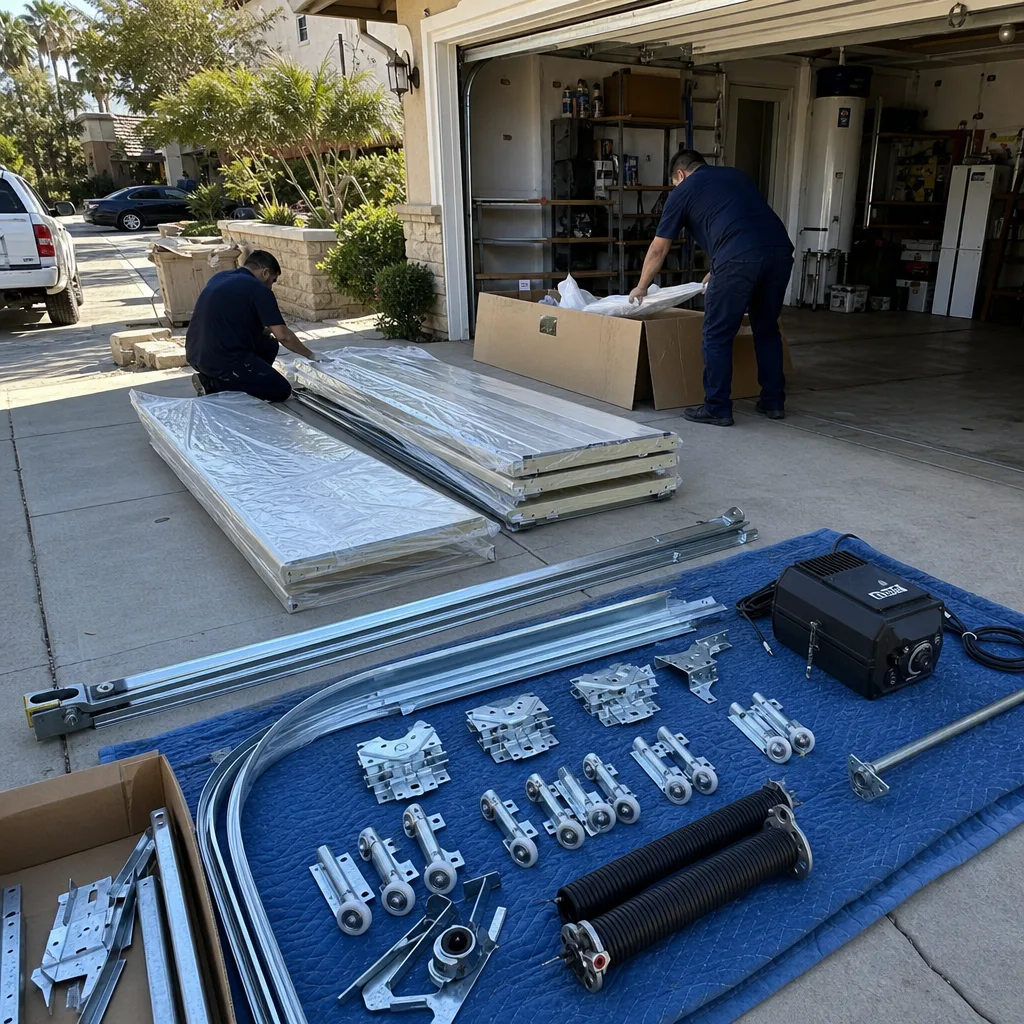
If your project involves any change to the rough opening, any new penetration between garage and living space, or a structure that has been converted or enlarged, hire a professional who understands Los Angeles building code and the LADBS inspection process before any work starts. The permit mistakes in this space are expensive to fix. For garage door replacement or repair work in Los Angeles, Servo Garage Doors Los Angeles home offers written flat-price estimates before any work begins, and every visit includes a documented photo record of what was found and what was done. We also offer a free second opinion on any written estimate you bring us from another company. Call (213) 348-6550 for a free estimate in Los Angeles.
Frequently Asked Questions
Like-for-like garage door replacement does not require a permit in most California jurisdictions, including Los Angeles, as long as the rough opening size, mounting method, and fire-safety characteristics remain unchanged. Any alteration to the opening, header, or wall assembly triggers a building permit. If your garage door simply needs repair or same-size replacement, check out our Garage Door Repair in Los Angeles page for pricing and service details.
A simple over-the-counter garage door permit in Los Angeles costs between $80 and $400 depending on the valuation of the work, while a plan check permit for structural header work or a new pedestrian door runs $400 to $900 plus engineering. Retroactive as-built permits carry late penalties. Call (213) 348-6550 if you want help determining which tier your project falls into.
Yes, but adding a walk-through door to an existing garage door or cutting a new pedestrian door into a garage wall constitutes an alteration requiring a permit and a fire-separation review under California Residential Code Section R302.5. The new door must meet 20-minute fire-rating requirements if it penetrates the garage-to-living-space wall. Our team handles full garage door installation and can advise on code compliance before you commit; see Garage Door Installation in Los Angeles for details.
Yes, unpermitted garage work, including door opening changes and carport enclosures, surfaces during escrow as a discrepancy between as-built conditions and county records, frequently causing loan conditions or price concessions. Retroactive permitting under current code can cost more than the original project. For garage door opener issues after a conversion or remodel, see Garage Door Opener Repair & Installation in Los Angeles.
California law does not prohibit a homeowner from performing garage door spring replacement on their own property, but torsion springs are under high tension and cause serious injuries every year. We recommend hiring a licensed professional for this specific repair; the savings from doing it yourself is not worth a hospital visit. If you are in Los Angeles and need spring work, we carry the parts on the truck and can usually complete the repair the same day.
Under our written-price-first system, the price is quoted and agreed before any work starts, and it does not change once the technician begins unless you authorize additional work in writing. Clause 1 of The Haven Standard requires a flat, written price and written scope on every job, no exceptions. Call (213) 348-6550 for a free estimate in Los Angeles, and the quote you receive is the price you pay.
The Bottom Line
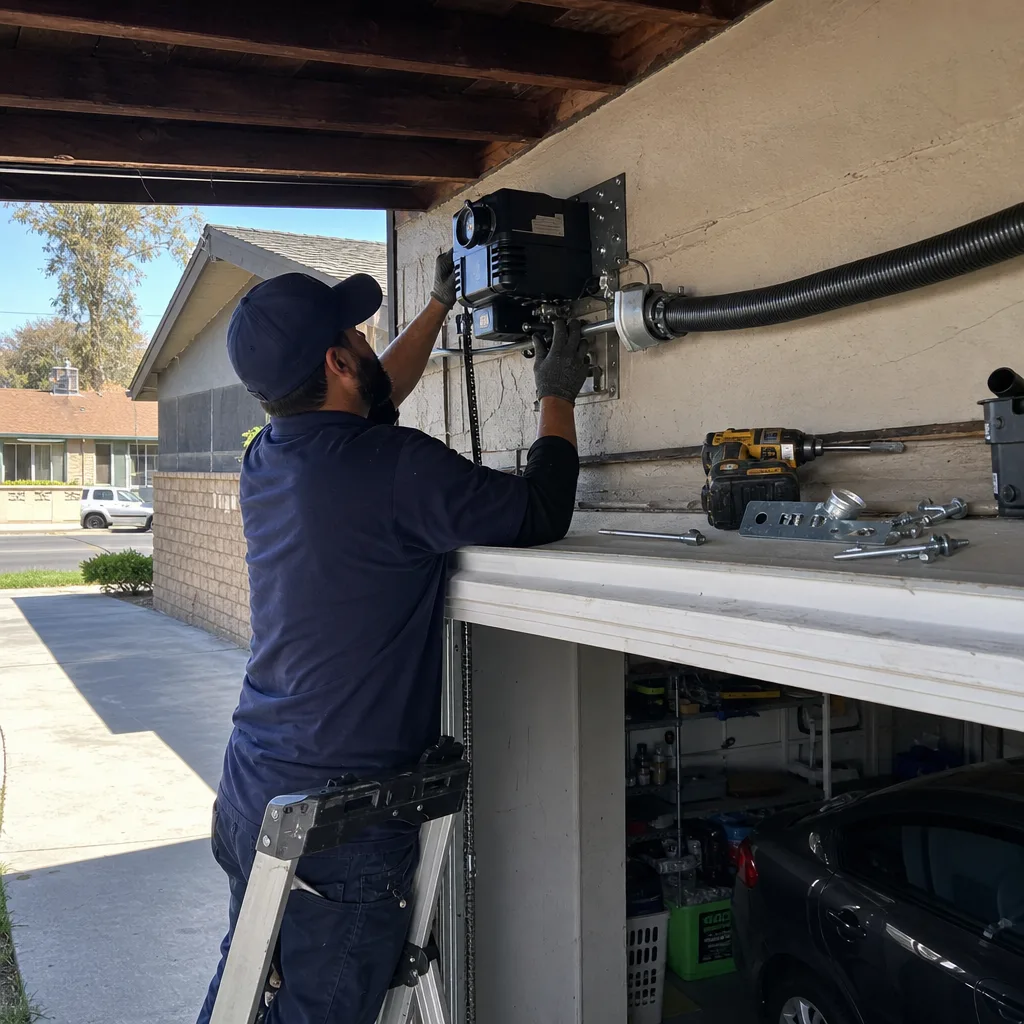
The California garage door permit question is not a yes or no answer; it is a distinction between replacement and alteration. A like-for-like door swap in an unchanged opening is typically permit-exempt in Los Angeles. Widening the opening, adding a pedestrian door, enclosing a carport, or touching the fire-separation wall is not. The unpermitted work that houses carry into escrow comes from homeowners and contractors who failed to recognize the difference. Before you start any garage door project, check LADBS records, identify the scope honestly, and pull the permit when the code requires it. In Los Angeles, Servo Garage Doors handles repair, installation, and opener work with written flat pricing on every job, and we are happy to help you determine whether your project needs a permit before anything gets taken apart. Call (213) 348-6550 for a free estimate.
Written by Marcus Deller, Owner at Servo Garage Doors Los Angeles, serving Los Angeles since 2015.